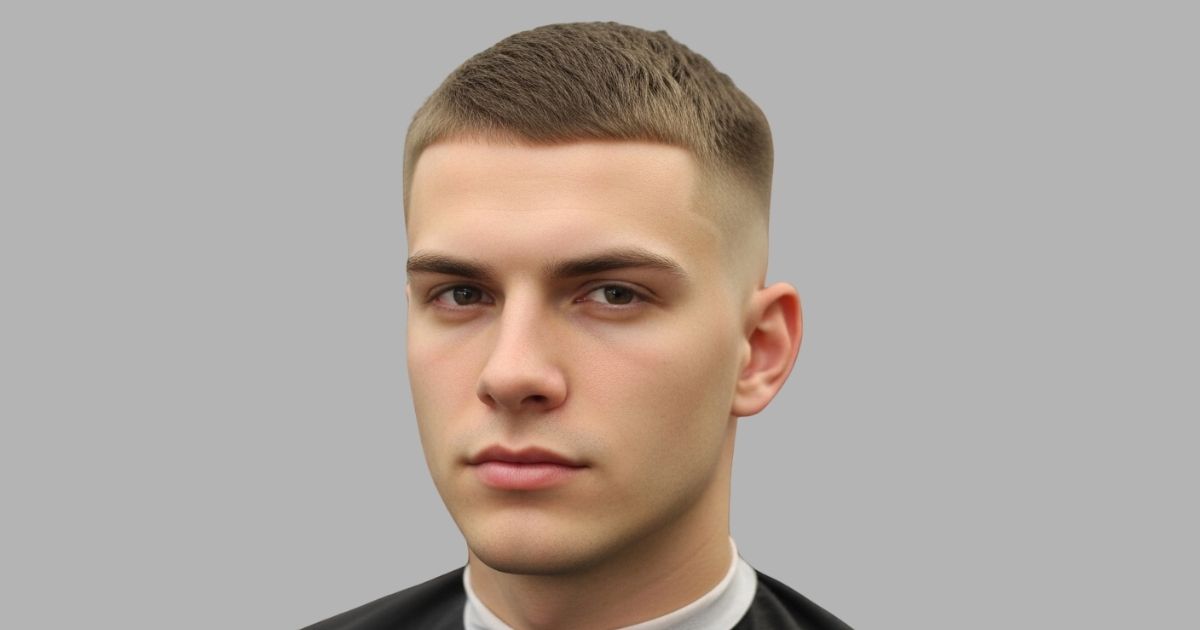
Walk into any barbershop right now and you will hear the same request over and over: low taper fade buzz cut. It is the haircut that has quietly taken over Instagram feeds, barber chairs, and office hallways alike. Clean on the sides. Sharp around the ears. Short and structured on top. No product, no fuss, no bad hair days.
This is not a trend built on hype. It is built on results. Men with thick hair, fine hair, curly hair, and everything in between are requesting this cut because it genuinely works for everyone. Whether you are stepping into your first barbershop appointment or thinking of switching from a longer style, this complete guide covers every variation, every barber script, and every maintenance tip you need to get it right in 2026.
What Exactly Is a Low Taper Fade Buzz Cut?
A low taper fade buzz cut combines two techniques into one clean, modern haircut.
The buzz cut uses clipper guards to cut the hair evenly across the top of the head. Depending on the guard number, the result ranges from a near-shaved scalp to a short, textured surface. Most men use a Guard 2 or Guard 3 for a polished everyday look.
The low taper fade gradually reduces the hair length starting just above the ear and blending down toward the neckline. Because the fade starts low on the head, it keeps a natural silhouette without exposing too much skin. This is what separates it from a mid or high fade, which start much higher on the sides and create a sharper contrast.
Together, the combination delivers a cut that looks deliberate and sharp without being loud or high-maintenance. The taper creates structure. The buzz handles the top. The result is a haircut that works at a job interview, a gym session, and a Saturday night out.
Why the Low Taper Fade Buzz Cut Is Dominating 2026
Three things drive its popularity, and all three come down to practicality.
It fits every face shape. Round faces benefit from a slightly longer top that adds height. Square faces look even stronger with a clean line-up that highlights the jawline. Oval faces are the most flexible and can pull off every variation. Diamond faces do well with a Guard 3 or 4 on top to balance a narrower forehead.
It works on every hair type. Thick hair gets a bulk reduction that prevents the dreaded helmet look. Fine hair looks denser and more uniform under a Guard 3. Curly and coily hair gets natural definition without the need for extensive styling. Straight hair looks sharp and even without any effort.
It is genuinely low maintenance. Unlike crop tops, quiffs, or textured fringes that require pomades, blow dryers, and daily effort, this haircut looks sharp with zero product. A quick rinse in the morning and you are ready. Barbers also note that the low taper grows out more gracefully than a high fade, meaning you get more days between appointments before it starts looking rough.
Add beard compatibility, clean neckline finishes, and the fact that it looks fresh at every age, and you have a haircut built for real life.
All the 2026 Variations You Need to Know
The term buzz cut is not one haircut. It is a whole family of styles, and each one feels and looks different. Here are the eight variations getting the most attention in 2026.
Classic Buzz Cut
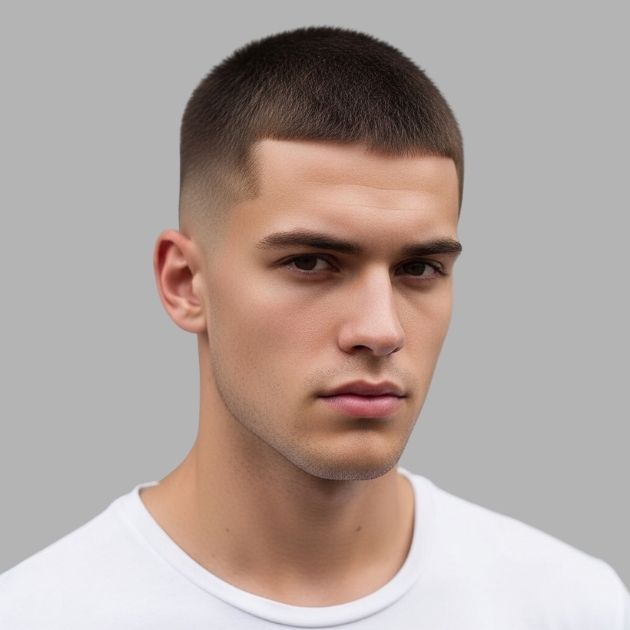
The foundation style that started everything. A Guard 2 or 3 all over the top with a soft, gradual taper wrapping around the ears and neckline. No hard lines, no skin, no extra design work. This version suits every age group, every setting, and every hair type. If you want a reliable cut that never looks dated, this is your starting point.
Textured Buzz Cut
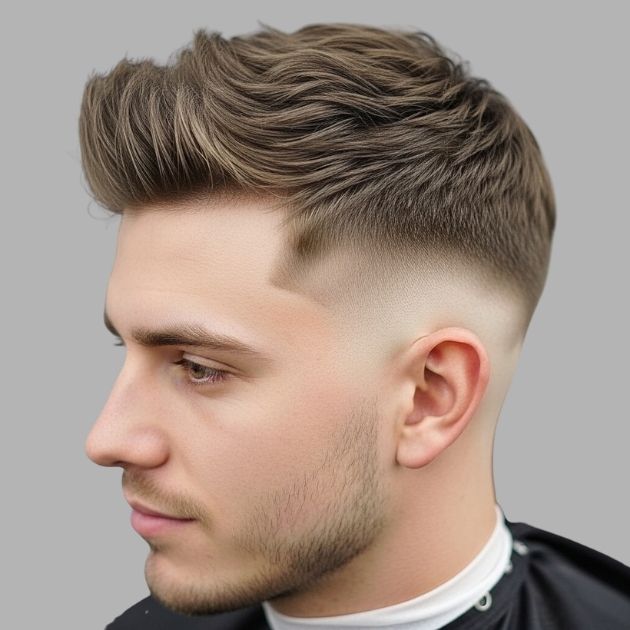
A step up from the classic. The top uses a Guard 3 or 4 to give the hair just enough length to show natural texture. Some barbers work in a subtle skin fade within the taper for extra contrast. A small amount of lightweight hair clay or matte paste on the top gives a fresh, defined finish. This variation is trending heavily among young professionals who want something clean but slightly more expressive.
Low Taper Fade Buzz Cut
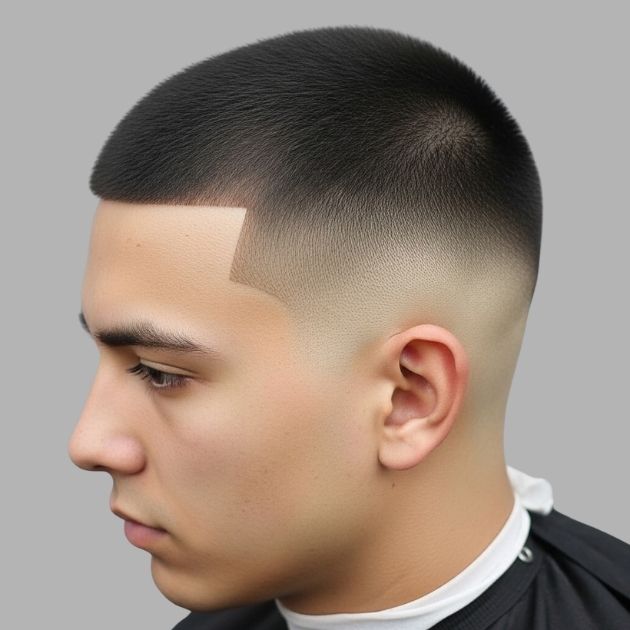
The signature style of 2026. The top sits at a Guard 2 or 3, and the fade starts just above the ear with a smooth C-shaped blend wrapping around to the neckline. No harsh contrast, no dramatic skin, just a precise and structured outline. A hard part or line-up can be added for extra detail. This version works equally well with or without a beard.
Skin Fade Buzz Cut
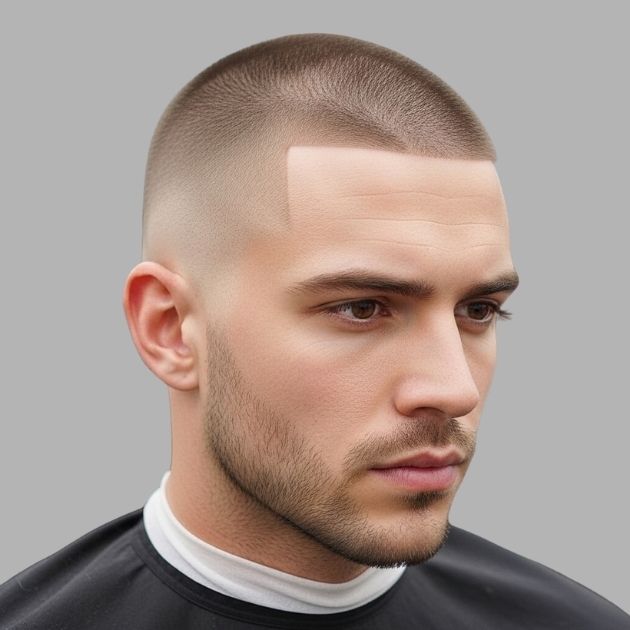
For men who want sharper contrast. The taper drops all the way to the skin around the ear line and neckline, creating a clean boundary between the buzzed top and the bare sides. This works best on men with strong facial features and a healthy scalp. It requires more frequent touch-ups since the skin fade becomes visible faster than a standard taper.
High and Tight
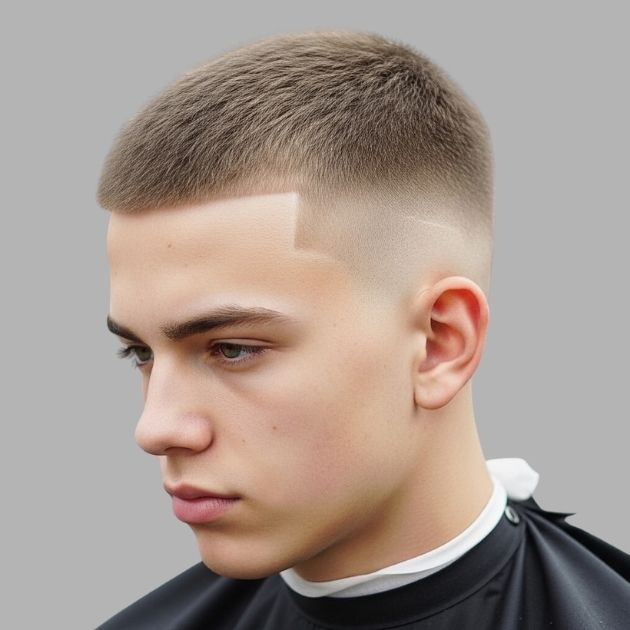
A military-inspired variation where the buzz is close cropped on top at a Guard 1 or 2, and the sides are clipped extremely short starting very high on the head. The result is a tight, structured silhouette that looks sharp and disciplined. It works best on oval and square face shapes and pairs well with a clean shave or short beard.
Burst Fade Buzz Cut
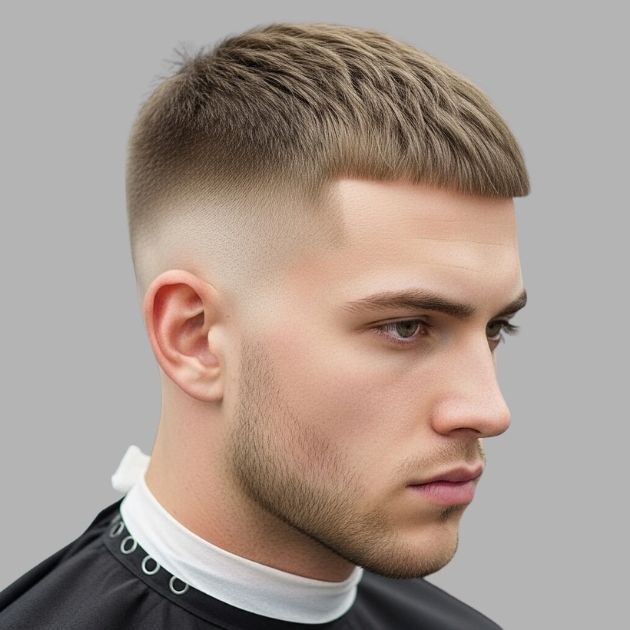
The burst fade wraps around the ear in a rounded, arc-shaped fade rather than a straight drop. When combined with a buzz cut top, it creates a softer, more modern shape that suits wavy and curly hair especially well. This variation has been growing quickly in 2026 because it adds movement and dimension without adding length.
Induction Buzz Cut
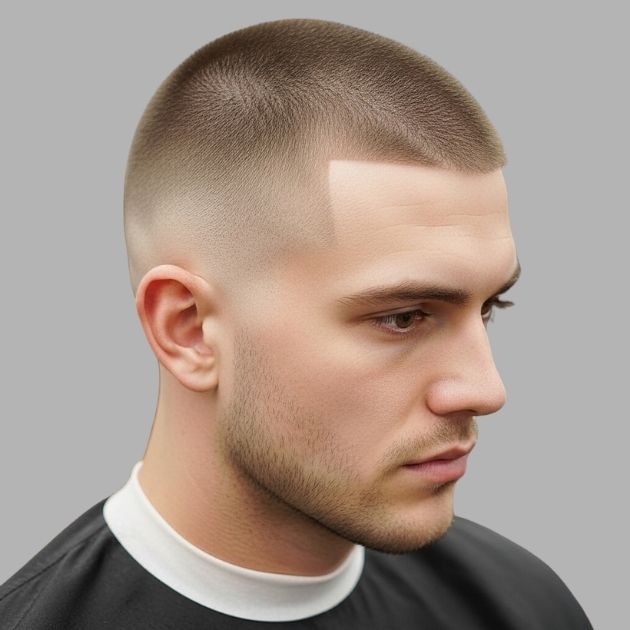
The shortest option. A Guard 0 or 1 all over, revealing the exact shape of your scalp. Originally given to military recruits on their first day, this cut now carries a bold, intentional aesthetic. It takes about 10 minutes in the chair and requires zero maintenance. The only consideration is your head shape, since there is nothing to offset or balance any irregularities.
Long Buzz Cut
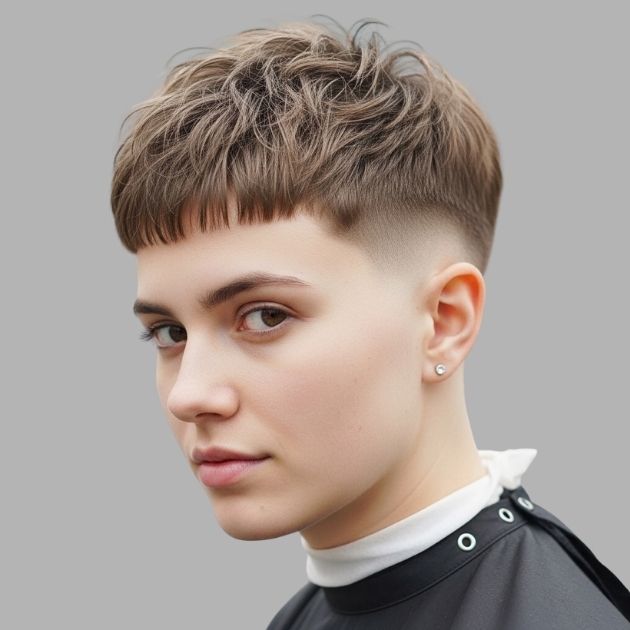
A Guard 4 or 5 on top gives just enough length to show your natural hair pattern without requiring styling. The sides get a soft low taper to keep things structured. This version is ideal for men growing out a shorter style or for those who want the buzz cut aesthetic without committing to a very close crop. It suits most hair types and looks especially good on wavy and curly hair.
Buzz Cut Mohawk Fade
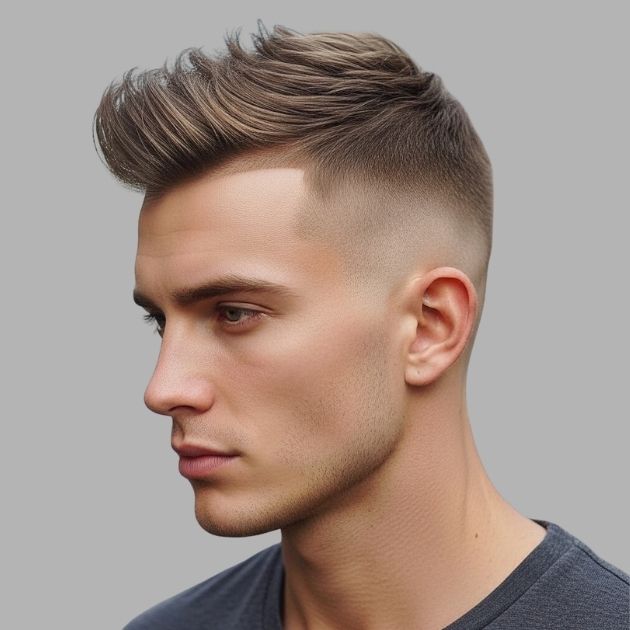
The most expressive variation on this list. The sides are faded tight while the center strip runs from the forehead to the nape with noticeably more length. It does not need to be dramatic. Even a subtle height difference between the center and the sides creates the mohawk shape. Combined with a low taper, the overall effect is bold but still clean and office-appropriate depending on how pronounced the contrast is.
Face Shape Cheat Sheet: Will It Suit You?
Here is a quick reference to match your face shape with the right variation.
- Oval face: The most versatile shape. Every variation works. Take your pick.
- Round face: Go with a Guard 2 or 3 on top for added height. Avoid a very low, flat buzz that widens the appearance of the face.
- Square face: A classic low taper with a clean line-up highlights your jawline. A Guard 2 to 4 on top balances the strong bone structure beautifully.
- Diamond face: Opt for a Guard 3 to 5 on top to add width at the temples. A low taper rather than a tight skin fade keeps proportions balanced.
- Heart face: A longer buzz top with a subtle taper adds weight to the lower half of the face and softens the wider forehead.
- Oblong or long face: Keep the top from adding too much height. A flat, even Guard 3 or 4 with a low taper works well here.
How to Ask Your Barber (Exact Scripts)
The number one reason men walk out of the barbershop unhappy is vague communication. Saying “just a fade” gives your barber almost no information. Here are exact scripts for three common requests.
For the standard low taper fade buzz cut: “I want a Guard 3 buzz cut on top with a low taper fade. Start the fade just above the ear and blend it down to the neckline. Keep a natural finish, no skin, and clean up my hairline with a light line-up.”
For a tighter, more defined version: “Guard 2 on top, low taper fade starting just above the ear. Bring it to skin at the neckline only. Sharp line-up on the forehead and around the ears.”
For the textured version with a hard part: “I want a Guard 3 buzz cut with a low skin fade on the sides. Add a hard part on the left side and keep the top slightly textured. Clean up the edges with a razor.”
Always bring a reference photo. Even one clear photo eliminates guesswork and gives your barber a visual target to work toward.
Step-by-Step: How Barbers Create the Perfect Blend
Understanding what happens in the chair helps you catch mistakes before they become problems.
- Consultation first. The barber confirms the guard length for the top and the height at which the taper begins.
- Buzz the top. Clippers with the selected guard run evenly across the scalp from front to back and side to side.
- Establish the taper line. The barber marks where the fade begins, typically just above the ear and along the natural hairline at the nape.
- Work the blend. Starting from the taper line downward, the barber uses progressively smaller guards to create a smooth gradient. A Guard 2 transitions to a Guard 1, then to a Guard 0.5 or skin if requested.
- Check for evenness. The barber steps back, checks both sides in the mirror, and corrects any uneven blending with detail work.
- Line-up and edges. A T-outliner or detail trimmer defines the hairline across the forehead, around the ears, and at the neckline.
- Final clean-up. Loose hairs are dusted off, and a light edge-up gel or aftershave is applied to the skin lines.
The entire process takes between 20 and 35 minutes depending on hair thickness and detail level.
Maintenance and Grow-Out Timeline
One of the biggest selling points of this cut is how long it stays sharp between visits.
- Week 1 and 2: The cut is at its freshest. The taper is defined, and the buzz is clean and even.
- Week 3: The sides begin to grow in and soften the taper slightly. The top adds a little more texture at this stage, which many men actually prefer.
- Week 4: The taper loses most of its definition. This is the point where most men book their next appointment.
For men who want the cut to stay sharp at all times, a barber visit every 2 to 3 weeks is ideal. For men who do not mind a slightly grown-out look, every 3 to 4 weeks works fine.
Between appointments, a quality pair of detail trimmers or edgers handles the hairline cleanup. Running them carefully along the forehead, ears, and neckline adds several days of sharpness without requiring a full barber visit.
Styling Products (You Barely Need Any)
This is one of the few haircuts that looks great with absolutely nothing on it. But if you want a little extra, here are the right choices.
- Matte clay or paste: A fingertip amount worked through the top adds subtle texture and separation without weight or shine. Best for Guard 3 and above.
- Lightweight hair oil: A single drop rubbed between the palms and skimmed over the top gives a fresh, healthy finish. Works especially well on coily or dry hair.
- Scalp moisturizer: For shorter Guard 1 and 2 cuts where the scalp is visible, a fragrance-free moisturizer keeps the skin healthy and itch-free.
Avoid heavy pomades and thick creams on short buzz lengths. They flatten the hair and leave a greasy finish that defeats the whole purpose of the cut.
Pros vs Cons (Real Talk from the Chair)
Pros:
- Zero daily styling time required
- Works on all hair types and textures
- Grows out gracefully compared to higher fades
- Compatible with beards of every length
- Appropriate in every environment from gym to boardroom
- Reduces visibility of thinning or receding hairlines
Cons:
- Requires regular barber visits every 2 to 4 weeks to stay sharp
- Very short lengths expose the scalp, which means sunscreen becomes necessary outdoors
- Less forgiving if a barber misjudges the taper height
- Not ideal for men who prefer volume or length on top
Celebrity Low Taper Fade Buzz Cut Inspiration 2026
Several high-profile men have been spotted wearing variations of this cut recently, pushing its visibility even further.
Idris Elba has been photographed with a tight low taper buzz that emphasizes his strong jaw. LeBron James regularly refreshes his low fade with a precise line-up. Timothee Chalamet went shorter in early 2026, wearing a textured buzz with a soft low taper that became one of the most searched men’s haircuts of the year. Post Malone has kept a clean buzz with fade that strips back the visual clutter and lets his facial features do the work.
The common thread across all of them is simplicity. The cut is not trying to be the loudest thing in the room. It is confident and clean, and that reads well both on camera and in everyday life.
FAQ’s
What guard should I use for a low taper fade buzz cut?
A Guard 2 gives a close, clean finish while a Guard 3 shows more texture. Most barbers recommend starting at Guard 3 if you are trying this cut for the first time.
How often should I get a low taper fade buzz cut trimmed?
Every 2 to 3 weeks keeps it sharp. Every 3 to 4 weeks works if you do not mind a slightly grown-out look between visits.
Does a low taper fade buzz cut work on curly hair?
Yes. Curly and coily hair actually looks great with this cut because the natural texture adds visible definition to the buzzed top without any styling products.
What is the difference between a low taper and a low fade?
A taper gradually reduces hair length toward the natural hairline while keeping some hair at the bottom. A fade goes all the way down to the skin. A low taper fade combines both in one smooth blend.
Will this cut work if I have a receding hairline?
Yes. The uniformity of the buzz cut minimizes the contrast between areas of thinning and areas of full hair, making the hairline look more even and intentional.
How do I maintain my low taper fade buzz cut at home between appointments?
Use a detail trimmer to clean up the hairline at the forehead, ears, and neckline every 7 to 10 days. This extends the sharpness of the cut without requiring a full barber visit.
Can I add a beard to a low taper fade buzz cut?
Absolutely. A beard pairs exceptionally well with this cut. Ask your barber to blend the taper into the sideburn area so the fade and the beard connect seamlessly for a unified look.
Final Thoughts
The low taper fade buzz cut is not trending because it is flashy. It is trending because it is right. It solves the problems most men have with their hair: too much maintenance, too many bad grow-out phases, and too little versatility across different settings.
Whether you go with a classic Guard 3, a tight skin fade variation, or a textured burst fade buzz, the fundamentals stay the same. Clean top. Sharp taper. Precise edges. The only decision left is which version suits your face shape and lifestyle best.
Pick your variation, save a reference photo, and give your barber the exact script from this guide. You will walk out of that chair looking exactly like you intended. And in four weeks, you will be back for the same thing.

Charlotte Aiden is the founder and editor of FaxhionTips.com, where he shares practical insights on the latest haircut trends, hairstyles, grooming tips, and hair care advice. Passionate about modern style and easy-to-follow beauty guidance, Charlotte creates well-researched content to help readers choose the best haircuts and maintain healthy, stylish hair with confidence.