
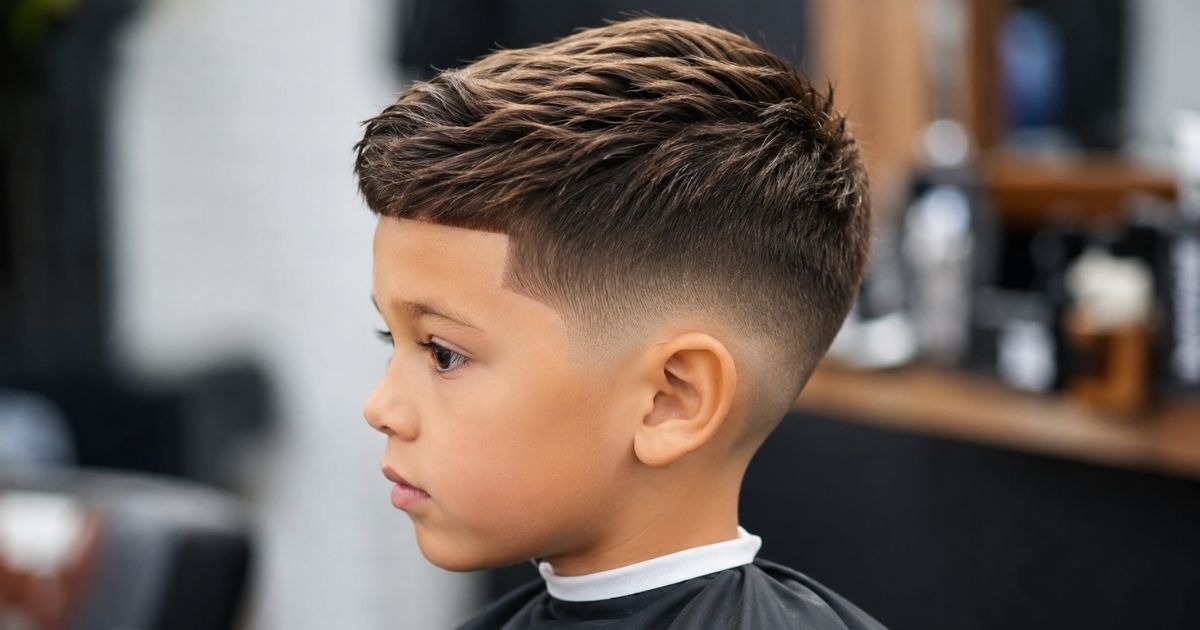
Choosing a haircut for a boy used to mean picking between a buzz cut and a slightly longer buzz cut. That has changed. The low taper fade is now the most requested kids’ haircut at barbershops across the country, and parents want to understand it before booking a chair.
This guide breaks down everything a parent needs: what a low taper fade actually is, which style suits your child’s hair type, age, and face shape, how to talk to a barber, and how to keep the cut looking sharp at home. No fluff, just the details that matter.
What is a low taper fade for kids, and at what age can boys get one?
A low taper fade is a haircut where the hair gradually shortens near the hairline, ears, and neck, while the top stays longer. Most barbers agree boys can safely get one starting around age 2, once a child can sit still for 15 to 20 minutes.
There is no strict minimum age set by any grooming authority. The real limit is patience and tolerance for clipper noise, not hair texture or thickness.
What Is a Low Taper Fade & Boys?
A low taper fade keeps the fading action close to the bottom of the head, usually starting just above the ears and along the neckline. Unlike higher fades, it leaves more length around the sides, which gives a softer, more natural look.
It works with almost every hair type and length on top, from a buzz cut to curls to a small pompadour. That flexibility is exactly why it has become the default request at kids’ barbershops.
How Does a Low Taper Fade Actually Work?
A barber uses clipper guards that step down in size, starting with a longer guard near the top of the fade zone and moving to a shorter guard closer to the skin. This creates a gradual blend rather than one visible line.
- The fade typically starts one to two inches above the ear
- Clippers move in short upward strokes to blend each guard length
- Scissors are used on top to shape length and texture
The result is a smooth transition with no harsh line between short and long hair.
What Is the Difference Between a Taper and a Fade?
A taper gradually shortens hair without ever reaching skin level. A fade goes further, blending hair down to bare skin or very close to it.
| Feature | Taper | Fade |
| Shortest point | Short, not skin level | Skin or near-skin |
| Look | Softer, subtle | Sharper, more defined |
| Best for | Conservative styles, school | Bold, modern styles |
A low taper fade sits in between. It has the gradual softness of a taper but fades close to skin at the very bottom near the neck and ears.
What Makes the Low Taper Fade Different from Mid and High Fades?
The difference comes down to where the fade starts on the head.
- Low fade: Starts near the ears and neckline, minimal skin showing
- Mid fade: Starts around the temple area, more visible fade zone
- High fade: Starts near the top of the head, dramatic contrast
For kids, low fades are the most popular because they grow out gracefully and rarely violate school dress codes.
Why Is the Low Taper Fade So Popular for Boys Right Now?
The low taper fade sits at the intersection of practicality and trend. It is neat enough for school, cool enough for social media, and low maintenance enough for busy parents.
Barbers report that requests for kids’ fades have grown steadily since 2023, largely driven by online culture and celebrity kids sporting similar cuts.
The TikTok Effect: How a Viral Meme Made Every Kid Want This Haircut
The phrase “low taper fade” became an internet meme around 2023, often used sarcastically in comment sections to describe anything considered mainstream or basic. Ironically, the joke made the haircut more recognizable and more requested than ever.
Kids see the style on YouTubers, gamers, and older siblings, then ask their parents for it by name. Barbers say many young clients now walk in with a screenshot instead of trying to describe the cut.
Why Parents Love This Haircut Too
Parents appreciate the low taper fade for reasons that have nothing to do with trends.
- It grows out without looking messy
- It keeps hair off the ears and neck in hot weather
- It works for school photo days and sports alike
- It pairs with almost any top style, so it grows with the child
That combination of practicality and style is rare in kids’ haircuts, which is why it has stuck around longer than most trends.
What Are the Best Low Taper Fade Styles for Kids & Boys in 2026?
Below are the 25 most requested low taper fade variations for boys this year, organized by top style.
Low Taper Fade with Textured Crop
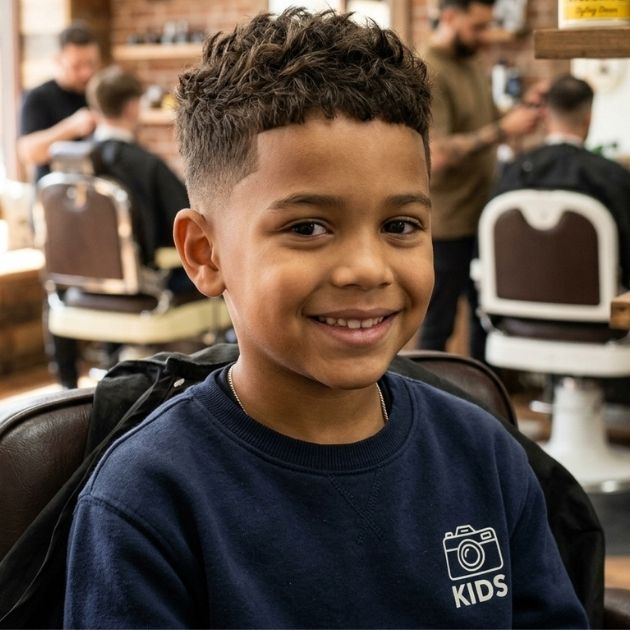
Short, choppy layers on top with a matte finish give this cut a natural, effortless look. It works especially well for boys with straight to wavy hair.
Low Taper Fade with Curly Top
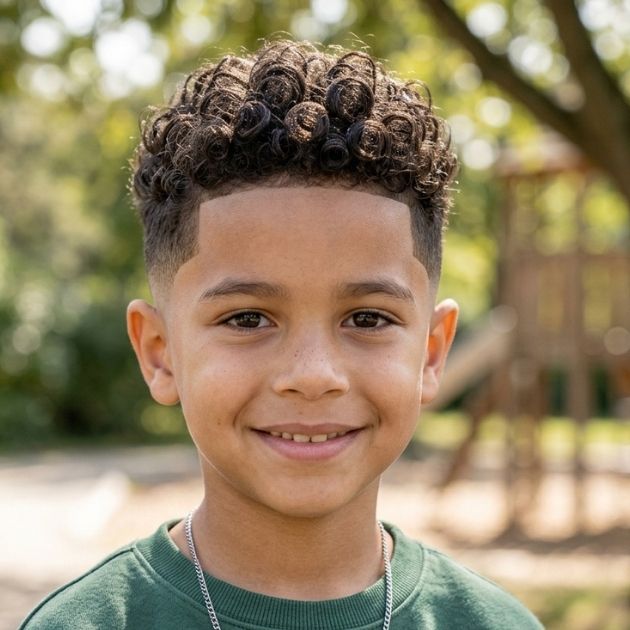
Natural curls are left longer on top while the sides fade low and tight. This style needs minimal product, since the curls provide texture on their own.
Low Taper Fade with Comb Over
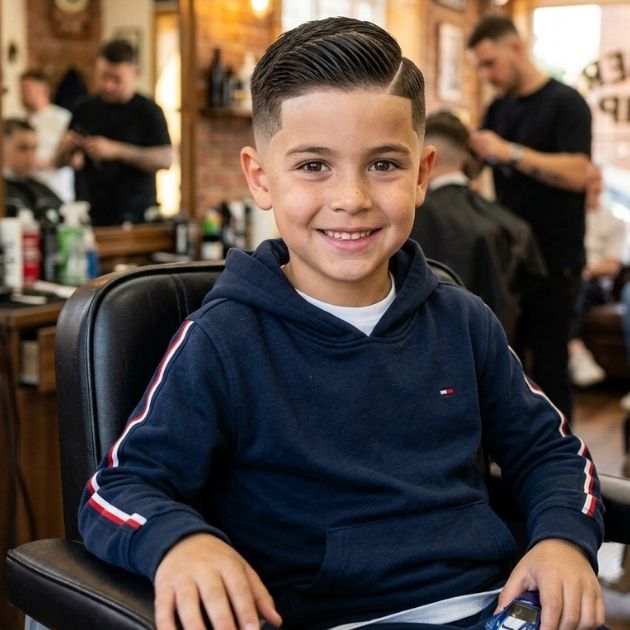
A classic side part with the top combed neatly to one side. It reads slightly more formal, making it a favorite for family events and school portraits.
Low Taper Fade with Pompadour
Volume is built up and back at the front, tapering into the low fade at the sides. This works best for boys with thicker hair that holds shape.
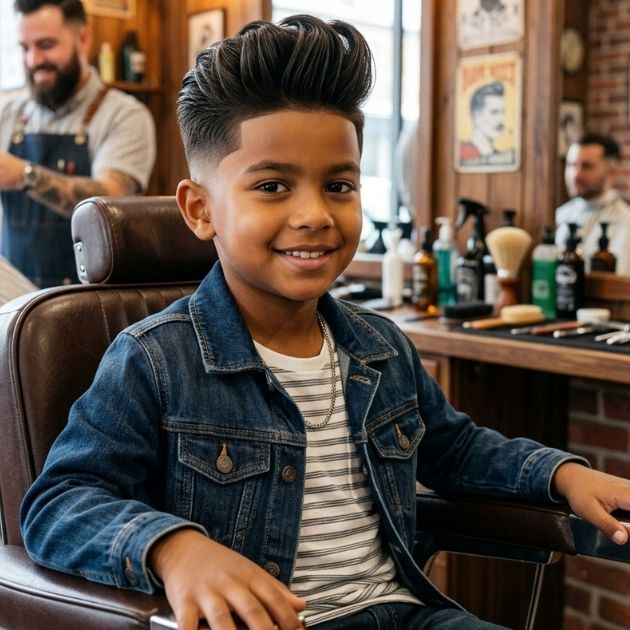
Low Taper Fade with Buzz Cut
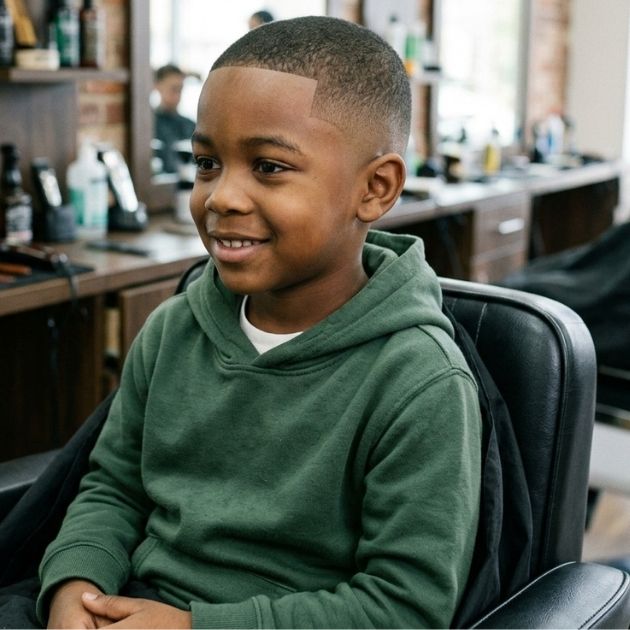
The simplest combination on this list. Short, even length on top blends into the low fade for an ultra-low-maintenance look that suits any age.
Low Taper Fade with French Crop
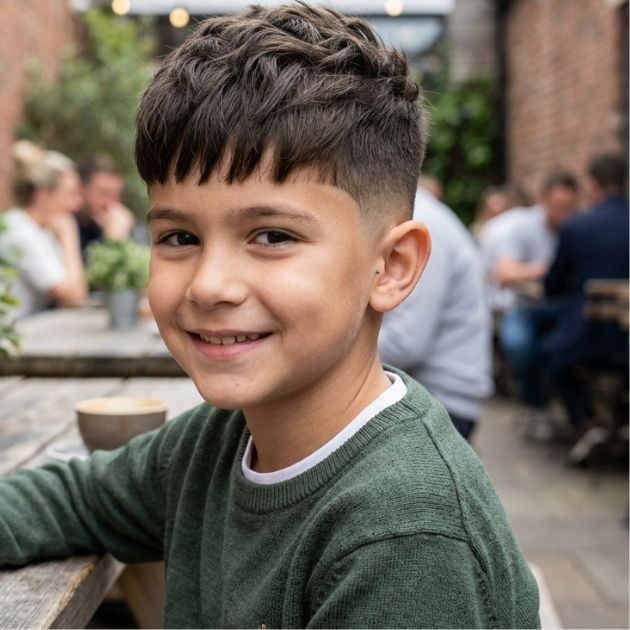
A fringe is left slightly longer at the front and cut straight across, paired with a low fade at the sides. It has a European, tidy appearance.
Low Taper Fade with Mohawk / Faux Hawk
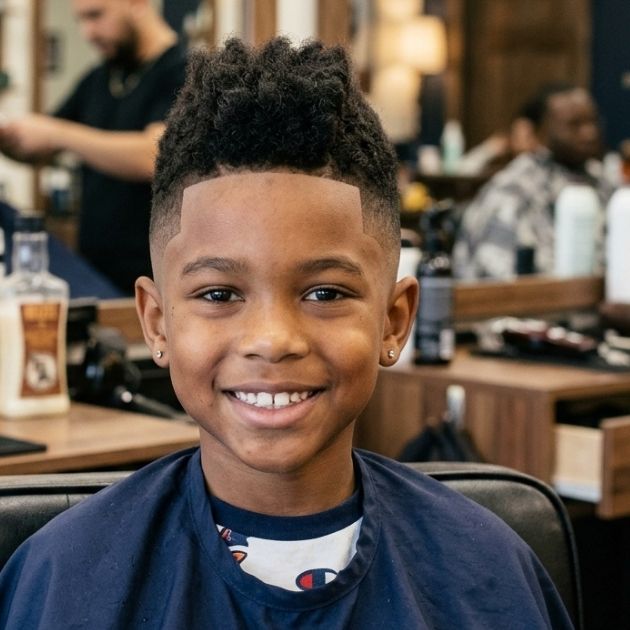
A strip of longer hair runs down the center while the sides fade low. The faux hawk version keeps the sides less shaved than a true mohawk, making it easier to restyle.
Low Taper Fade with Side Part
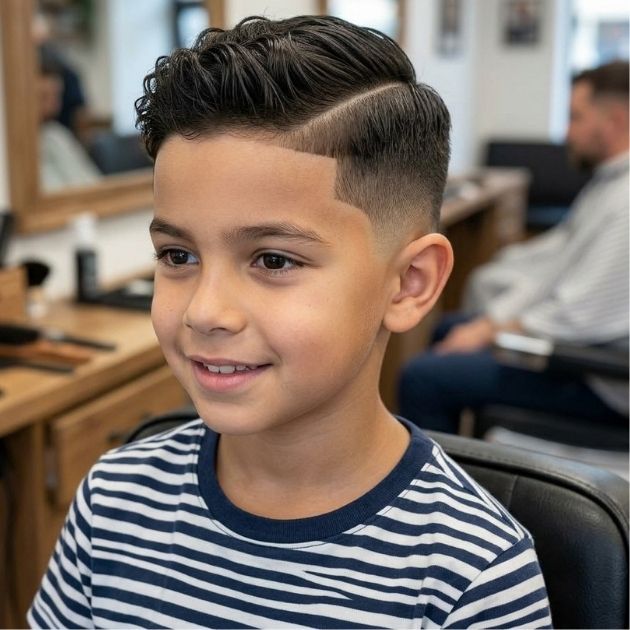
A hard or soft line is shaved or combed to create a defined side part, then blended into the low fade. This is one of the most requested styles for boys aged 6 to 12.
Low Taper Fade with Afro Top (for Black Kids)
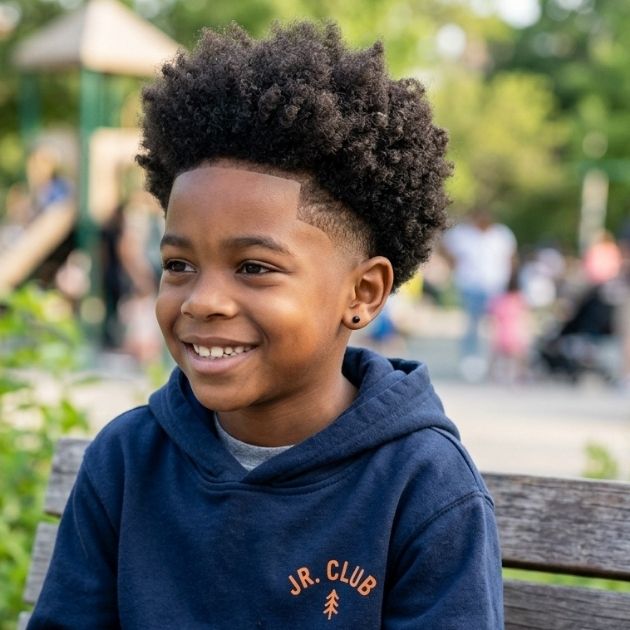
Natural afro texture is left full on top, with a clean low fade framing the hairline. This combination highlights natural curl pattern while keeping the cut sharp.
Low Taper Fade with Broccoli Cut
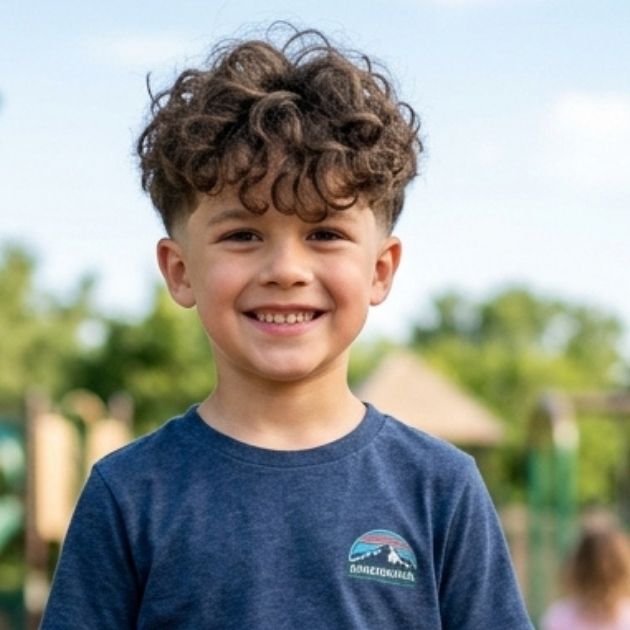
Curly or coily hair is left longer and rounded on top, resembling the trending “broccoli” silhouette, paired with a subtle low fade underneath.
Low Taper Fade with Crew Cut
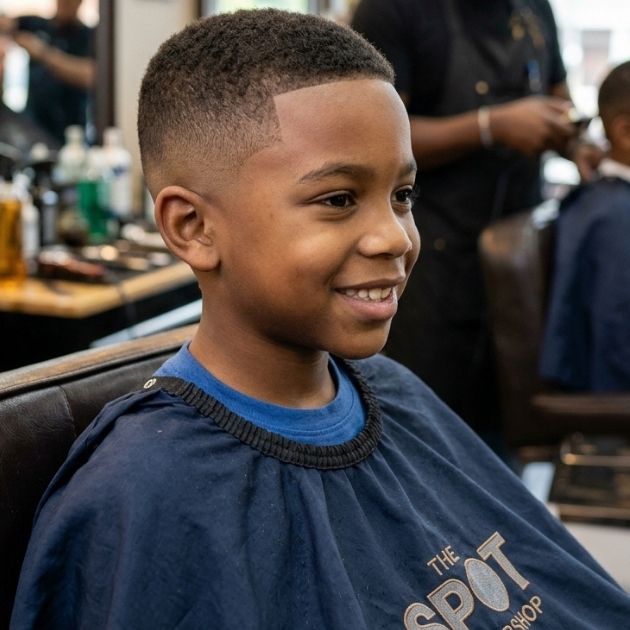
A short, uniform length on top that tapers gently into the fade. It is one of the most school-friendly options on this list.
Low Taper Fade with Slicked-Back Top
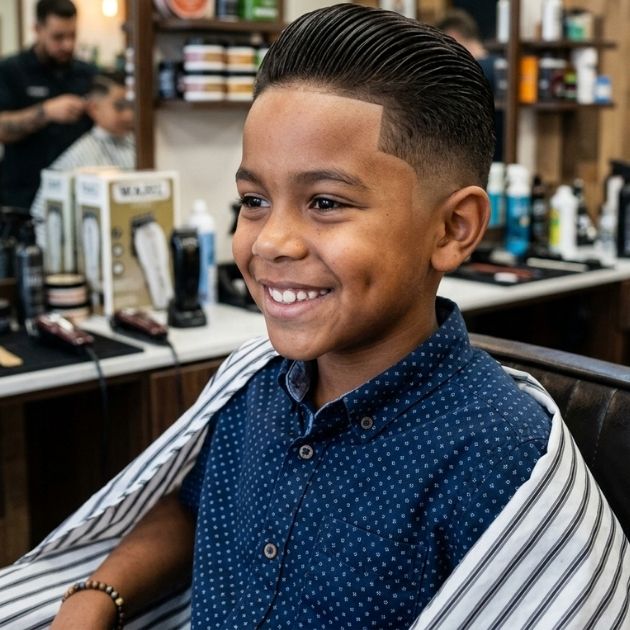
Hair on top is styled backward using a light pomade, creating a polished look that pairs well with the clean lines of a low fade.
Low Taper Fade with Spiky Top
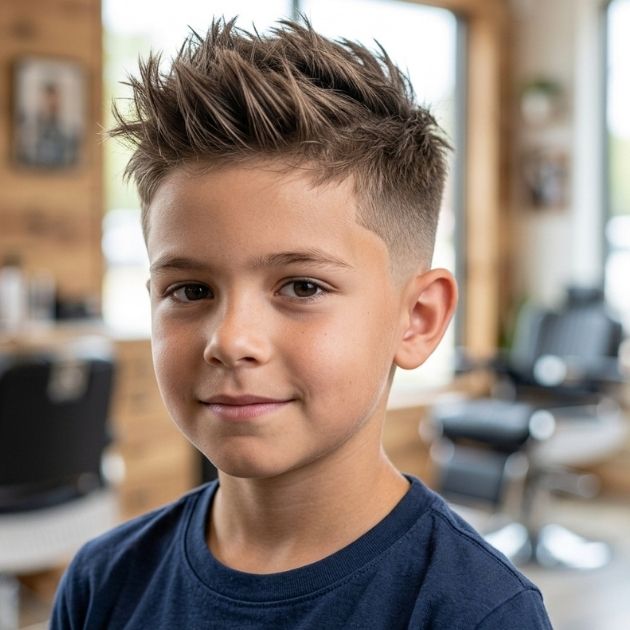
Short spikes styled with a matte or medium-hold product add texture and height, contrasting nicely with the smooth low fade at the sides.
Low Taper Fade with Modern Mullet
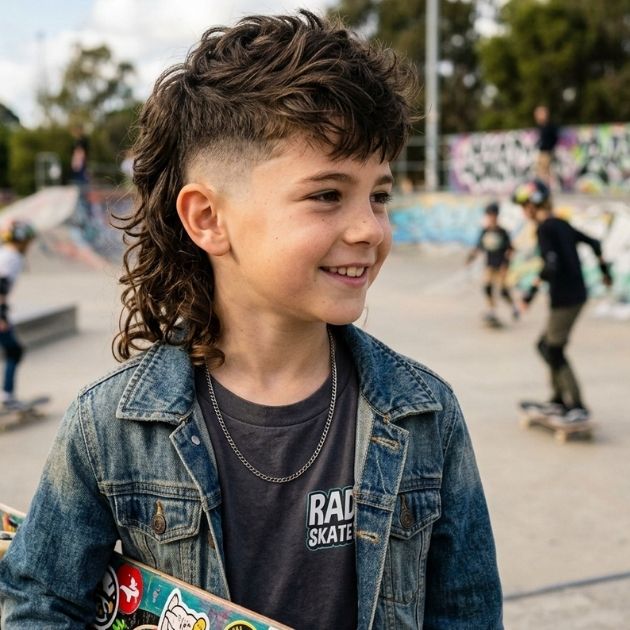
Length is kept longer at the back while the sides fade low. This bolder style has grown in popularity among tweens and teens who want to stand out.
Low Taper Fade with 360 Waves (for Black Boys)
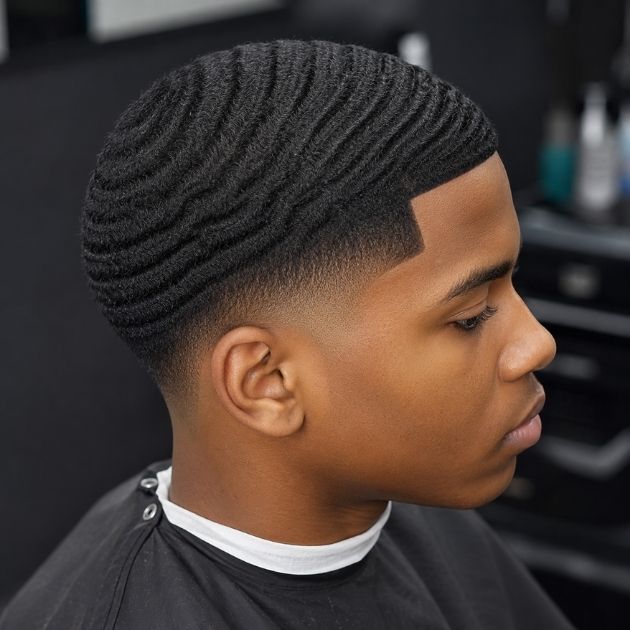
Hair is cut very short and brushed consistently to create a wave pattern across the scalp, framed by a crisp low fade. This style requires a durag or wave cap between visits to maintain the pattern.
Which Low Taper Fade Works Best for Your Child’s Hair Type?
Hair type changes how a low taper fade should be cut and styled, even when the general shape stays the same.
Low Taper Fade for Curly Hair Boys
Curly hair holds volume naturally, so barbers often leave more length on top to let curls form fully. Scissor-over-comb techniques work better than clippers on top for preserving curl pattern.
Low Taper Fade for Straight Hair Boys
Straight hair shows every line clearly, so precision matters most here. Textured crops and comb-overs tend to look cleanest on straight hair types.
Low Taper Fade for Wavy Hair Boys
Wavy hair sits in between curly and straight, giving natural texture without much effort. A textured crop or spiky top style makes the most of this natural movement.
Low Taper Fade for Thick Hair Boys
Thick hair can get heavy and lose shape quickly, so regular thinning with texturizing shears helps. Pompadours and slicked-back styles work well because thick hair holds these shapes without much product.
Low Taper Fade for Fine Hair Boys
Fine hair needs shorter top lengths to avoid looking flat or thin. Buzz cuts, crew cuts, and short textured crops give the illusion of fuller hair.
Low Taper Fade for Black Kids (Afro / 4C Hair)
Afro and 4C hair textures pair especially well with low fades because the contrast between coily top hair and the smooth fade creates striking definition. Barbers experienced with textured hair should always be sought out, since improper technique can cause uneven fading or bumps.
What Is the Best Low Taper Fade for Each Age Group?
Age affects both what is appropriate and what a child can tolerate during the cut.
Baby Taper Fade: Is It Appropriate for Babies Under 2?
Most barbers recommend waiting until a child is at least 18 to 24 months old before attempting a fade. Babies rarely sit still long enough for clipper work near the ears and neckline, which increases the risk of nicks.
Toddler Taper Fade (Ages 2–5): What Works Best?
Simple, forgiving styles work best at this age since toddlers move constantly. Buzz cuts and crew cuts paired with a low fade are the fastest and safest options.
Little Boy Taper Fade (Ages 5–7) Playful But Neat
Kids this age can usually sit through a full cut, opening the door to styles like textured crops and side parts. Parents often request slightly longer tops that are easy to comb before school.
School-Age Boys Taper Fade (Ages 8–12) The Core Audience
This is the largest group requesting low taper fades, and also the group most influenced by trends. Comb-overs, spiky tops, and curly top styles are the most requested cuts in this age range.
Teen Taper Fade (Ages 13–17) Style-Driven Choices
Teens have the most say in their own haircut and often bring reference photos. Mullets, pompadours, and mohawks become popular as teens look to express individuality.
Quick Age Reference Guide
| Age Range | Recommended Styles | Sit-Still Tolerance |
| Under 2 | Not usually recommended | Very low |
| 2 to 5 | Buzz cut, crew cut | Low to moderate |
| 5 to 7 | Textured crop, side part | Moderate |
| 8 to 12 | Comb over, spiky top, curly top | High |
| 13 to 17 | Mullet, pompadour, mohawk | High |
Which Low Taper Fade Suits Your Child’s Face Shape?
Face shape influences how much length should stay on top and where volume should sit.
Low Taper Fade for Round Faces
Adding height on top helps elongate a round face. Pompadours and spiky tops work better than flat, wide styles.
Low Taper Fade for Oval Faces
Oval faces are considered the most versatile, so nearly every style on this list works well. Comb-overs and textured crops are especially flattering.
Low Taper Fade for Square Faces
Softer, textured tops help balance a strong jawline. Curly tops and broccoli cuts complement square faces nicely.
Low Taper Fade for Heart-Shaped Faces
Keeping some width at the temples and avoiding too much height balances a narrower chin. Side parts and crew cuts tend to work well here.
How Do You Tell the Barber What Low Taper Fade You Want?
Clear communication prevents most bad haircut experiences. Barbers rely on specific language, not vague descriptions.
The Complete Parents’ Barber Scripts
- “Low fade, guard 1 at the bottom blending into guard 3 on top.”
- “Keep the top long enough to style with fingers, no scissors above two inches.”
- “Low taper fade with a hard part on the left side.”
- “Skin fade only at the neckline, taper everywhere else.”
Essential Questions to Ask the Barber Before the Cut
- Have you cut a fade on a child this age before?
- How much length will be left on top after the cut?
- Can you show me a similar finished style on your portfolio?
- Will this style still look neat in three to four weeks?
What NOT to Say at the Barbershop
Avoid vague phrases like “just make it short” or “you know, the popular one,” since interpretations vary widely between barbers. Never assume a barber knows what a specific TikTok or YouTube trend looks like without a reference photo.
How Do You Maintain a Low Taper Fade for Kids at Home?
A good fade only stays sharp with consistent care between barber visits.
The Complete Weekly Home Maintenance Routine
- Wash hair two to three times a week with a mild, sulfate-free shampoo
- Apply a small amount of product only to the top, never near the fade lines
- Brush or comb daily to train the direction of growth
- Trim any stray neck hair with clippers weekly if regrowth appears fast
How to Do a Quick At-Home Touch-Up Between Barber Visits
Parents can use a trimmer with a guard one size larger than the barber used to clean up the neckline and sideburns. This is not a full re-fade, just a light refresh to extend the sharp look by a week or two.
How to Keep Curly Hair Looking Fresh Between Trims
Curly tops benefit from a leave-in conditioner applied on damp hair to prevent frizz. Avoid brushing curly hair when dry, since this breaks curl pattern and creates a frizzy, unkempt look.
Signs It Is Time for a Barber Visit
- The fade line has grown out and looks uneven
- Hair on top is falling into the eyes
- Neck hair is visibly longer than the rest of the fade
- The original shape is hard to restyle even with product
How Much Does a Kid’s Low Taper Fade Haircut Cost?
Prices vary widely based on location, barber experience, and shop type.
Kids Taper Fade Price Breakdown
| Location Type | Average Price Range |
| Chain salon (kids-focused) | 15 to 25 dollars |
| Local barbershop | 20 to 35 dollars |
| Premium or specialty barber | 35 to 60 dollars |
| Mobile or at-home barber | 25 to 45 dollars |
Smart Ways to Save Money on Kids’ Taper Fades
- Ask about kids’ discount days, common at many barbershops midweek
- Book longer intervals between cuts by choosing styles that grow out well
- Look for barber apprentices who often charge less while building a portfolio
- Bundle sibling appointments for potential multi-cut discounts
Is a Low Taper Fade Haircut School-Appropriate for Boys?
Most schools allow low taper fades, but the safest choice depends on how the dress code is worded.
What Most School Dress Codes Say About Fade Haircuts
Many school policies focus on extreme styles like shaved patterns, unnatural colors, or very high fades rather than fades themselves. A low fade with a conservative top style rarely raises concerns.
The Safest Low Taper Fade Choices for Strict Schools
- Crew cut with low fade
- Textured crop with low fade
- Comb over with low fade
These three options read as neat and traditional even to the strictest dress code reviewers.
School-Safe Fade Checklist for Parents
- Confirm the school handbook does not restrict fades specifically
- Avoid designs, lines, or shaved patterns if the school bans them
- Keep top length within any stated maximum, if one exists
- When in doubt, ask the school office before the appointment
What Are the Best Styling Products for a Kids’ Low Taper Fade?
The right product depends on hair type and desired finish.
- Matte clay: Best for textured crops and spiky tops, gives strong hold without shine
- Water-based pomade: Ideal for slicked-back and comb-over styles, washes out easily
- Curl cream or leave-in conditioner: Best for curly and afro tops, defines curls without stiffness
- Light sea salt spray: Adds texture for wavy hair without heavy hold
- Wave brush and pomade: Essential combination for maintaining 360 wave patterns
Always choose kid-safe, tear-free formulas when possible, since these products often end up near the eyes during styling.
Frequently Asked Questions
What is the best age to start a low taper fade for a boy?
Most barbers recommend starting around age 2, once a child can sit reasonably still. There is no strict age requirement, only a patience requirement.
Does a low taper fade work for curly or afro hair?
Yes, low taper fades work extremely well with curly and afro hair, often creating the most striking contrast. A barber experienced with textured hair should always be chosen.
How often does a kid’s low taper fade need a trim?
Most low taper fades need a refresh every 3 to 4 weeks. Faster hair growth may require touch-ups every 2 to 3 weeks.
Is a low taper fade allowed at most schools?
Yes, low taper fades are allowed at the majority of schools since they read as neat and conservative. Always check the specific dress code if the school has strict grooming rules.
How much does a kid’s taper fade haircut cost on average?
Prices typically range from 15 to 45 dollars depending on location and barber experience. Premium barbershops may charge up to 60 dollars.
What is the difference between a taper and a low fade?
A taper never reaches skin level, while a fade blends down to bare or near-bare skin. A low taper fade combines both, with the skin-close fading limited to the lower area near the ears and neck.
Can I maintain a low taper fade at home between barber visits?
Yes, light touch-ups on the neckline and sideburns using a trimmer can extend the fresh look. A full re-fade should still be left to a professional barber.
Final Thoughts
The low taper fade earned its popularity honestly. It flatters nearly every hair type, face shape, and age group, while staying practical enough for school and low maintenance enough for busy family schedules.
Choosing the right variation comes down to three things: your child’s hair type, their age and patience level, and how strict their school dress code is. Use the scripts and checklists above at the next barber visit, and the result should be a haircut that looks sharp for weeks, not just days.

Charlotte Aiden is the founder and editor of FaxhionTips.com, where he shares practical insights on the latest haircut trends, hairstyles, grooming tips, and hair care advice. Passionate about modern style and easy-to-follow beauty guidance, Charlotte creates well-researched content to help readers choose the best haircuts and maintain healthy, stylish hair with confidence.