

The mullet is no longer a throwback joke. In 2026, it’s one of the most requested boys haircuts in barbershops, and for good reason. It’s easy to grow, forgiving between trims, and flexible enough to suit curly, wavy, or pin straight hair.
This guide breaks down every version of the boys modern mullet worth knowing, from soft school friendly cuts to sharp burst fades. You’ll also get real barber phrasing, age based trim schedules, and simple home care tips so the style actually holds up between salon visits.
What Is a Boys Modern Mullet
A boys modern mullet keeps the top and sides short and neat while leaving noticeably more length at the back and crown. Unlike the exaggerated 1980s version, today’s take is cleaner and more tailored to school and sports schedules.
Most modern mullets pair a fade or taper on the sides with texture on top, then blend smoothly into the longer back section. The contrast is intentional, but it’s controlled rather than extreme. That balance is exactly why parents and kids both tend to like it. It reads as stylish at pickup and still passes most dress codes.
Three features define the look:
- Short, tidy sides with a fade or taper
- Textured or slightly longer top for movement
- A longer back section that can be styled or left natural
How to Choose the Right Version
Two things really decide which mullet variation works best: hair texture and how much time your family has in the morning.
If mornings are already rushed, ask for a shorter back and a soft taper instead of a hard fade. It’s a genuinely low maintenance haircut that grows out evenly, so you’re not booking a barber every two weeks. If your son wants more edge, a fade sharpens the sides and adds instant definition without making the cut harder to manage day to day.
Hair type matters just as much:
- Curly hair does best with soft layers that let the curl pattern show instead of fighting it.
- Straight hair holds shape longer with a taper fade mullet, since straight strands show every uneven line.
- Fine hair looks fuller with shorter layers up top, because extra length can flatten out fast.
- Thick hair can usually handle more length in the back without looking bulky.
An easy mullet haircut for school boys doesn’t have to mean boring. Even a simple taper with a slightly longer back reads as intentional rather than overgrown.
The Best Boys Mullet Haircut Variations
1) Classic Boys Mullet

This is the starting point for most families. Tidy sides, a lightly textured top, and a back that lands around the collar. Nothing dramatic, nothing extreme.
It works on straight, wavy, and curly hair alike, and it photographs well for school pictures. If your son has never had a mullet before, this is the safest place to begin.
2) Boys Mullet Fade
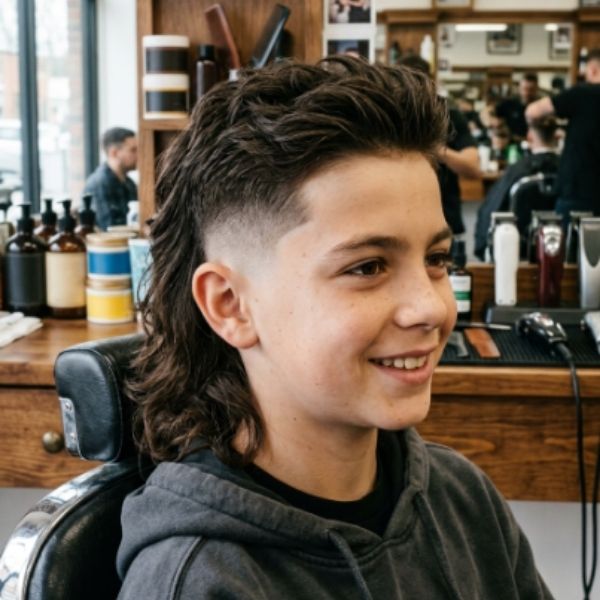
Add a fade to the sides and you get the boys mullet fade. The sides taper down smooth while the top stays fuller and the back stays long.
This is one of the most popular boys haircuts right now because it balances an edgy silhouette with a neat, groomed finish. It works well for kids who already have some hair confidence and want a bolder statement.
3) Short Mullet Haircut Boy

For families who want the mullet shape without a lot of length, the short mullet haircut boy version keeps everything close. The back extends just past the natural hairline, barely grazing the neck.
It’s a good entry option for younger boys or for parents who aren’t ready to commit to a longer back yet.
4) Curly Boys Modern Mullet
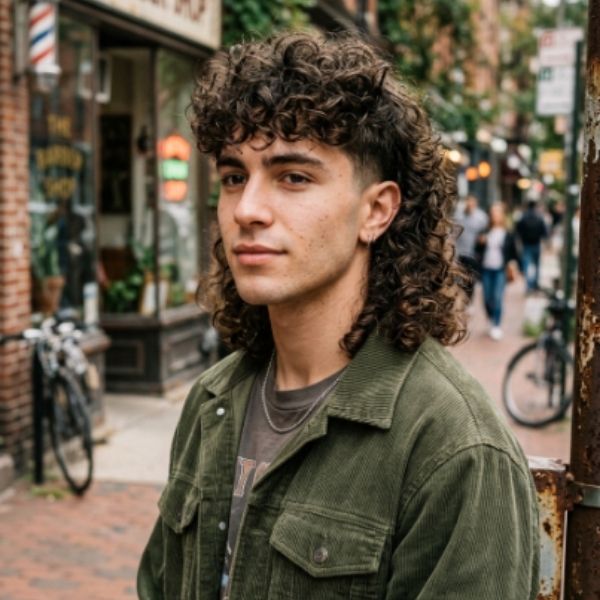
Curly hair and mullets are genuinely a great match. A curly mullet works best with soft layers in the back that let the natural curl pattern breathe and bounce, rather than heavy, blunt cutting that weighs curls down.
Leave the top a touch longer to support the spring of the curl. A pea sized amount of leave-in conditioner helps control frizz, and air drying or diffusing on low heat keeps the curl pattern intact. Avoid brushing curly hair once it’s dry, since that breaks up the curl and adds frizz.
5) Boys Modern Mullet Straight Hair
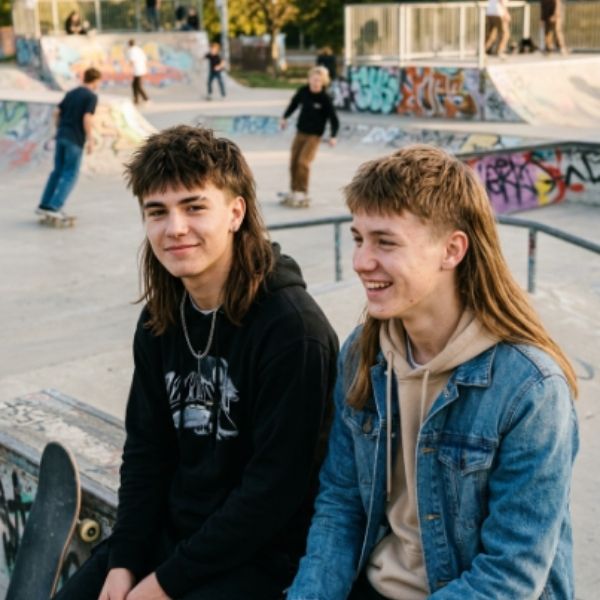
Straight hair shows every line, so texture matters more here than length. Choppy layers in the back keep the mullet from sitting flat and heavy, and a light taper on the sides avoids harsh, blocky edges.
A small amount of matte clay or texture cream through the top adds separation and stops the style from looking too sleek or too costume like.
6) Tapered Modern Mullet Haircut Boy
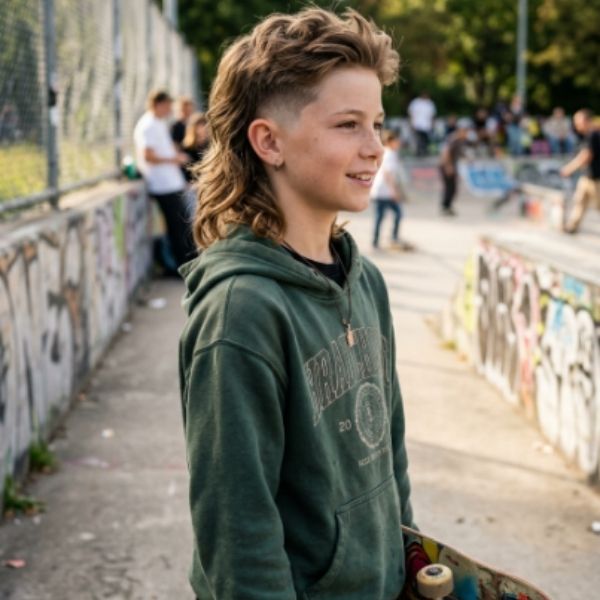
A taper is the gentler cousin of a fade. Instead of a sharp transition, the sides blend gradually from short to slightly longer, which grows out with far less visible awkwardness between trims.
This version suits younger kids especially well, since it’s forgiving if a trim gets pushed back a few extra weeks.
7) Burst Fade Boys Mullet Haircut
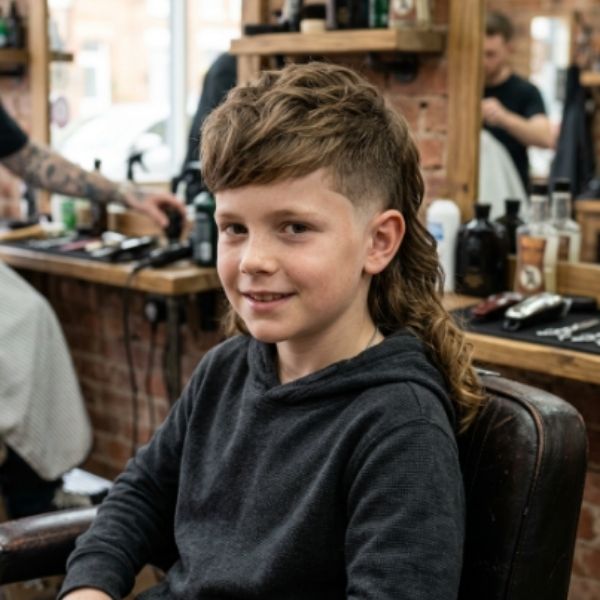
The burst fade curves around the ear rather than running in a straight line, which creates a rounded, contained blend. It’s a sharper, more detailed cut that pairs nicely with a longer, textured back.
Boys who already get regular fades tend to like this one, since it stands out without going too far into extreme territory.
8) Sporty Medium Mullet

Built for active kids, this version keeps the sides shorter and the back at a manageable, mid length that stays out of the eyes during practice or games. It’s a smart pick for boys who play soccer, football, or any sport where hair getting in the face is a real problem.
9) Wavy Surfer Mullet for Boys

This relaxed style leans into natural wave texture with a slightly shaggy top and a softly layered back. Sea salt spray and a bit of finger scrunching on damp hair bring out the wave pattern without looking overly styled. It suits boys who spend a lot of time outdoors or near water.
10) Fringe Mullet

A longer front fringe sweeps forward and frames the face, softening stronger features and drawing attention to the eyes. It pairs well with a tapered back and works especially well on boys with straight to slightly wavy hair. A quick blow dry helps set the fringe direction each morning.
11) Low Fade Modern Mullet
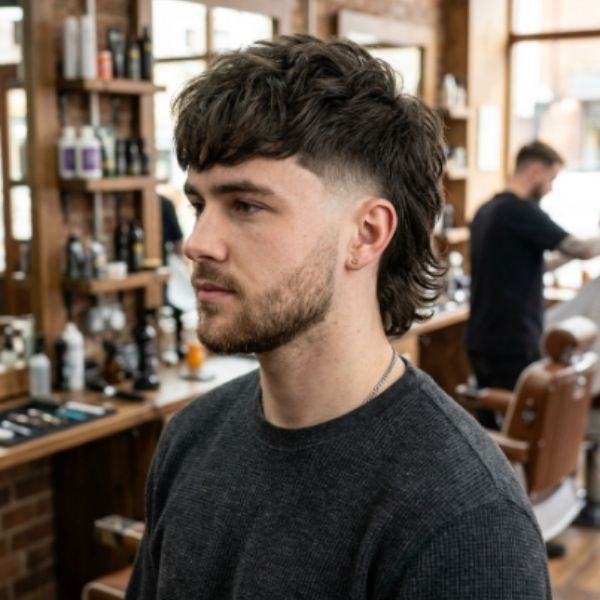
For a more subtle fade, try the low fade mullet. The fade starts close to the ears instead of higher up the head, keeping the contrast understated and easy to wear.
It’s a smart pick for boys who want a modern haircut that isn’t too flashy, and it tends to age well between trims since the fade line sits lower and grows out more gradually.
12) Longer Back, School Safe

Some schools have strict rules about hair length or shaved patterns. This version keeps a moderate back length, a low fade or soft taper, and zero shaved designs, which passes nearly every dress code we’ve come across. It still reads as a clear mullet shape without pushing any boundaries.
Quick Age and Care Guide
Trim frequency and style choice should shift as kids get older and their routines change.
| Age Range | Best Style Type | Sides | Trim Frequency |
| Toddler (2 to 4) | Soft taper, minimal length gap | Light taper | Every 6 to 8 weeks |
| Young kid (5 to 8) | Classic or short mullet | Taper | Every 6 to 8 weeks |
| Tween (9 to 12) | Fade or textured crop | Low or mid fade | Every 4 to 6 weeks |
| Teen (13 to 16) | Fade, taper, or fringe mullet | Fade or taper | Every 4 to 6 weeks |
Younger kids generally do better with a softer taper, since it’s less noticeable when it grows out and doesn’t require frequent barber visits. Older kids chasing a sharper look, like a burst fade or low fade, will need more regular upkeep to keep the line crisp.
Daily Styling That Kids Can Do
Most boys mullets are simple enough for kids to style themselves once they know the basic steps.
- Towel dry hair until it’s just damp, not soaking wet.
- Work a small amount of light gel or texture cream through the top.
- Scrunch curls or waves gently with fingers to encourage natural movement.
- Comb straight styles forward, then push the top hair slightly to one side.
- Let the back hang natural. There’s no need to overthink or overstyle it.
Keeping the routine to a few steps means kids actually do it, instead of walking out the door with flat, unstyled hair every morning.
Care and Upkeep
A mullet holds its shape well, but a few habits keep it looking sharp between trims.
- Trims: every 4 to 6 weeks keeps the shape clean, though younger kids with softer tapers can often stretch to 8 weeks.
- Washing: two to three times a week is plenty. Washing daily strips natural oils and dries hair out, especially for curly textures.
- Products: a light gel or sea salt spray works better than heavy wax for kids, since wax can weigh down fine hair and attract dirt.
- Brushing: a wide tooth comb prevents tangles in the longer back section without disrupting curl or wave pattern.
- Sun and chlorine: rinse hair after swimming and apply a leave-in conditioner, since both can dry out and fade the longer back strands faster than the rest of the cut.
Barber Talk That Works
Walking in with the right words saves everyone time and avoids a haircut that misses the mark.
For a classic ask, say: “Keep the sides tight, add length in the back, and blend it with a fade.”
For texture, say: “Leave the top a bit choppy, don’t make it too clean.”
For younger kids or a first fade, say: “Soft taper, nothing too sharp, this is his first fade.”
For curly hair, ask for soft layers and close sides to frame the face without losing curl volume. For straight hair, request choppy layers in the back so it doesn’t sit flat and heavy.
Be specific about length too. Saying “just above the collar” gets a far more predictable result than saying “a little long.”
Frequently Asked Questions
What’s the best mullet for a boy with curly hair?
A curly mullet with soft back layers and close sides works best. It lets the natural curl pattern show without adding unnecessary bulk.
How often should a boys mullet be trimmed?
Every 4 to 8 weeks depending on age and hair growth speed. Younger boys with softer tapers can usually stretch the gap longer.
Is a mullet good for school?
Yes, in most cases, especially with a softer fade and a moderate back length. Always check your school’s specific dress code first.
Can a mullet work for sports?
Absolutely. A sporty medium mullet keeps the sides short and the back at a manageable length that stays out of the eyes during activity.
What’s the difference between a fade and a taper?
A fade creates sharp, high contrast blending and needs more frequent trims. A taper blends more gradually and grows out with far less visible awkwardness.
How much length is needed to start a mullet?
Most barbers suggest at least two to three inches at the back before the cut, otherwise there isn’t enough length to create real contrast with the sides.
Conclusion
The boys mullet haircut earns its popularity in 2026 because it genuinely works for almost every hair type and lifestyle. Whether it’s a soft taper for a first time cut, a curly mullet that lets natural texture shine, or a sharp burst fade for an older kid who wants an edge, there’s a version that fits.
Pick the style based on hair texture and how much daily upkeep your family realistically has time for, bring clear barber phrasing to the appointment, and stick to a trim schedule that matches your son’s age. Get those three things right, and the cut will look intentional at every stage of growth, not just fresh out of the chair.

Charlotte Aiden is the founder and editor of FaxhionTips.com, where he shares practical insights on the latest haircut trends, hairstyles, grooming tips, and hair care advice. Passionate about modern style and easy-to-follow beauty guidance, Charlotte creates well-researched content to help readers choose the best haircuts and maintain healthy, stylish hair with confidence.