A skullet haircut is one of those styles you either love on sight or need a minute to process. It pairs a shaved or closely cropped top with long, untouched hair at the back, and the contrast is exactly the point. Once dismissed as a punk rebellion or an accident of male pattern baldness, it has clawed its way back into barbershops thanks to footy stars, musicians, and a wave of men who are done pretending thinning hair is something to hide.
This guide breaks down everything you need to know before you commit. You’ll learn what actually separates this cut from a mullet, why it’s trending again, who it suits, and ten distinct variations worth showing your barber. We’ll also cover how to ask for the cut without confusing your stylist, plus the maintenance routine that keeps it sharp instead of scruffy.
What is a Skullet?
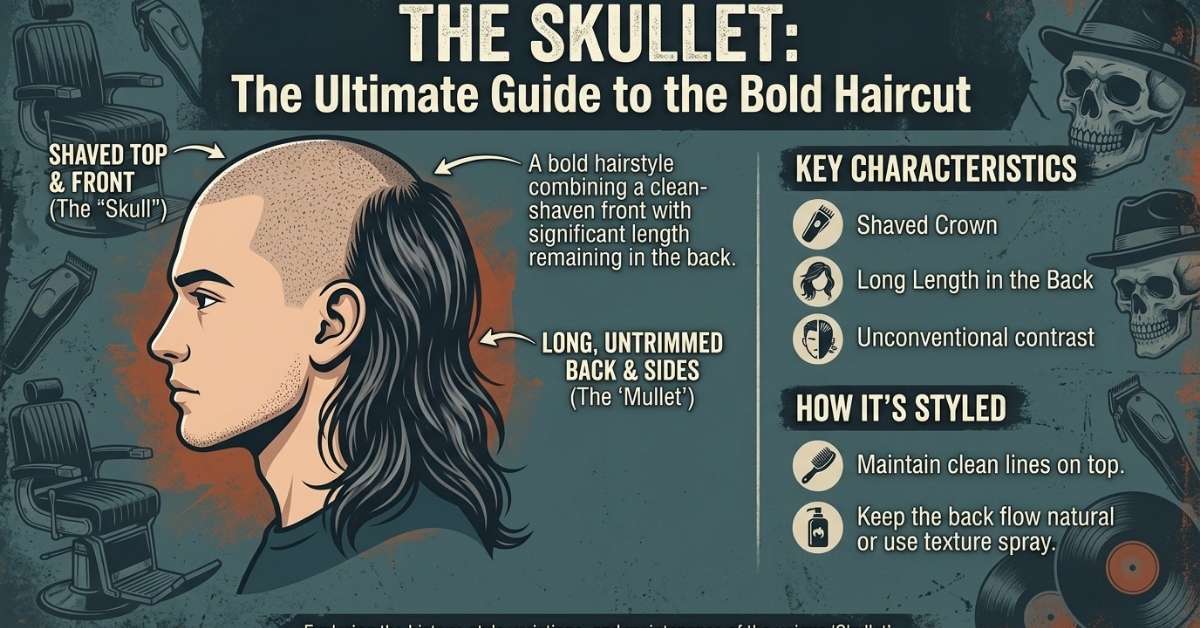
A skullet is a hybrid hairstyle that combines a shaved or very short crown with long hair left at the back of the head. Think of it as a mullet that’s had the top completely stripped away, leaving a bare or buzzed crown up front and a curtain of length trailing behind.
The name itself is a direct mashup of “skull” and “mullet,” and there’s no subtlety in that branding. Where a standard mullet keeps hair on top and simply tapers the sides, this cut removes the top section almost entirely, sometimes down to the skin, sometimes with a light buzz. The sides can be shaved, faded, or kept short depending on the variation you choose.
This cut isn’t as new as social media makes it look. Historians have traced similar shaved-crown-and-long-back styles back to ancient warriors and even Civil War-era portraits, long before punk and skinhead subcultures adopted it in the 1980s and 90s. Modern barbers now blend it with skin fades, textured crops, and curly top sections, turning what used to be a shock-value cut into something genuinely styled.
It’s also a practical option for men managing a receding hairline or thinning crown, working with the hair loss pattern instead of against it by shaving the thinning area and letting the still-thick back do the talking.
Further Reading
Guide to the Best Men’s Skincare Routine
A sharp haircut looks even better with healthy skin underneath it. Our men’s skincare guide walks through cleansing, moisturizing, and sun protection basics that pair well with any bold new look.
6 Best Fade Hairstyles for Men, According to a Barber
If the shaved crown here has you curious about fades in general, this barber-approved roundup covers the fade styles worth knowing before your next appointment.
Skullet vs Mullet: What’s the Difference?
The confusion between these two cuts is understandable since they share a family tree, but the difference comes down to one simple rule: a mullet keeps hair on top, this cut doesn’t.
A classic mullet follows the old “business in the front, party in the back” formula. The front and sides stay relatively short and neat while the crown retains a full head of hair that blends into the longer back section. It’s a length gradient, not a stark cutoff.
This style removes that gradient entirely. The top and often the front hairline are shaved down to skin or clipped extremely short, creating a hard visual break before the long back section begins. There’s no blending the crown into the length behind it because there’s essentially nothing left up there to blend.
Here’s a quick side-by-side to make the distinction clear:
- Top of the head: Mullet keeps hair; skullet shaves or buzzes it away.
- Visual contrast: Mullet has a gradual taper; skullet has a hard, dramatic line.
- Best for: Mullet suits men who want length everywhere; skullet suits men managing thinning hair or chasing a bolder statement.
- Styling commitment: Mullet is comparatively low-key; skullet demands more confidence and more frequent barber visits to maintain the shaved section.
In short, every version of this cut borrows the long-back DNA of a mullet, but not every mullet is bold enough to go this far.
Why the Skullet is Trending Again
This comeback isn’t random. A handful of high-profile athletes and public figures have put the style back in front of millions of people, and social platforms did the rest.
Australian rules football star Dustin Martin is widely credited with the current resurgence, wearing a crew-cut version that’s become so associated with him that some barbers simply call it “the Dustin Martin.” Rugby player Jai Arrow has worn a similar version, helping the cut gain traction across sports culture.
Beyond sport, this trend taps into a broader shift in men’s grooming: styles that once signaled rebellion are now read as confidence. Barbers report more requests for fade-integrated versions that feel modern rather than retro, proof that the cut has been absorbed into mainstream men’s style rather than staying a subculture relic.
There’s also a practical driver behind the trend. Many men start noticing hair thinning or a receding hairline by their late twenties, and this cut offers a way to lean into that change instead of disguising it.
Who Suits a Skullet Haircut?
It isn’t a universal cut, and that’s part of its appeal. It rewards a specific mix of hair type, face shape, and honestly, attitude.
- Hair type: Straight, wavy, curly, and coily hair can all work, as long as there’s enough length at the back to create real contrast against the shaved top.
- Face shape: Oval, square, and diamond face shapes tend to handle the style most naturally, since the strong top-to-back contrast can balance angular or elongated features. Round faces can still pull it off with a lower fade height or added volume at the back.
- Hair density concerns: Men dealing with a receding hairline or a thinning crown are often the best candidates, since the cut turns hair loss into an intentional style rather than something to hide.
- Lifestyle and confidence: This is a cut that gets noticed. It suits men in creative fields, music, sport, or any setting where standing out isn’t a liability. If you’re not comfortable with double takes, this style will test that quickly.
It’s also worth being honest that it doesn’t suit every setting. Conservative workplaces with strict grooming codes may not welcome the more extreme versions, though a subtle fade with moderate back length can often thread that needle.
Best Skullet Haircuts and Hairstyles for Men
These ten variations range from beginner-friendly to full commitment. Pick the one that matches your hair type, your face shape, and how much attention you’re ready to attract.
1. Skullet Fade
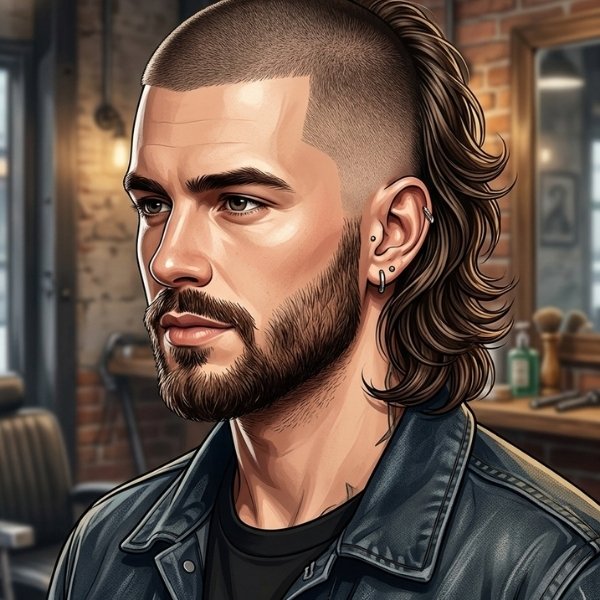
This variation softens the hard top-to-bottom contrast with a gradual fade running from the temples down to the skin, then leaves the back section long and untouched. It’s the most wearable entry point into the style, since the fade gives it a groomed, deliberate look rather than a jarring one.
Ask your barber for a skin or mid fade on the sides that blends smoothly into the shaved crown, keeping the transition tight and symmetrical. This version works particularly well for men who want the skullet’s statement without losing all sense of polish.
2. Crew Skullet
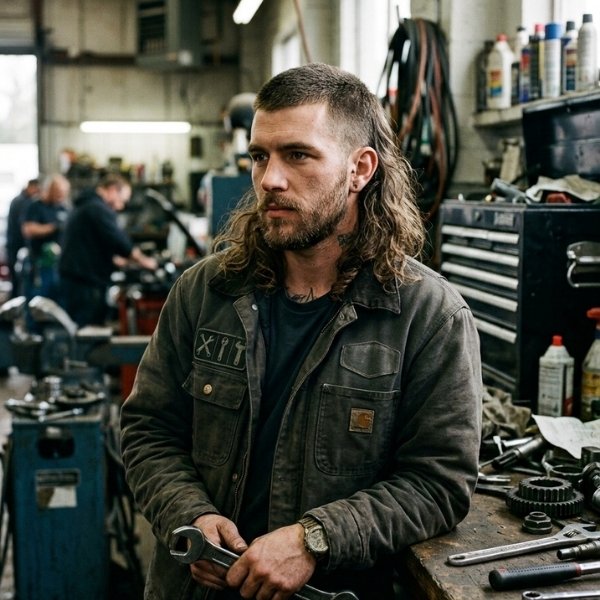
Instead of shaving the top completely bald, this version keeps a short buzzed layer up top, similar to a classic crew cut, before dropping into long hair at the back. It’s the cut most associated with Dustin Martin, and it’s become something of a signature among athletes who want the contrast without going fully bald on top.
The slight length on the crown gives you a bit more styling flexibility and a softer transition into the long back section, making it a solid middle ground between subtle and extreme.
3. Lion’s Mane Skullet
Built for men with thick, straight hair, this style lets the back grow out into a full, voluminous mane that fans out from the shaved crown. The bigger and bolder the back section, the more it lives up to its name.
This variation needs patience since it relies on serious length and volume at the back to create the mane effect. Regular trims to shape the growing length, rather than cut it short, keep it looking intentional instead of unruly.
4. The Double Take Skullet
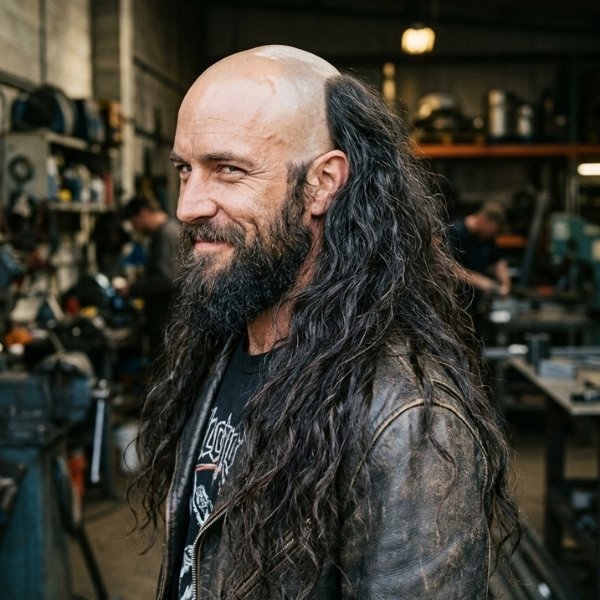
This is the no-holds-barred version: a completely shaved top, sharp line-ups, and a stark, uninterrupted drop into long hair behind it. There’s no fade to soften the transition, just a clean, precise line between bald skin and full length.
Getting this right depends entirely on the line-up. Ask your barber to keep the border between the shaved section and the long hair razor-straight, since any unevenness here is far more noticeable without a fade to disguise it.
5. Curly Skullet
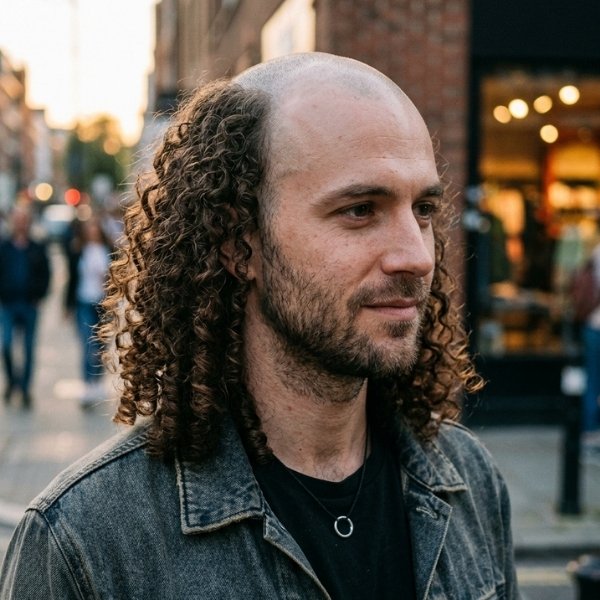
For men with naturally curly hair, this style channels all that texture into the back section while the top stays buzzed or shaved for contrast. The tighter the sides and top, the more dramatic the curls at the back appear by comparison.
A curl cream or light mousse helps define the curl pattern without weighing it down, and this style tends to need less daily styling effort than straighter skullet variations since curls naturally hold shape and volume.
6. The Afro Skullet
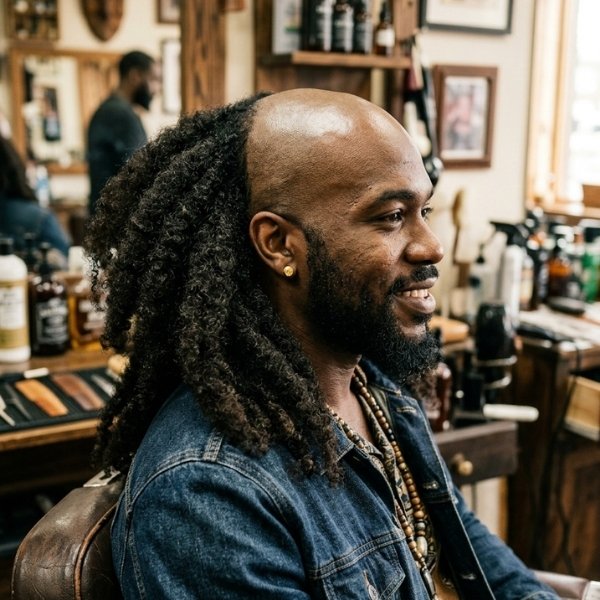
This variation takes coily hair and lets it stay full and rounded at the back, shaved crown included, creating one of the boldest silhouettes on this list. The rounded, high-volume shape of the afro contrasts sharply with the closely shaved top.
This version works best when the shaved sections are kept sharp and well-maintained, since a crisp line-up is what stops the look from reading as unfinished rather than intentional.
7. Balding Skullet
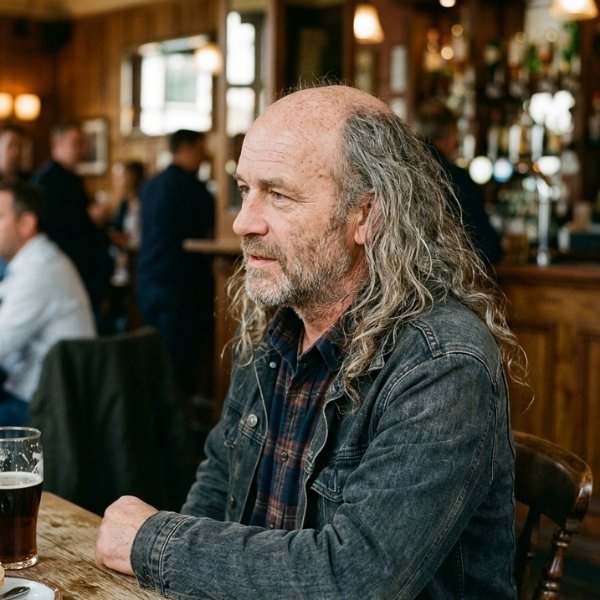
Rather than styling around thinning hair, this version embraces it directly. The top is shaved to match a naturally receding or thinning crown, while whatever length remains at the back is kept and grown out.
This is arguably the most practical entry on the list for men over thirty. It removes the need to disguise hair loss and instead turns it into the defining feature of an intentional, confident cut.
8. Shaggy Skullet
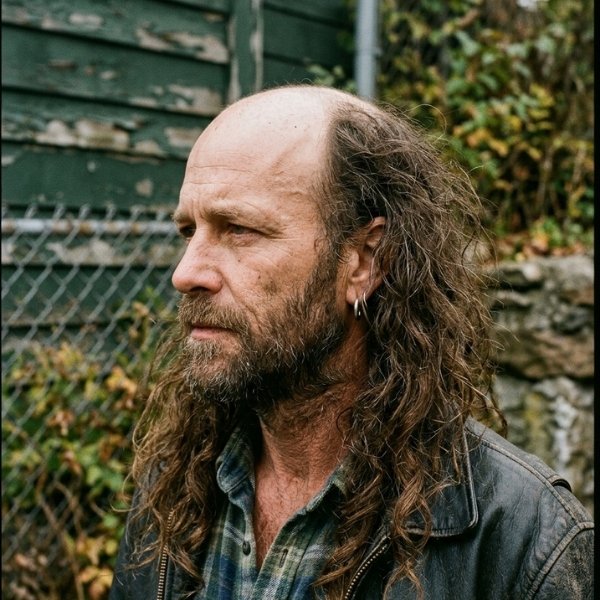
This version swaps a razor-sharp back for loose, textured layers that move naturally rather than sitting in one defined shape. Paired with a buzzed or lightly faded top, it reads as more relaxed and lived-in than the sharper variations.
This is a good choice for men who want the skullet’s silhouette without the high-maintenance grooming schedule some versions demand. A texturizing spray adds movement without requiring precise daily styling.
9. Long Skullet
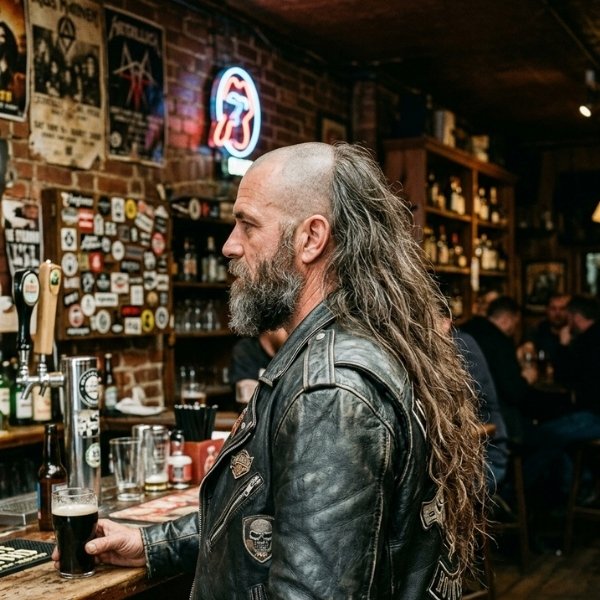
Considered the most extreme version of the cut, this style pairs a fully shaved or near-bald top with hair that extends well past the neck, sometimes to the shoulders. It’s the closest this haircut gets to a full mullet in terms of back length, just without any hair up top to soften it.
Because there’s so much length involved, regular trims to remove split ends are essential, even if you’re not cutting for shape. This version also benefits from a lightweight sea salt spray to add texture and prevent the length from looking flat.
10. Skullet with Beard
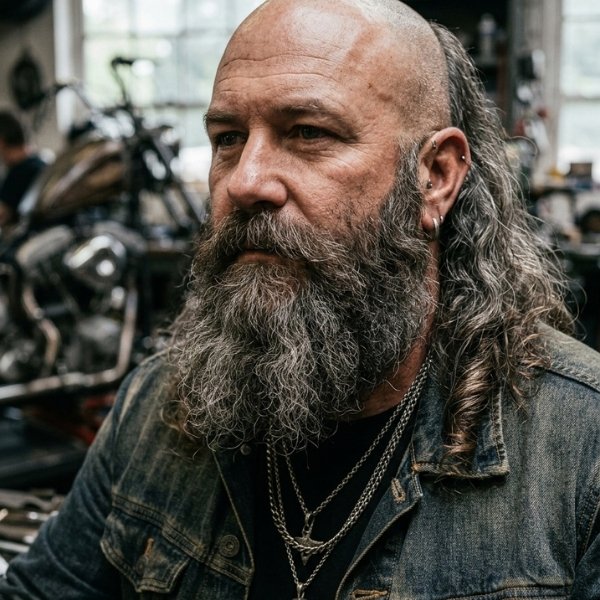
Pairing this cut with a full or well-groomed beard balances the shaved top with facial hair, softening the overall look and adding structure to the jawline. This combination is popular among men who want the edge without it dominating the entire face.
A beard also helps the style read as more deliberate and put-together, since the added facial hair signals grooming intent rather than simple neglect. Keep the beard trimmed and defined so it complements the sharp lines up top instead of competing with them.
How to Ask Your Barber for a Skullet Haircut
Saying “give me a skullet” can work with a barber who knows the term, but it’s smarter to be specific:
- Bring a reference photo. Skullet variations differ enormously, so a photo removes any guesswork about how short the top should be and how long the back should stay.
- Specify the top treatment. Tell your barber whether you want the crown fully shaved to the skin, buzzed with a guard, or faded gradually into the sides.
- Set a target length for the back. Give a rough measurement or reference point, like collar-length or shoulder-length, so there’s no confusion about how much to leave untouched.
- Discuss the sides. Decide whether you want a skin fade, a low fade, or simply short sides that match the top’s length.
- Ask about line-up sharpness. If you’re going for the double take skullet or another hard-edge style, make sure your barber knows precision on the border line is the priority.
- Mention your face shape and hair type. A good barber will adjust fade height or back volume to suit your features, so don’t skip this part of the conversation.
How to Maintain Your Skullet
The biggest maintenance challenge here is that the two sections age at completely different rates, so your routine needs to account for both.
- Schedule regular top touch-ups. A shaved or buzzed crown grows out fast and starts to blur the contrast within one to two weeks, so plan for touch-ups on that schedule if you want the sharp look maintained.
- Trim the back less frequently. The long section only needs a shape-up every three to four weeks, focused on removing split ends rather than cutting significant length.
- Keep the line-up crisp. The border between shaved and long hair is what makes the style read as intentional, so don’t let it grow soft or uneven between barber visits.
- Use the right products for your hair type. Pomade or wax works well for textured, matte finishes on the top section, while the long back benefits from leave-in conditioner to prevent dryness and frizz.
- Protect the scalp. A shaved or closely buzzed crown is exposed to more sun and friction than covered hair, so sunscreen or a hat is worth adding to your routine, especially in summer.
- Wash smart. Since the back section is longer and more prone to buildup, use a lightweight shampoo two to three times a week rather than daily, which helps preserve natural oils and reduce frizz.
More Men’s Hairstyle Guides
Looking to explore more bold or classic options before you commit? Check out our other guides on buzz cuts, curly hairstyles, and modern fade techniques to see how this cut compares to other statement cuts.
Skullet Haircut FAQs
Does the skullet suit all face shapes?
No. It works best on oval, square, and diamond face shapes, though round faces can adapt it with a lower fade and added back volume.
Is the skullet a good option for thinning hair?
Yes. Shaving the thinning crown while keeping the naturally thicker back section makes it a practical, confidence-building choice for hair loss.
How often do I need a barber visit to maintain a skullet?
Plan on a top touch-up every one to two weeks and a back trim every three to four weeks.
Can curly or coily hair work with a skullet?
Absolutely. Curly and coily textures add volume and definition to the back section, making styles like the curly or afro skullet especially striking.
Is the skullet appropriate for professional settings?
Conservative versions with subtle fades and moderate back length can work in relaxed offices, but the more extreme variations suit creative or casual environments better.
What’s the main difference between a skullet and a mullet?
A mullet keeps hair on top of the head, while a skullet shaves or closely buzzes the top entirely, leaving only the back long.
Conclusion
This haircut isn’t for men chasing a safe, forgettable look. It’s a deliberate contrast play, bald or buzzed up top, bold and long behind it, and that contrast is exactly what makes it work. Whether you’re managing thinning hair, chasing a sports-inspired look, or just ready for something that turns heads, there’s a version here that fits, from the barber-friendly fade version to the full-commitment long-back look.
Talk to your barber, bring a reference photo, and be honest about how much attention you’re ready to attract. Get the line-up right, keep up with touch-ups, and it rewards you with one of the boldest, most distinctive cuts a man can wear right now.

Charlotte Aiden is the founder and editor of FaxhionTips.com, where he shares practical insights on the latest haircut trends, hairstyles, grooming tips, and hair care advice. Passionate about modern style and easy-to-follow beauty guidance, Charlotte creates well-researched content to help readers choose the best haircuts and maintain healthy, stylish hair with confidence.