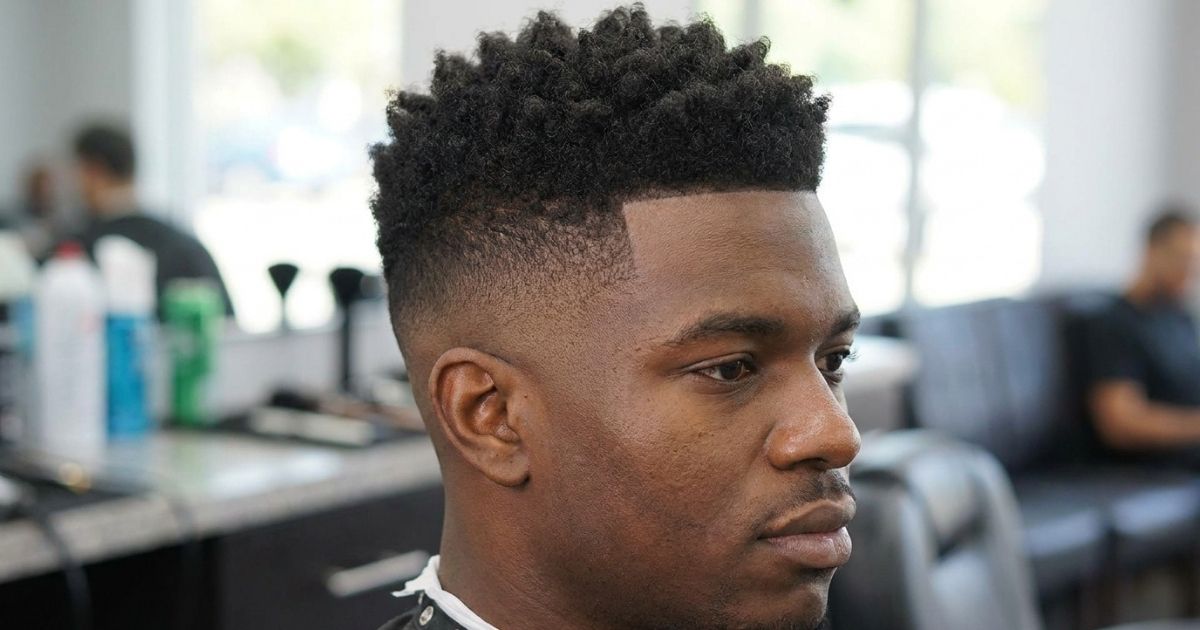
A high taper fade is one of the sharpest, most requested cuts in barbershops across the country right now. It works with almost any hair texture, from tight coils to loose curls, and it flatters nearly every face shape when the fade line is placed correctly.
If you have ever sat in a barber chair unsure of what to ask for, this guide fixes that problem. Below you will find the most popular high taper fade styles for Black men in 2026, how each one is cut, which hair types suit it best, and how to keep it looking fresh between appointments.
Whether you want soft curls on top, a slicked back finish, or a skin fade so clean it shines under barbershop lights, there is a style here built for you.
Trending High Taper Fade Looks for Black Men
Barbers say the biggest shift in 2026 is precision. Clients are no longer asking for a generic fade. They are bringing reference photos and asking for exact fade heights, blend techniques, and top textures. Below are the nine looks dominating requests this year.
Curly Taper Fade
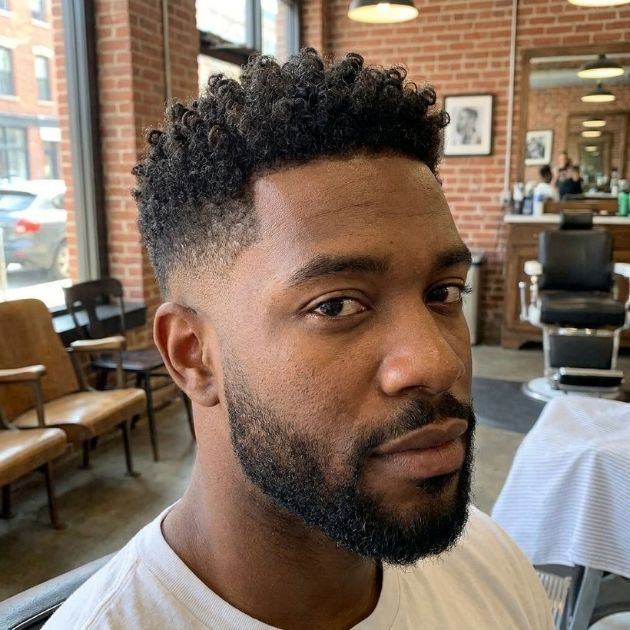
The curly taper fade keeps natural curls full and bouncy on top while the sides taper down into a clean, tight blend. It is one of the most requested cuts for men with 3C to 4A curl patterns because it lets the curls do the work without any extra styling effort.
- Ask your barber to leave 2 to 3 inches of length on top
- Use a lightweight curl cream to define each curl without weighing it down
- Avoid brushing the curls flat, since this breaks the curl pattern
This cut suits oval, round, and square face shapes especially well because the volume on top balances out the sharp lines on the sides.
Burst Taper Fade
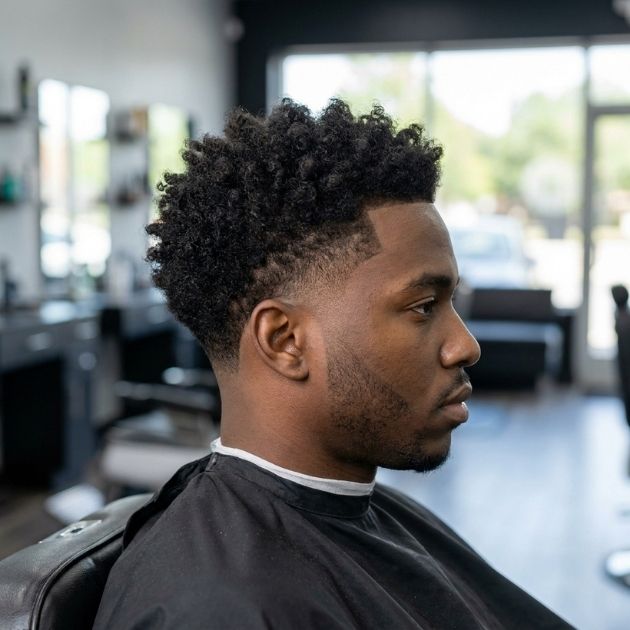
A burst taper fade curves around the ear instead of cutting a straight line down the side. This creates a rounded, blended look that leaves slightly more hair at the back while concentrating the fade near the temple and ear area.
Barbers recommend this style for men who want a fade that looks a bit softer and more natural than a straight skin fade. It pairs especially well with waves, twists, and short afros.
Afro Taper Fade
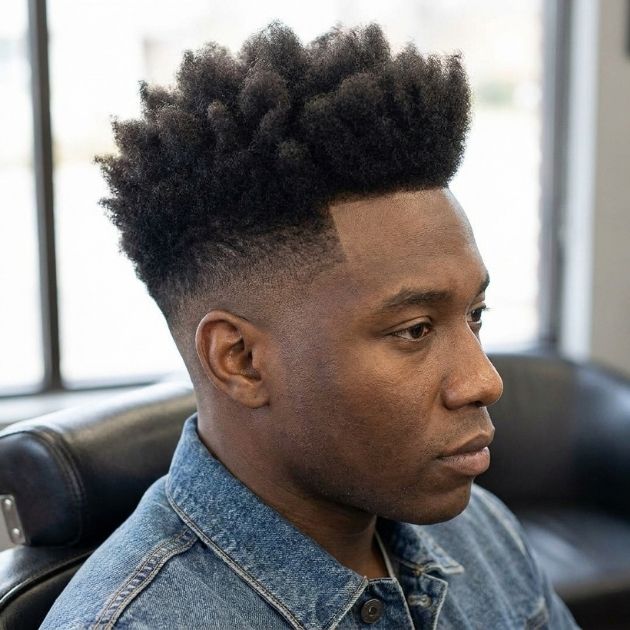
The afro taper fade is a favorite for men who want to celebrate their natural texture without sacrificing a sharp finish. The top stays full and rounded while the sides and back taper down cleanly, framing the afro instead of shrinking it.
- Tell your barber to keep the crown full and only taper the perimeter
- A wide tooth comb helps shape the afro after washing
- Shea butter or curl custard locks in moisture and shine
Slick Back Taper Fade
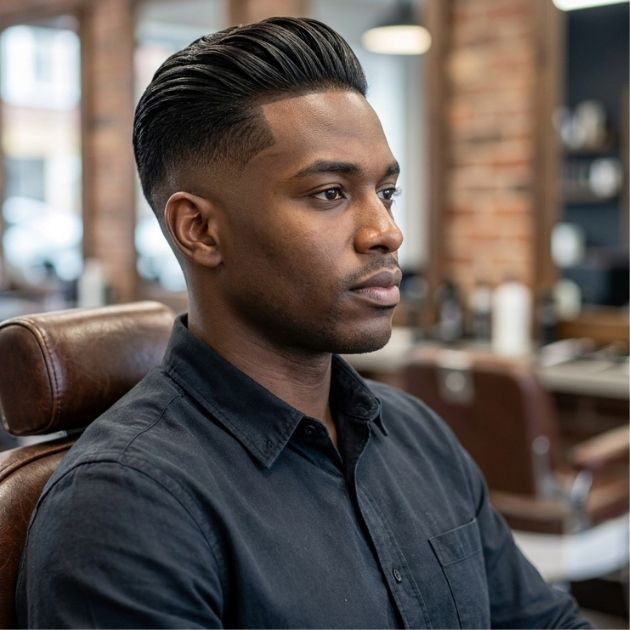
This look pushes the top hair straight back for a polished, professional finish. It works best with hair that has some length, usually 3 to 4 inches, so there is enough to comb back and hold in place.
Pomade or a strong hold gel is essential here. Apply product to damp hair, comb it back in one direction, and let it air dry or blow dry on a low setting for a shinier finish.
Comb Over Taper Fade
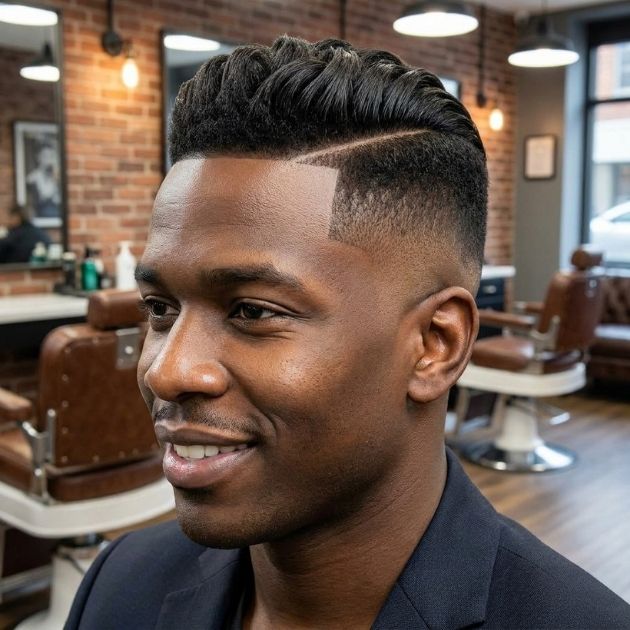
The comb over taper fade is a timeless, classic option. Length is left on top and swept to one side, while the sides fade into a tight, tidy taper. It reads as sharp and put together, which is why it remains a top choice for interviews, weddings, and formal settings.
- Ask for a 1 guard fade on the sides with length preserved on top
- A lightweight wax keeps the comb over in place without looking greasy
- Works well on straight, wavy, and loosely curled hair
Messy Taper Fade
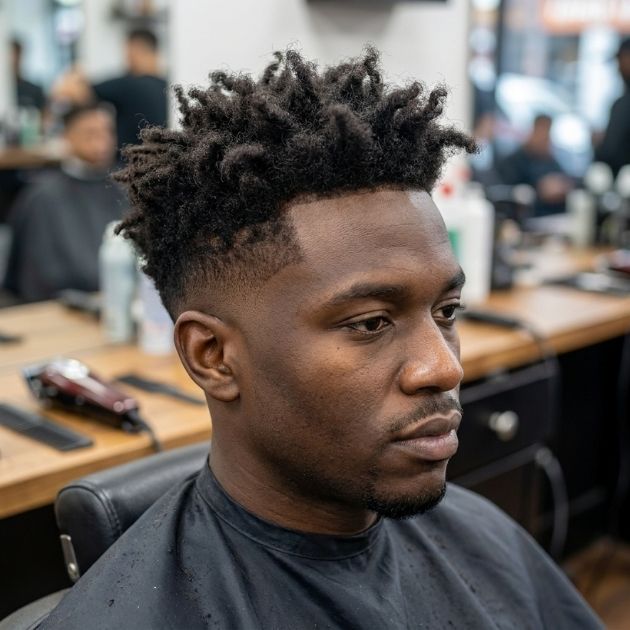
Not every high taper fade needs to look perfectly smooth. The messy taper fade uses point cutting on top to create a choppy, textured finish while the sides stay clean and faded. It looks intentional rather than undone, which is the whole appeal.
Sea salt spray adds texture and a matte finish, making this one of the easiest styles to maintain day to day.
Quiff Taper Fade
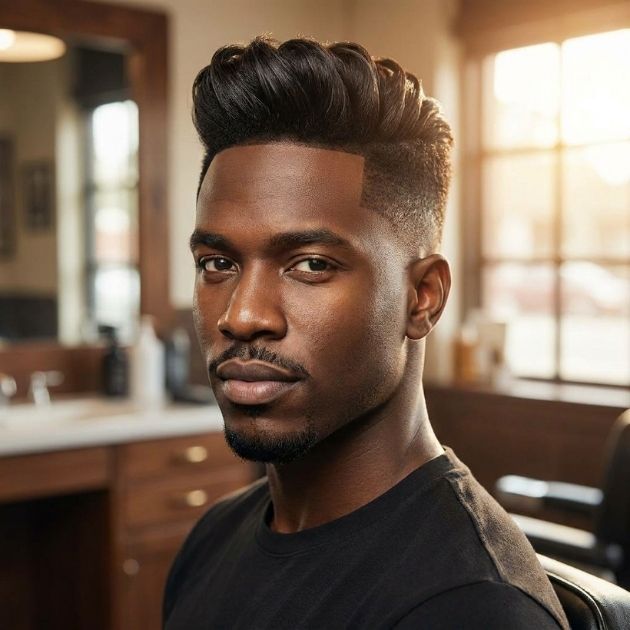
The quiff taper fade adds noticeable height and volume at the front of the head, pushed up and slightly back. Paired with a high fade on the sides, the contrast makes the quiff stand out even more.
- Blow dry the front section upward using a round brush
- Apply a volumizing mousse before styling for extra lift
- Finish with pomade to hold the shape through the day
Skin Taper Fade
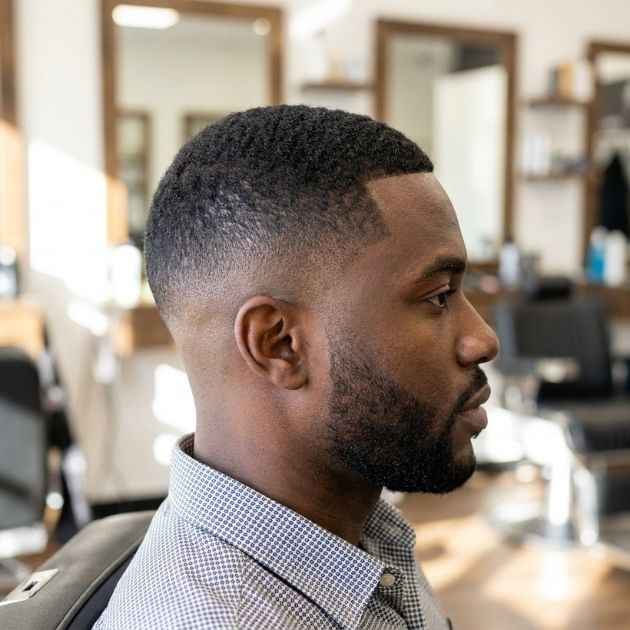
The skin taper fade is the sharpest option on this list. The sides fade all the way down to bare skin, creating maximum contrast against whatever style sits on top, whether that is curls, waves, dreadlocks, or a natural afro.
Because this style exposes more scalp, barbers recommend it for men without a history of razor bumps or pseudofolliculitis barbae, a common form of irritation in curly and coily hair. If your skin is sensitive, ask for a low or mid taper instead of going all the way to skin.
Drop Taper Fade
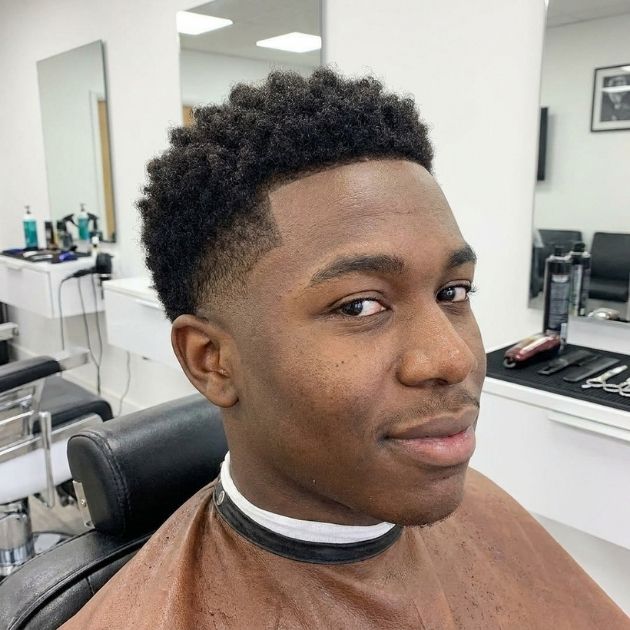
The drop taper fade curves downward behind the ear before rounding back up toward the nape. This creates a distinctive silhouette that adds a rounded, sculpted look to the back of the head. It pairs especially well with longer top styles like afros, twists, and curly crops, since the dropped line balances the extra volume up top.
What is High Taper Fade Haircuts for Black Men?
A high taper fade is a haircut where the fade begins high on the head, typically near the crown or just above the temples, and blends downward into shorter hair or bare skin at the sides and back. The word taper refers to the gradual reduction in hair length, while fade describes how tightly the blend transitions, sometimes ending at the skin and sometimes stopping at a short guard length.
Here is how it compares to other fade placements:
| Fade Type | Starting Point | Best For |
| Low taper fade | Near the sideburns | Subtle, professional looks |
| Mid taper fade | About 1 to 2 inches above the ear | Balanced, versatile styling |
| High taper fade | Near the crown or well above the temples | Bold, high-contrast looks |
A high taper fade gives the most dramatic contrast of the three because more of the head is faded before it reaches the fuller hair on top. This makes it a strong choice for men who want their top style, whether curls, waves, or an afro, to be the clear focal point.
According to the American Academy of Dermatology, fades that expose more scalp can increase the risk of irritation for men prone to pseudofolliculitis barbae or traction alopecia, both of which are more common in tightly coiled hair types. Talking to your barber about your skin history before committing to a skin level fade is a smart step.
The Evolution of High Taper Fade Haircuts for Black Men
The high taper fade did not appear overnight. Its roots trace back to Black barbershops in the 1980s, where barbers began experimenting with sharper, cleaner blends as an alternative to the boxier cuts of earlier decades. Black barbers are widely credited with coining the term fade itself and pushing the technique into mainstream grooming culture.
By the 1990s, the style had become deeply tied to hip-hop culture. Artists and athletes popularized fades paired with line-ups, flat tops, and bold designs, turning the haircut into a form of self-expression rather than just a routine trim.
The 2000s and 2010s brought sharper clipper technology and more precise techniques, which allowed barbers to create tighter blends, cleaner lines, and custom designs carved directly into the fade. Burst fades, drop fades, and temple fades all emerged during this period as barbers pushed the boundaries of what a taper could look like.
In 2026, the high taper fade has become a global style, worn with pride by Black men everywhere from local barbershops to red carpets. Barbers now combine the classic taper technique with modern touches like textured crops, natural curl patterns, and precision line work, keeping the cut fresh while honoring its cultural roots.
Frequently Asked Questions
What is the difference between a taper and a fade?
A taper gradually reduces hair length without reaching the skin, while a fade blends hair all the way down to bare skin for a sharper, more dramatic finish.
Is a high taper fade good for round faces?
Yes, a high taper fade adds height and vertical balance, which makes round faces appear slightly longer and more defined.
Does a high taper fade work with 4C hair?
Yes, it works very well with 4C hair, since the fade follows the natural growth pattern and highlights curl definition on top.
How often should I get my high taper fade touched up?
Most barbers recommend a touch up every 2 to 3 weeks, since fades grow out and lose definition faster than the top section.
Is a skin taper fade painful or risky for sensitive skin?
It can cause irritation like razor bumps for men prone to pseudofolliculitis barbae, so a low or mid taper is a safer choice for sensitive skin.
What products keep a high taper fade looking fresh?
Curl cream, wave pomade, lightweight wax, and a satin bonnet or durag at night all help maintain moisture and shape between appointments.
Can I get a high taper fade with locs or braids?
Yes, a high taper fade works well framing locs, twists, or braids, giving the top style a clean and sharp base.
Conclusion
The high taper fade remains one of the most versatile and culturally significant haircuts available to Black men today. From curly tops to slicked back finishes, there is a version of this cut suited to nearly every face shape, hair texture, and personal style.
Bring a reference photo to your next barber appointment, mention your skin sensitivity if you have one, and choose the fade height that matches the contrast you want. With the right barber and a little maintenance, a high taper fade will keep you looking sharp, confident, and on trend all year long.

Charlotte Aiden is the founder and editor of FaxhionTips.com, where he shares practical insights on the latest haircut trends, hairstyles, grooming tips, and hair care advice. Passionate about modern style and easy-to-follow beauty guidance, Charlotte creates well-researched content to help readers choose the best haircuts and maintain healthy, stylish hair with confidence.