You sit down in the barber’s chair, point to a photo on your phone, and say, “Just make it look like that.” Sounds simple, right? But here is the brutal truth most men never hear: picking the wrong fade for your face shape, hair texture, and lifestyle is the single most costly grooming mistake you can make. Not just in money spent on fixes, but in the confidence you leave behind on the floor along with your hair.
The mid fade vs low fade debate is not just a style preference. It is a decision that determines whether you walk out looking sharp and refined or just off. This guide breaks down every angle of the low fade vs mid fade conversation, covering hair types, specialized variations, maintenance demands, and the expert truths barbers rarely volunteer unless you ask.
Understanding the Basics: What Makes Each Fade Unique
Before you can choose intelligently, you need to understand what separates these two cuts at the most fundamental level. Both involve a gradual blend from longer hair on top to shorter hair on the sides and back. The defining factor is simply where that blend starts.
What Is a Low Fade?
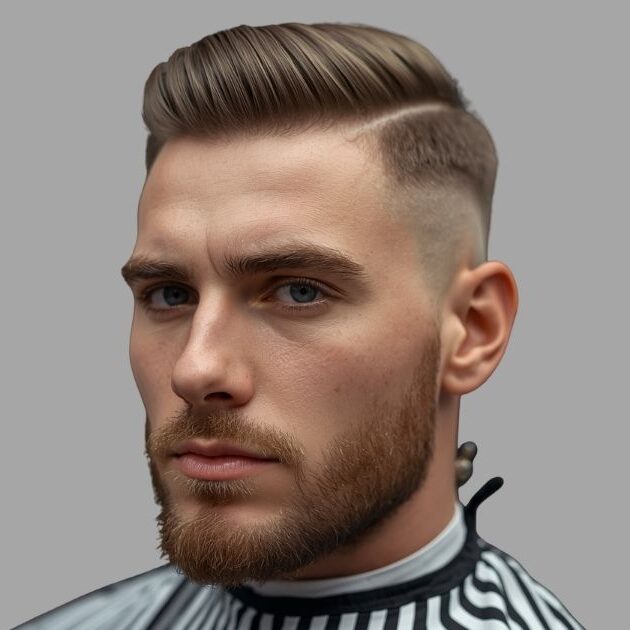
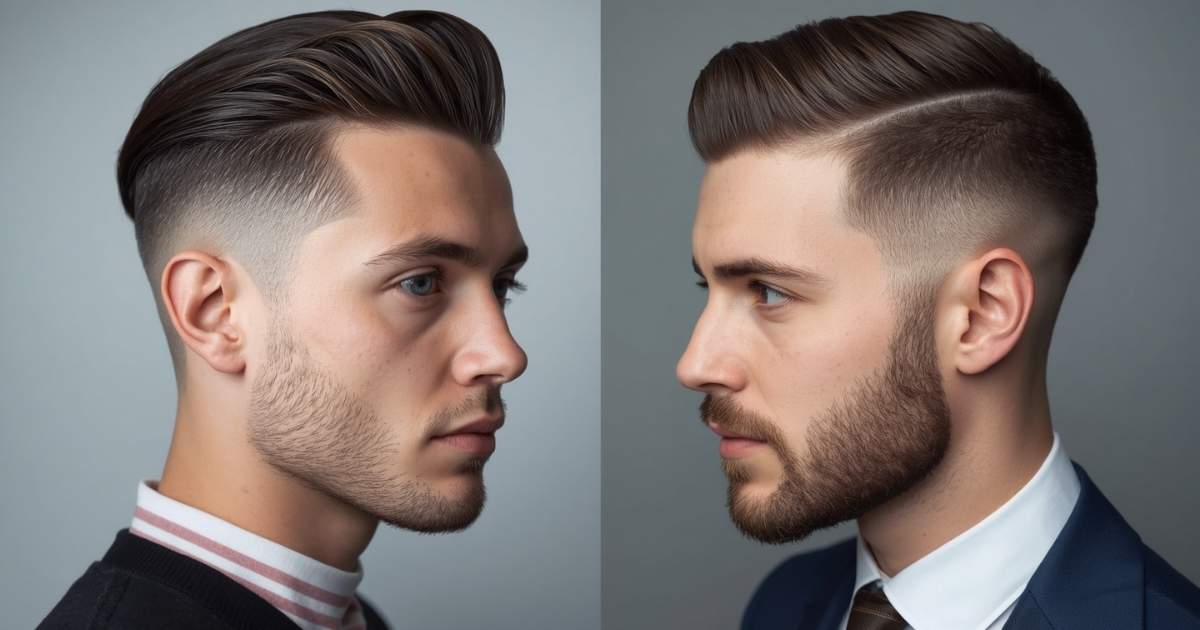
A low fade begins just above the ear and curves naturally down toward the neckline. The transition is gradual and understated, keeping more hair on the sides and creating a softer overall silhouette. Because the fade line sits close to the natural hairline, it blends out more gracefully as it grows and requires less frequent touch-ups to stay looking intentional.
The low fade is a preferred choice for professional settings, conservative dress codes, and men who want modern edge without aggressive contrast. It pairs beautifully with longer top styles like comb-overs, pompadours, and slick-backs.
What Is a Mid Fade?
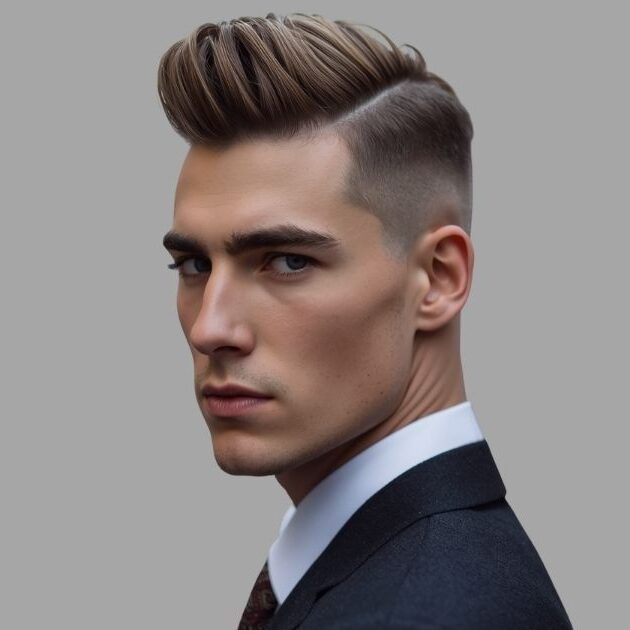
A mid fade starts around the temples, roughly halfway between the ears and the top of the head. This placement creates a noticeably bolder contrast between the sides and the hair on top, without pushing into high-fade territory. The result is a balanced, contemporary look that sits comfortably between subtle and striking.
Because the fade begins higher, it draws more attention to the hairline and naturally frames the face. It works particularly well with textured crops, quiffs, and faux hawks. It is also arguably the most versatile fade length because it complements a wide range of hair textures and face shapes.
Mid Fade vs Low Fade: Key Differences Breakdown
Understanding where each fade sits is only part of the picture. Here is a clear breakdown of how they differ across the most important categories:
| Category | Low Fade | Mid Fade |
| Starting Point | Just above the ear | Around the temples |
| Contrast Level | Subtle and gradual | Moderate and noticeable |
| Professional Suitability | Very high | Moderate to high |
| Maintenance Frequency | Every 3 to 4 weeks | Every 2 to 3 weeks |
| Face Shape Suitability | Most shapes, especially round | Oval, oblong, square |
| Best Top Style Pairings | Comb-over, slick-back, long styles | Textured crop, quiff, faux hawk |
The low fade favors men who want clean, polished sophistication. The mid fade favors those who want a sharper, more contemporary statement.
Low Fade vs Mid Fade: Which Style Suits Different Hair Types?
Hair texture is one of the most overlooked factors in the fade decision. The same cut can look completely different on curly, straight, or coily hair. Here is how each fade performs across hair types.
Low Fade vs Mid Fade Curly Hair
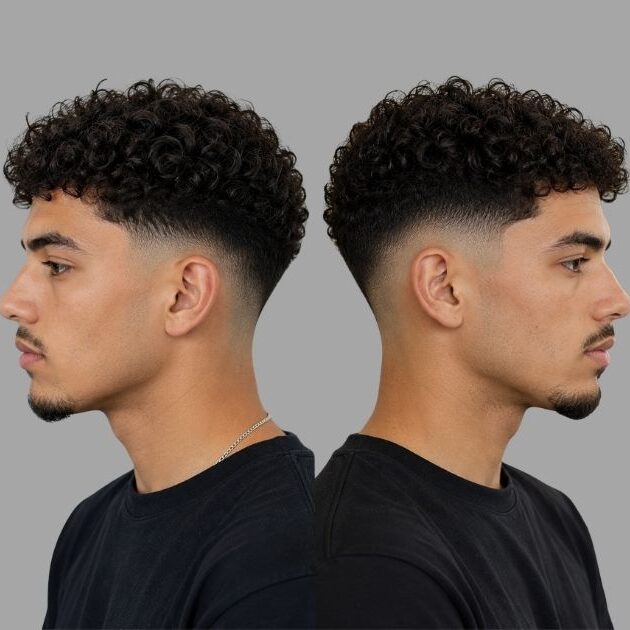
For men with natural curls, preserving volume and curl definition is the priority. A low fade keeps more hair on the sides, maintaining the natural fullness of your curl pattern while offering a clean, tapered outline. It is the subtler choice for curly-haired men who want polish without sacrificing their curl’s character.
The mid fade, on the other hand, creates a sharper contrast that actually makes curls pop more dramatically on top. If you want your curls to command attention and enjoy a more defined, sculptural look, the mid fade delivers that visual impact. For tight curl patterns like 3C or 4A, the mid fade removes side bulk effectively and lets the curl texture on top take center stage.
Mid Fade vs Low Fade Straight Hair
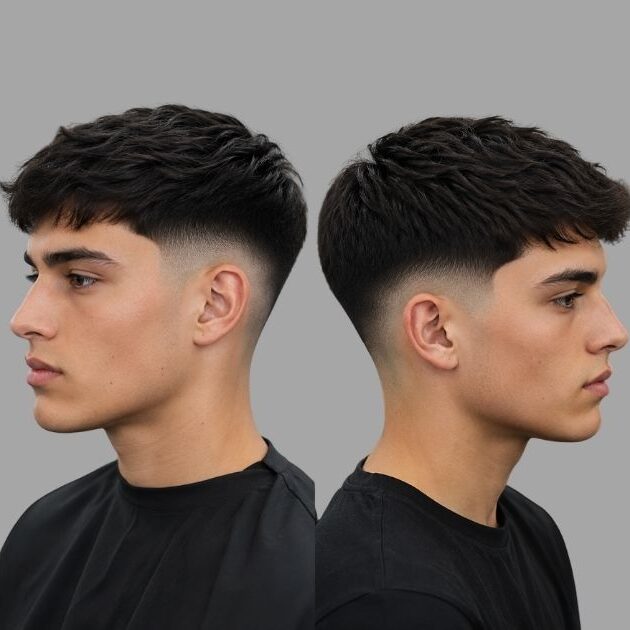
Straight hair lies flat naturally, which means the contrast difference between a low and mid fade becomes highly visible. A low fade on straight hair reads as classic and professional, great for a side part or comb-over look. The blend is soft and the transition gentle.
The mid fade on straight hair creates a sharper, more fashion-forward silhouette. Styles like the pompadour and textured quiff become more defined and dimensional with the higher fade placement providing contrast beneath them.
Mid Fade vs Low Fade Black Hair
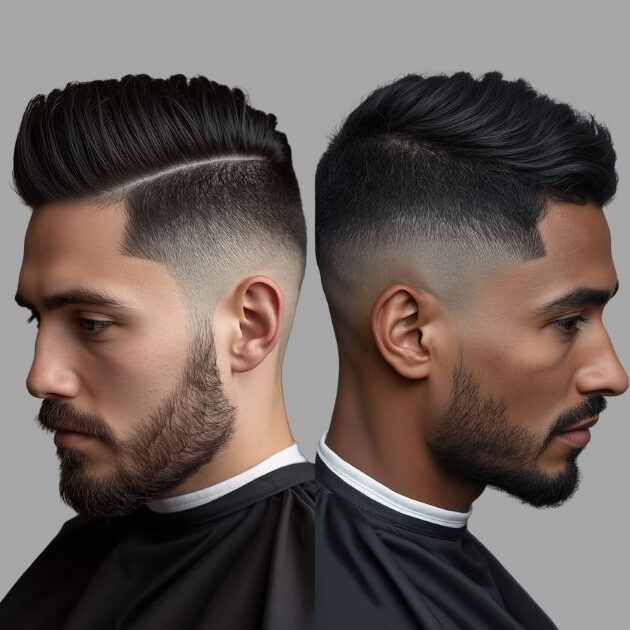
For Black men with textured, coily, or afro hair, the fade debate carries both aesthetic and cultural weight. A low fade on textured hair highlights the natural hair on top, whether it is waves, an afro, or tight curls. It complements sharp line-ups and blends with beard styles effortlessly.
The mid fade is the stronger choice if you want structure and a more sculpted look. Starting higher at the temples, it creates bold contrast against textured hair and pairs exceptionally well with high-top styles, twists, longer afros, and sharp edge-ups. Both options work well with a beard, but the mid fade provides more dramatic framing.
Exploring Taper Variations: Low Taper Fade vs Mid Taper Fade
A taper fade and a traditional fade are related but distinct. While a standard fade blends all the way to the skin, a taper fade focuses the shortest lengths primarily at the sideburns and neckline, leaving more hair visible along the sides. It is a softer hybrid that suits men who want sharp edges without dramatic skin exposure.
Low Taper Fade vs Mid Taper Comparison
The low taper fade creates an incredibly polished look. It hugs the natural hairline and grows out gracefully, making it one of the most low-maintenance options in the entire fade spectrum. It is ideal for office environments, formal occasions, and men who prefer a clean-cut finish that never feels aggressive.
The mid taper fade sits higher and provides more contrast without going full skin. It adds modern edge while still remaining conservative enough for most professional settings. Men who want the benefits of a taper but prefer a slightly bolder visual statement consistently favor the mid taper.
The Complete Fade Spectrum: Low vs Mid vs High Fade
Low Fade vs Mid Fade vs High Fade Overview
To fully appreciate where the low and mid fade sit, it helps to see the complete spectrum:
- Low fade begins just above the ear. Subtle contrast. Professional and timeless.
- Mid fade begins around the temples. Balanced contrast. Modern and versatile.
- High fade begins above the temples, near the top of the head. Maximum contrast. Bold and edgy.
The easiest way to remember the difference: low fades are subtle, mid fades are balanced, and high fades are bold. Each step up the head increases visual drama and reduces how long the cut stays looking fresh.
Low vs Mid vs High Taper Fade Considerations
When applying the taper logic to all three levels, the same principles hold. A low taper is the gentlest, a mid taper adds moderate structure, and a high taper comes closest to the drama of a full high fade. Your choice should reflect your lifestyle, profession, and how much chair time you are willing to commit to each month.
Specialized Fade Variations: Skin, Drop, and Burst Fades
Fades do not exist in isolation. Once you have chosen your fade height, you can layer in a variation that completely changes the final look.
Low Skin Fade vs Mid Skin Fade
A skin fade takes the hair all the way down to bare scalp at its shortest point. The low skin fade keeps the exposed skin minimal and close to the ear, creating a clean, professional edge without being overly dramatic. The mid skin fade exposes more scalp higher up the sides, increasing contrast and adding boldness. The choice between the two comes down to how much visual impact you want from your sides.
Low Drop Fade vs Mid Drop Fade
A drop fade curves downward behind the ear rather than following a straight horizontal line. This arc shape adds a softer, more natural-looking contour. The low drop fade keeps that curve subtle and understated. The mid drop fade makes the arc more pronounced and noticeable, accentuating head shape more dramatically and adding a unique structural element to the overall cut.
Low Burst Fade vs Mid Burst Fade
A burst fade creates a semicircular pattern radiating outward from around the ear. It is especially popular when paired with mohawks and faux hawks. The low burst fade keeps the burst effect tight and subtle, closer to the ear. The mid burst fade expands that effect higher and creates a more dramatic framing of the face. Men who want an eye-catching, modern finish consistently prefer the mid burst for its visual impact.
Low Bald Fade vs Mid Bald Fade: The Boldest Options
Bald fades, also called zero fades, take hair all the way down to smooth skin. They represent the sharpest, most high-contrast fade option available. The low bald fade keeps that bald-to-skin transition minimal and near the ears, creating a striking but still relatively contained look. The mid bald fade brings that cleanly shaved zone higher up the sides, maximizing contrast and making a serious statement.
Both require regular maintenance, typically every one to two weeks, to stay looking intentional. They work best with darker hair where the contrast against skin is most visible, and they pair particularly well with beards, line-ups, and top styles with significant volume or texture.
Haircut Context: Making the Right Choice
Low Fade Haircut vs Mid Fade Considerations
Context matters enormously. If you work in a corporate or conservative environment, the low fade is almost always the safer and smarter choice. It reads as polished and intentional without crossing into bold territory. If your environment is creative, casual, or fashion-forward, the mid fade gives you that contemporary edge without going overboard.
Low Fade vs Mid Fade Haircut Men Preferences
Data consistently shows that both styles rank among the most requested men’s haircuts globally. Men who favor the low fade tend to prioritize professionalism, ease of maintenance, and versatility. Men who choose the mid fade tend to be more style-conscious, enjoy regular barber visits, and want their haircut to be part of a deliberate aesthetic statement.
Practical Styling: Mid Fade vs Low Fade Haircut Execution
Getting the Cut Right
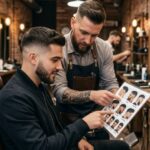
When you sit in the barber’s chair, specificity is your best friend. Simply asking for a “fade” leaves too much open to interpretation. Instead, tell your barber:
- Where you want the fade to begin (just above the ear for low, at the temples for mid)
- How much skin you want visible, if any
- The specific variation you want, such as taper, drop, burst, or skin
- A reference photo if possible
Barbers work in three-dimensional space and appreciate clients who know what they want.
Maintenance Requirements
Both styles need regular upkeep to stay sharp, but the mid fade demands more frequent visits. As a general guide:
- Low fade: touch-up every 3 to 4 weeks
- Mid fade: touch-up every 2 to 3 weeks
- Skin fades and bald fades at either level: every 1 to 2 weeks
Between visits, a quality edge-up trimmer can help maintain your neckline and keep the fade looking fresh.
Popular Combinations and Modern Trends
Mid Fade vs Low Fade with Different Top Styles
The top of your hair has as much influence on which fade to choose as the fade itself. Here are proven pairings:
Low fade works best with: classic comb-over, modern slick-back, long textured hair, side part, man bun, French crop.
Mid fade works best with: textured crop, pompadour, faux hawk, quiff, buzz cut, waves, afro, high-top, twists.
Current Preferences in the Low vs Mid Fade Debate
In 2026, the mid fade continues to dominate social media and barbershop request lists, particularly among men aged 18 to 35. The textured crop with a mid fade is arguably the most requested combination globally right now. However, the low fade has seen a resurgence among professionals who want to stay stylish without looking like they just walked out of a music video.
Both styles remain firmly in trend territory with no signs of slowing down.
Expert Tips for Each Fade Type
For the low fade:
- Grow your top hair to at least 2 to 3 inches for maximum visual balance
- Use a matte pomade or clay for natural-looking definition without the shine overload
- Request a “clean neckline” along with your low fade for a polished finish
- If you have a round face, avoid requesting a low fade too tight to the scalp as it can emphasize width
For the mid fade:
- Pair with a line-up at the hairline for a crisp, deliberate edge
- Use a lightweight styling cream or texture paste to define movement on top
- If you have an oval or oblong face, the mid fade is your ideal default as it naturally flatters balanced proportions
- Visit your barber more frequently to keep the higher fade line looking intentional
Common Mistakes to Avoid
Mistake 1: Choosing Style Over Suitability
Picking a fade because it looks good on someone else without considering your own face shape, hair texture, or lifestyle is the fastest route to disappointment. A mid fade that looks incredible on a man with oval face and thick curly hair can look completely wrong on someone with a round face and fine straight hair.
Mistake 2: Poor Communication with Barbers
Walking in with a vague request like “make it fade” is a guaranteed path to a cut that is not what you imagined. Bring reference photos, describe the fade height in concrete terms, and tell your barber exactly how much skin you want showing.
Mistake 3: Neglecting Maintenance
A mid fade that is six weeks old does not look like a mid fade anymore. It looks like untidy overgrowth. Both fade types require commitment. Skipping touch-ups is the difference between a haircut that earns compliments and one that gets ignored.
Mistake 4: Ignoring Hair Growth Patterns
Cowlicks, double crowns, and unusual growth patterns affect how a fade blends and sits. An experienced barber will account for these. Always mention any growth quirks before they start cutting.
Mistake 5: Mismatching Fade and Top Style
Pairing a high-volume pompadour with a low fade can look visually disconnected, just as a very short buzz cut with a high fade can look unbalanced. The fade height and top length should create a harmonious proportion, not compete with each other.
Frequently Asked Questions
Which is better for a round face, low fade or mid fade?
A mid fade is generally more flattering for round faces because its higher placement adds visual height and creates a longer-looking facial profile.
Can a low fade or mid fade work with a beard?
Both styles pair well with beards. The low fade blends more naturally into a fuller beard, while the mid fade creates a more defined contrast between beard and fade.
How long does a fade haircut typically last before needing a touch-up?
A low fade stays sharp for 3 to 4 weeks, while a mid fade typically needs a refresh every 2 to 3 weeks due to its more prominent contrast.
Is a mid fade or low fade better for thin hair?
A low fade is generally the better choice for thin hair because it retains more coverage on the sides and avoids exposing too much scalp.
What is the difference between a taper fade and a regular fade?
A taper fade focuses the blend primarily at the sideburns and neckline while leaving more hair visible on the sides, whereas a regular fade blends all the way to the skin across the sides and back.
Can I switch from a low fade to a mid fade easily?
Yes. Transitioning from a low to a mid fade simply involves letting your hair grow slightly and then reshaping the fade line higher on your next barber visit.
Which fade type is more popular in 2026?
The mid fade remains the most broadly requested style globally in 2026, particularly paired with a textured crop or modern quiff.
Conclusion
The mid fade vs low fade decision is not one-size-fits-all. It is deeply personal and tied to your face shape, hair texture, lifestyle, and how much maintenance you are willing to commit to. The low fade delivers timeless sophistication, professional appropriateness, and forgiving grow-out. The mid fade offers contemporary boldness, stronger contrast, and a more fashion-forward edge.
The most expensive mistake you can make is treating this decision casually. Go in knowing your face shape, your hair type, your preferred top style, and your maintenance window. Communicate clearly with your barber. And never underestimate how much a perfectly chosen fade can change not just your hair, but the way the room perceives you.
Choose well. Look sharp.

Charlotte Aiden is the founder and editor of FaxhionTips.com, where he shares practical insights on the latest haircut trends, hairstyles, grooming tips, and hair care advice. Passionate about modern style and easy-to-follow beauty guidance, Charlotte creates well-researched content to help readers choose the best haircuts and maintain healthy, stylish hair with confidence.