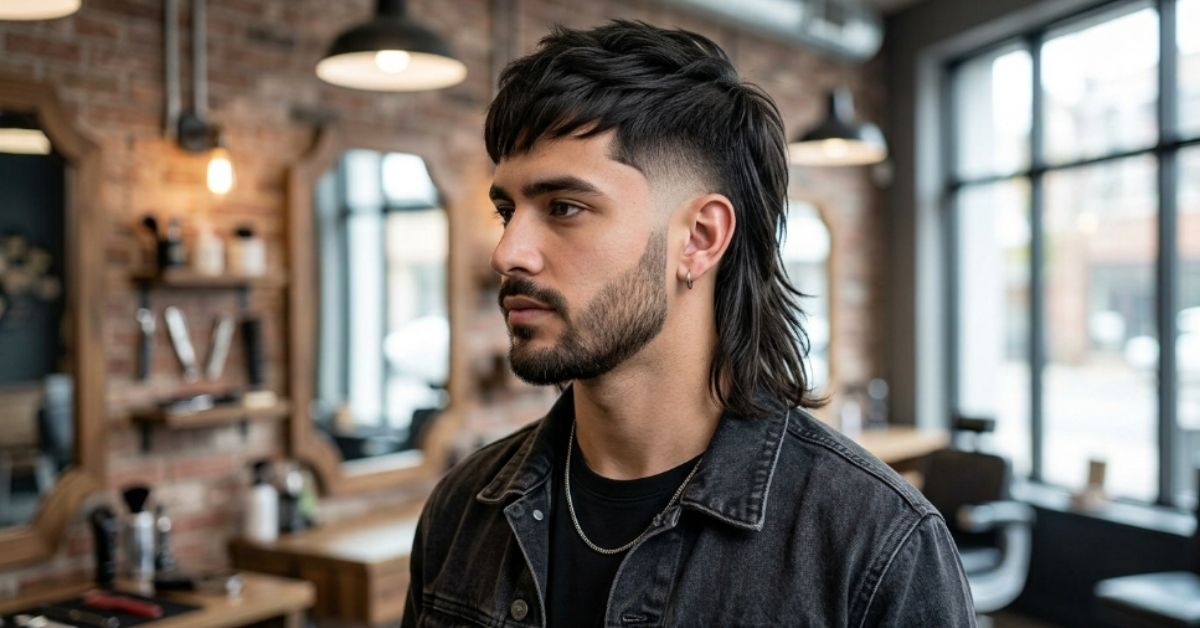
The mullet is no longer a throwback joke. It’s one of the most requested cuts in barbershops right now, and straight hair happens to be one of the best textures for pulling it off. Because straight strands lie flat and catch the light evenly, every layer, every fade line, and every length change shows up clearly, which is exactly what gives this haircut its sharp, graphic edge.
This guide covers everything you need before your next salon visit: what a straight hair mullet actually is, the most popular variations for 2026, how to style it at home, which products actually work on flat, straight strands, and how to explain the cut to your barber so you don’t leave the chair disappointed. We’ll also cover maintenance, face shape pairing, and how this cut compares to its close cousin, the wolf cut.
What Is a Straight Hair Mullet?
A straight hair mullet is a haircut with short layers on the top and sides and noticeably longer hair left at the back, cut on naturally straight (not wavy or curly) hair. The short-to-long contrast that defines every mullet becomes more visible on straight hair because there’s no natural wave or curl pattern to soften the transition.
On straight strands, the cut tends to read as sleeker and more structured than the same mullet would look on textured hair. The front and sides stay clean and controlled, while the back grows out into a defined tail-like section. Because straight hair doesn’t have built-in volume or movement, the shape of this haircut depends almost entirely on precise layering and a barber who knows how to work with flat, heavy hair.
Why Straight Hair Is Perfect for a Mullet
Straight hair might seem like an unlikely match for a haircut known for its rebellious, shaggy reputation, but it actually has a few real advantages:
- Clean, visible lines. Straight strands show off sharp fades, precise partings, and crisp length drops better than wavy or curly hair.
- Easier upkeep. There’s less frizz to manage, which means fewer products and less daily styling time compared to curly mullets.
- Versatile finish. You can style a straight mullet sleek and polished for a more editorial look, or add texture spray for a rougher, lived-in finish.
- Better fade visibility. If you’re pairing the mullet with a fade or taper, straight hair makes the gradient between skin and hair look cleaner.
The tradeoff is that straight hair has less natural volume, so choppy layering, texturizing, or a partial perm on top is often recommended to stop the crown from looking flat.
Straight Hair Mullet Variations
There isn’t just one straight hair mullet. Barbers have built dozens of variations around length, fade style, and finish. Here are the most requested versions going into 2026.
Classic Straight Hair Mullet
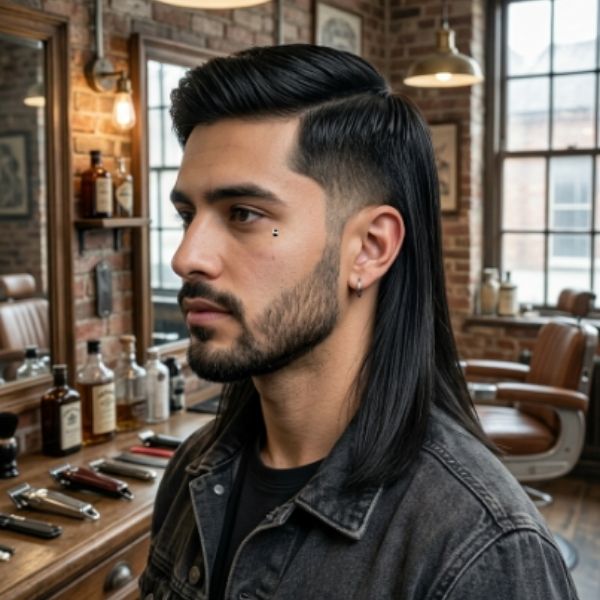
The classic version keeps things close to the cut’s original roots: short, tidy sides and top with a blunt, uncut back section left to grow long. It skips heavy texturizing in favor of a straightforward length contrast, which makes it a lower-maintenance option if you want the mullet silhouette without a lot of styling effort.
Modern Straight Hair Mullet
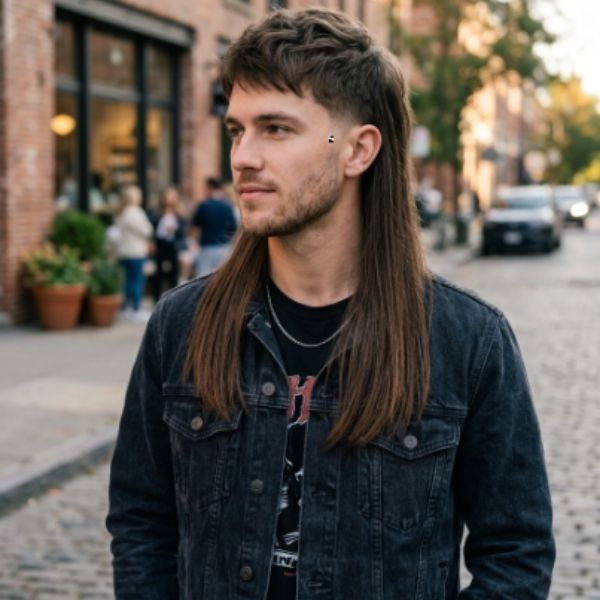
The modern mullet softens the retro shape with more blending between the front, sides, and back. Instead of one abrupt length drop, a modern cut uses graduated layers so the transition feels less jarring. This version usually pairs a textured top with a tapered fade and a moderately long back, making it the most wearable option for everyday settings, including most workplaces.
Straight Hair Mullet with Taper Fade
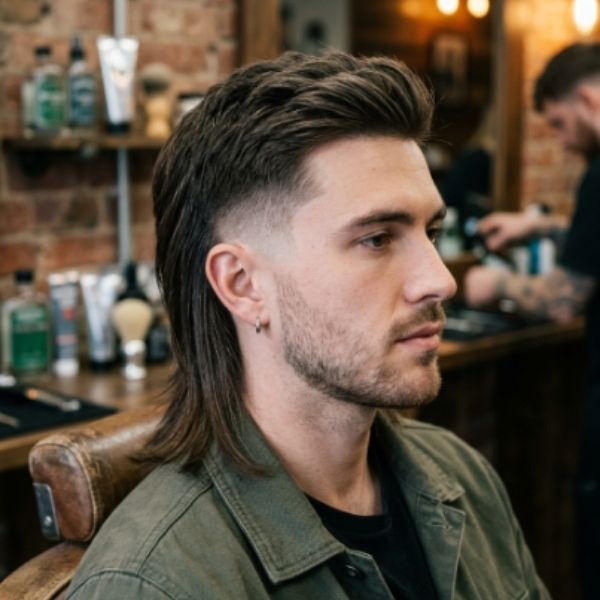
A taper fade gradually shortens the hair around the sides and back of the head without exposing much skin. On straight hair, a taper fade creates a smooth frame around the face while keeping the back length dramatic. It’s a good middle-ground choice if you want definition without the boldness of a skin fade.
Low Taper Straight Hair Mullet
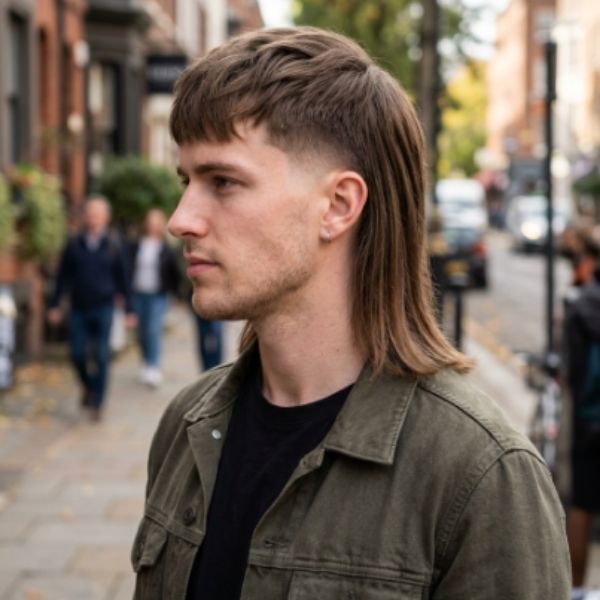
The low taper keeps the fade close to the hairline, just above the ears and neckline, leaving more length and coverage on the sides overall. This is one of the more subtle mullet fades, suited to anyone who wants the haircut to look intentional and tidy from the front, with the mullet’s signature length only becoming obvious from the back.
Straight Hair Mullet Fade
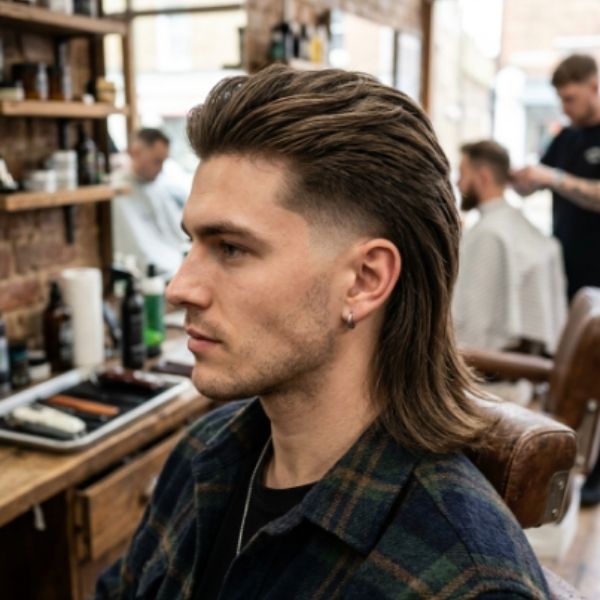
This term generally covers any straight hair mullet paired with a fade on the sides, whether that’s low, mid, high, or skin level. A fade sharpens the overall shape and gives the cut a more polished, barbershop-fresh finish. Skin fades in particular create maximum contrast with the long back section, which is why this pairing has become one of the most searched mullet styles.
Short Straight Hair Mullet
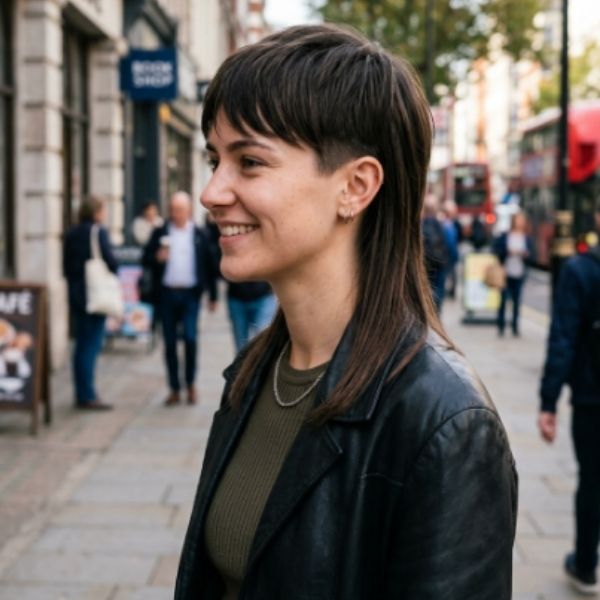
A short mullet keeps the back length modest, usually just past the nape of the neck, rather than growing it down to the shoulders. It’s a good entry point if you’re trying the haircut for the first time or if your workplace has a more conservative dress code, since the length contrast is present but far less dramatic.
Long Straight Hair Mullet

For those who want the full statement look, the long version lets the back grow well past the shoulders while keeping the front and sides short. On straight hair, the long back tends to hang flat and sleek rather than curling under, giving it a more dramatic, almost editorial drop.
Layered Straight Hair Mullet
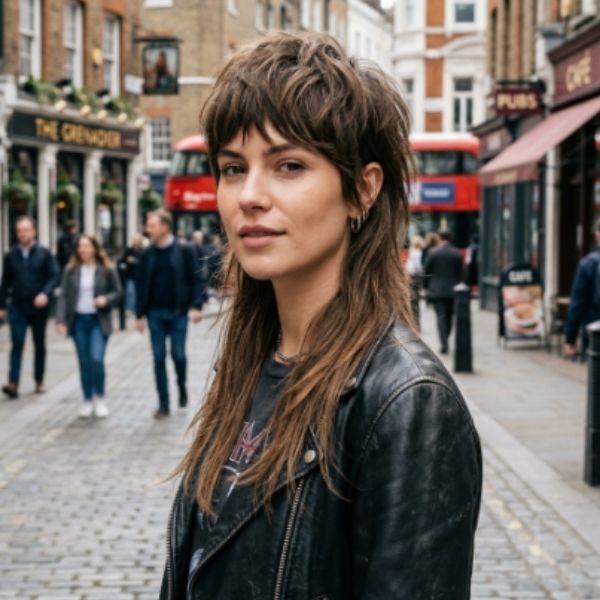
Layering is added throughout the top, crown, and back to break up the heaviness that straight hair can carry. This version adds movement and prevents the classic “helmet” look that can happen when straight hair is cut with too few layers. It’s one of the more flattering options for fine or thin straight hair specifically.
Straight Hair Mullet with Fringe or Bangs

Adding a fringe brings the mullet’s short section forward, framing the forehead and eyes. On straight hair, a fringe lies flat and defined, which works well for round or long face shapes since it visually shortens the face. Curtain-style fringes are especially popular paired with this cut in 2026.
Straight Hair Shag Mullet

The shag mullet combines heavy, feathered layering throughout the entire head with the mullet’s short-to-long structure. It’s less about clean lines and more about texture and movement, so it usually requires a texturizing spray or light perm to keep straight hair from falling too flat despite all the layering.
How to Style a Straight Hair Mullet
Straight hair needs a little help to avoid looking flat, especially at the crown. Follow this routine for a mullet that holds shape all day:
- Start on towel-dried hair. Apply a lightweight volumizing mousse or heat protectant from roots to ends while hair is still damp.
- Blow-dry with a round brush. Lift the roots at the crown and front as you dry to build in volume before the hair sets flat.
- Add texture with a flat iron or wand. Bend the ends of the back section slightly outward or inward to keep the long hair from looking stiff.
- Work in a texturizing spray. Focus on the crown and top layers to break up the smoothness that straight hair naturally has.
- Define the front and fringe. Use a small amount of wax or clay to shape the shorter front pieces, whether you’re pushing them up, forward, or off to the side.
- Set with a flexible-hold hairspray. A light mist keeps the shape without making straight hair look stiff or crunchy.
For a more relaxed, second-day look, skip the flat iron and rely on dry texture spray and your fingers to rework the shape.
Best Products for a Straight Hair Mullet
Because straight hair lacks natural grip, product choice matters more here than it does on wavy or curly hair. A few categories worth keeping in your routine:
- Volumizing mousse: Applied at the roots before blow-drying to fight flatness at the crown.
- Texturizing or sea salt spray: Adds grip and a matte, lived-in finish, especially useful for shag and modern mullet variations.
- Matte clay or paste: Best for shaping and separating the shorter front and top sections without adding shine.
- Light-hold pomade: Useful for slicker, more polished versions of the classic mullet.
- Heat protectant spray: Essential if you’re regularly using a flat iron or curling wand to add bend to the back section.
- Flexible-hold hairspray: Locks the style in place without the stiffness a strong-hold spray can leave on fine, straight strands.
What to Tell Your Barber for a Straight Hair Mullet
A mullet lives or dies on the initial cut, so a clear consultation matters. Bring reference photos from the front, side, and back, and be specific about these details:
- Length ratio: How short you want the top and sides versus how long you want the back left.
- Fade type: Whether you want a skin fade, taper, or no fade at all on the sides.
- Layering amount: Heavy texturizing for a shaggier look, or minimal layering for a cleaner classic shape.
- Fringe preference: Whether you want a fringe, and if so, how heavy or curtain-style it should be.
- Hair density: Mention if your hair is thin, fine, or thick, since straight hair mullets are cut differently depending on how much natural volume you’re starting with.
- Maintenance expectations: How often you’re realistically able to visit for trims, which affects how the cut is initially shaped to grow out.
Straight Hair Mullet Maintenance Tips
Keeping a straight hair mullet sharp requires a slightly different trim schedule than most haircuts, since the front and back grow at the same rate but need very different treatment:
- Trim the front and sides every 4 to 6 weeks to keep the short sections from growing out and losing their shape.
- Trim the back only every 8 to 12 weeks, and only lightly, since the whole point of the cut is preserving that length.
- Wash 2 to 3 times a week rather than daily, since straight hair can lose natural volume and grip if it’s washed too often.
- Use a dry shampoo between washes to keep roots from looking flat while retaining the texture you built in with styling products.
- Deep condition the ends weekly, since the longer back section is more exposed to damage and split ends over time.
- Sleep on a silk or satin pillowcase to reduce friction on the longer strands and keep the front pieces from flattening overnight.
Straight Hair Mullet for Men
For men, the straight hair mullet is most often paired with a taper or skin fade on the sides, a textured or slightly spiked top, and a back section that ranges from collar-length to well past the shoulders depending on personal style. Popular 2026 variations include the Edgar-style mullet, which combines a sharp, straight fringe with tight faded sides, and the business mullet, which keeps the front short and professional-looking while the length statement stays hidden in the back.
Straight Hair Mullet for Women
On women, the straight hair mullet leans into more layering and face-framing pieces around the front. Curtain fringes, longer face-framing layers at the sides, and a shag-influenced back section are common choices. Many women opt for a softer transition between the short and long sections rather than the sharp contrast favored in men’s cuts, which keeps the style feeling modern rather than overtly retro.
Straight Hair Mullet for Girls
For younger girls trying the trend, a softer, shorter version of the mullet tends to work best. Keeping the length contrast modest, with a shorter back section and a light fringe, gives the style without requiring the same level of daily upkeep an adult version might need. It’s also easier to grow out or adjust as a child’s hair and preferences change.
Straight Hair Mullet vs. Wolf Cut
Both cuts share layered, edgy roots, but they’re built differently:
| Feature | Straight Hair Mullet | Wolf Cut |
| Layering | Sharp contrast between short front and long back | Blended layers throughout for a softer shape |
| Volume | Can look flatter on top unless intentionally styled | More natural volume and movement built into the cut |
| Maintenance | Dual trim schedule; sides trimmed more often than the back | Generally fewer, more even trims |
| Overall vibe | Bold, structured, and retro-inspired | Shaggy, tousled, and effortless |
| Best for | Anyone wanting a clear length statement | Anyone wanting texture without a dramatic contrast |
If you want a haircut that reads as intentional and graphic, the mullet is the stronger choice on straight hair. If you’d rather have something that blends more naturally and needs less daily styling, the wolf cut tends to be the easier option.
Best Face Shapes for a Straight Hair Mullet
While the straight hair mullet can be customized to suit almost anyone, a few face shapes pair especially well with it:
- Oval faces: Nearly any version of the cut works well, since an oval face shape doesn’t need much visual balancing.
- Square faces: Softer layering around the front helps break up strong jawlines while the length in the back adds contrast.
- Heart-shaped faces: The longer back section adds visual weight to the lower half of the face, helping balance a wider forehead.
- Long faces: A fringe or curtain bangs paired with the mullet helps shorten the appearance of the face.
- Round faces: Added height at the crown, combined with shorter, angled front pieces, helps elongate a rounder face shape.
Conclusion
A straight hair mullet in 2026 is less about chasing a retro trend and more about choosing a haircut that lets precise cutting do the talking. Because straight strands show every layer and every fade line clearly, this cut rewards a skilled barber and a consistent trim schedule more than it demands complicated daily styling. Whether you go classic, modern, shaggy, or fringed, the key is matching the length ratio, fade, and layering to your face shape and how much upkeep you’re realistically willing to commit to. Bring reference photos to your next appointment, be specific about what you want, and the straight hair mullet can be one of the lowest-effort, highest-impact cuts you try this year.

Charlotte Aiden is the founder and editor of FaxhionTips.com, where he shares practical insights on the latest haircut trends, hairstyles, grooming tips, and hair care advice. Passionate about modern style and easy-to-follow beauty guidance, Charlotte creates well-researched content to help readers choose the best haircuts and maintain healthy, stylish hair with confidence.