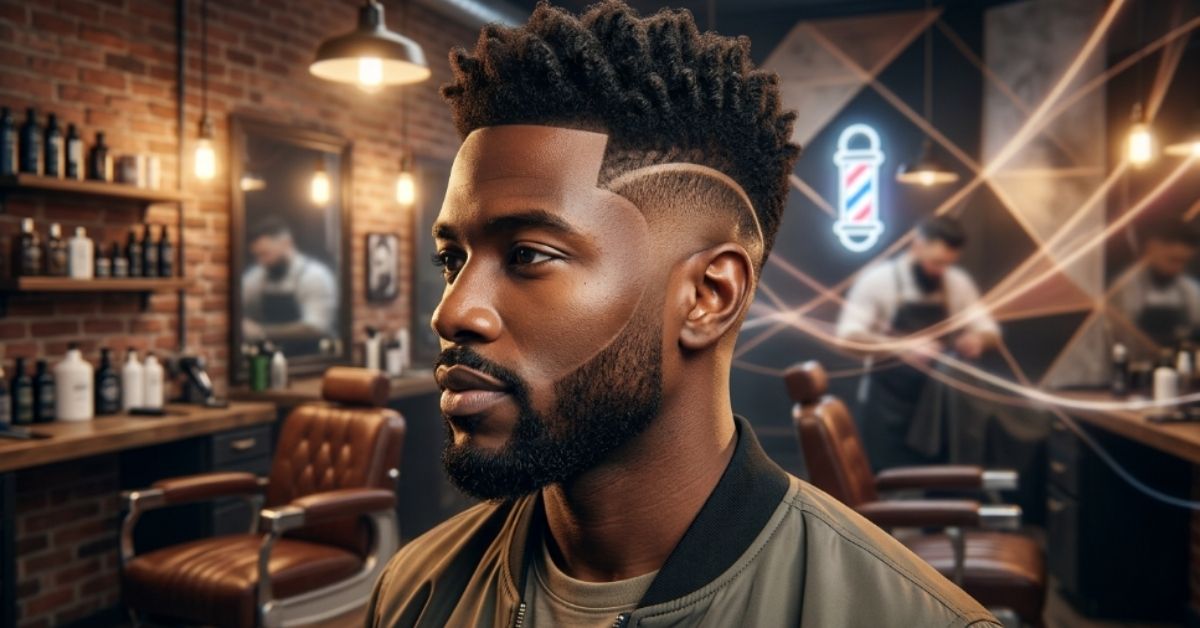
A burst fade design takes the classic burst fade and adds a shaved pattern, line, or shape into the curved taper around the ear. It’s one of the most requested men’s haircuts of 2026 because it works on almost any hair type and lets you add a personal touch without going overboard.
This guide breaks down what a burst fade design actually is, where it looks best, the top design ideas barbers are cutting right now, and how to keep it sharp between visits. Whether you have straight hair, curls, or coils, you’ll find a version of this cut that fits your head shape, your hair, and your lifestyle.
What Is a Burst Fade Design
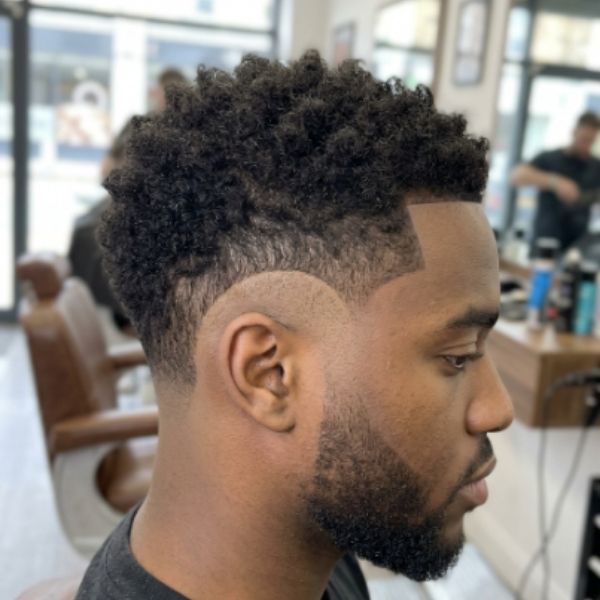
A burst fade is a fade that curves or “bursts” around the ear instead of running in a straight line around the whole head, the way a low, mid, or high fade normally does. Because the fade only wraps around the ear, it leaves more length at the back and along the neckline, which is exactly why it pairs so well with mullets, longer tops, and textured crops.
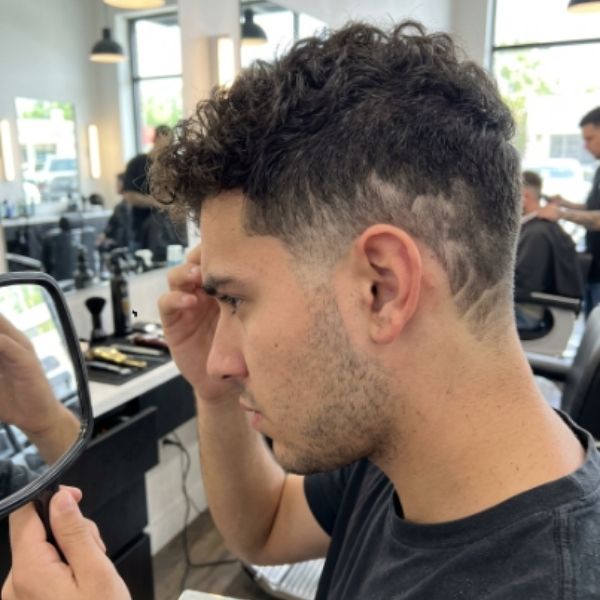
A burst fade design simply means a barber uses clippers, a trimmer, or a straight razor to shave a shape into that curved fade area. The result is a cut that keeps the clean, rounded taper of a burst fade but adds a detail that makes the style stand out, whether that’s one thin line, a bold zigzag, or a full geometric pattern.
Burst Fade With Design vs Regular Burst Fade
A regular burst fade is clean, simple, and built around smooth blending. There’s nothing shaved into the fade itself, just skin-to-hair contrast around the ear.
A burst fade with design keeps that same curved shape but adds a shaved detail on top of it. This changes the look and feel of the haircut in a few ways:
- It draws the eye toward the ear and temple area, which can make a face look sharper.
- It adds a sporty or edgy feel that a plain fade doesn’t have.
- It needs more upkeep, since the design grows out faster than the surrounding fade.
- It gives you room to personalize the cut with initials, symbols, or patterns.
If you’re trying a design for the first time, a single clean line is the easiest way to test the look before committing to something bolder.
Where Should the Design Go on a Burst Fade
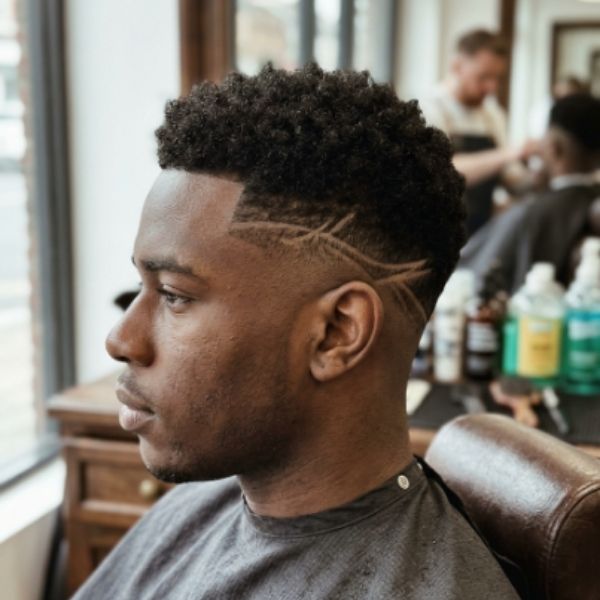
Placement changes how visible the design is, how professional it looks, and how quickly it needs a touch-up. Most barbers work with three main zones: above the ear, behind the ear, and along the nape or V area at the back of the neck.
Above the ear is the most common spot because it’s easy to see from the front and the side, and it’s the area where the burst fade curve is already sharpest. Behind the ear is a close second, since it’s slightly more subtle and works well for school, office jobs, or anyone who wants a cleaner overall silhouette.
Behind the Ear Burst Fade Design
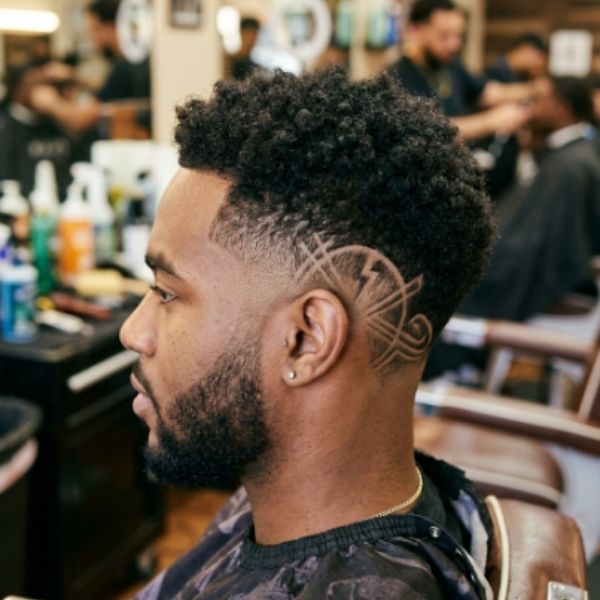
A design placed behind the ear sits in the curve of the burst fade but stays out of direct sightline from the front. It’s a good middle ground if you like the idea of a design but don’t want it to be the first thing people notice.
This placement also tends to hold its shape a little longer than a design right above the ear, since hair in that zone often grows slightly slower and gets less daily friction from glasses, hats, or headphones.
Nape and V Area Design
The nape and V area sit at the base of the skull, right where the burst fade tapers down into the neckline. A design here, like a V-cut, a curved line, or a small shape, adds detail to a part of the haircut people often overlook.
The tradeoff is that this zone grows out fastest of the three, since neck hair tends to grow quickly and gets covered by collars, so a nape design usually needs a touch-up every one to two weeks to stay crisp.
Best Burst Fade Design Ideas
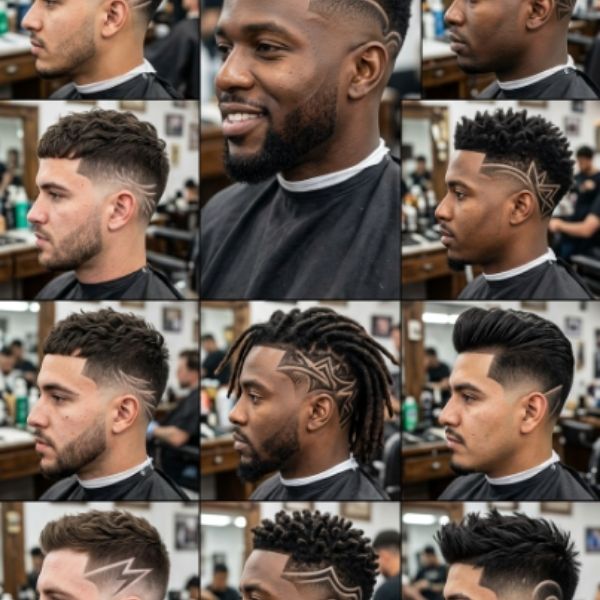
There’s no single “correct” burst fade design. The best choice depends on your hair color, hair type, how bold you want the cut to look, and how often you’re willing to get it touched up. Below are the most popular options barbers are cutting in 2026.
Burst Fade Line Design
A single shaved line is the simplest and most versatile burst fade design. It works on any hair color, any hair type, and any age, and it’s the easiest design to grow out or remove if you change your mind.
Barbers typically cut it with a fine trimmer, either as one straight line following the curve of the fade or as a slightly angled line for a sharper look.
Burst Fade Zigzag Design
A zigzag adds movement and energy to the fade without being as loud as a full shape. It reads well from a distance and photographs sharply, which is part of why it’s popular for portraits and social content.
This design works best on straight to wavy hair, where the sharp angles of the zigzag stay visible instead of getting softened by curl pattern.
Burst Fade Lightning Bolt Design
The lightning bolt is one of the boldest burst fade designs and tends to suit shorter fades and higher contrast hair colors, like dark hair with light skin exposed underneath. It’s a strong statement piece rather than a subtle detail, so it’s best suited to people who are comfortable with attention.
Burst Fade Heart Design
A heart design is a popular request for younger clients, matching couples, or anyone who wants something playful rather than aggressive. It needs a steady hand from the barber since curves are harder to keep symmetrical than straight lines.
Burst Fade Star Design
A star shape works well as a small accent design, often placed just above or behind the ear. Like the heart, it requires more precision than a line or zigzag, so it’s worth asking your barber if they have experience with shape designs before committing.
Burst Fade Geometric Design and Negative Space
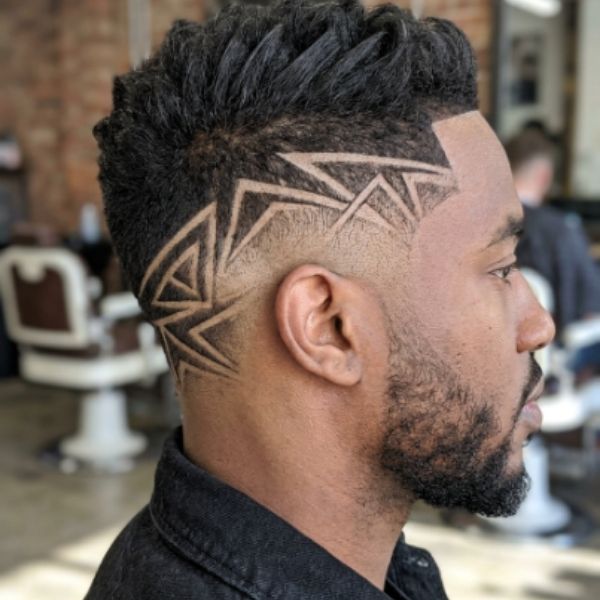
Geometric and negative space designs use a mix of shaved lines, triangles, and blocks to create a pattern that looks almost architectural. These designs use the skin itself as part of the artwork, which is why they’re sometimes called negative space designs.
This style takes the longest to cut and the most skill to execute cleanly, so it’s best reserved for barbers who specialize in freehand or razor design work.
Burst Fade With V Design
A V design combines a burst fade with a V-shaped taper at the nape, creating a cut that curves around the ears and comes to a point at the back of the neck. It’s a favorite for anyone growing out a mullet, since the V shape flatters longer back hair while keeping the sides tight and defined.
Low vs Mid vs High Burst Fade Design
The height of the fade changes how bold the design looks, how much maintenance it needs, and how it fits with different lifestyles or dress codes.
Low Burst Fade Design
A low burst fade starts close to the ears and keeps more hair on the sides overall. It’s the most subtle option and the easiest to maintain, since the design sits in a smaller area and grows out more slowly than higher placements.
This is a strong choice for a first-time design, for workplaces with conservative grooming policies, or for anyone who wants a design that’s noticeable up close but not from across the room.
Mid Burst Fade Design
A mid burst fade sits between the temple and the top of the ear, offering more contrast than a low fade without the intensity of a high fade. Most barbers consider this the best balance between style and manageability, which is why it’s the most requested height for burst fade designs.
High Burst Fade Design
A high burst fade starts near the temple, leaving more skin exposed and creating the sharpest contrast for the design to sit in. It looks the boldest, but it also grows out the fastest and typically needs a touch-up every one to two weeks to stay sharp.
Burst Fade Design for Different Hair Types
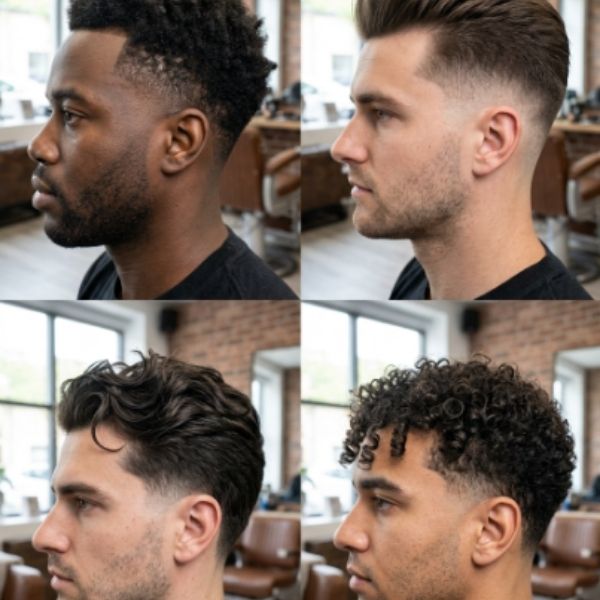
Hair type has a bigger impact on how a burst fade design looks than most people expect. The same design can look completely different on straight hair versus curly or coily hair.
Burst Fade Design on Straight Hair
Straight hair shows off fine, detailed designs clearly, since there’s no curl pattern to soften the lines. Thin lines, zigzags, and small shapes all read cleanly on straight hair, which makes it the easiest hair type to work with for intricate designs.
Burst Fade Design on Curly Hair
Curly and coily hair adds volume and texture around the design, which can partially hide fine details. Bolder, thicker designs tend to hold up better on curly hair, since the extra width keeps the pattern visible even as curls spring back after cutting.
Barbers often recommend keeping the top slightly shorter around a curly burst fade design so the contrast between the design and the curls stays sharp.
Burst Fade Design for Thick Hair vs Thin Hair
Thick hair holds a design’s shape longer because there’s more density to fade around, but it can also take a bit longer to grow out between touch-ups compared to thin hair. Thin hair fades faster and shows the skin more easily, which makes designs look crisp immediately after cutting but means the pattern can blur sooner as new growth comes in unevenly.
Burst Fade Design With Popular Top Styles
A burst fade design doesn’t exist on its own. It’s usually paired with a specific style on top, and the combination affects both the look and the maintenance schedule.
Burst Fade Mohawk Design
Pairing a burst fade design with a mohawk creates strong contrast between the shaved sides and the raised strip of hair on top. This combination works especially well with a line or zigzag design, since the mohawk already draws the eye upward and a simple design keeps the sides from feeling too busy.
Burst Fade Mullet Design
The burst fade mullet is one of the most popular combinations in 2026, especially paired with a V design at the nape. The burst fade keeps the sides tight and defined while the length at the back grows out into the mullet, and a shaved design adds an extra detail without disrupting the overall shape.
Burst Fade Textured Crop or Fringe Design
A textured crop or fringe on top pairs naturally with a subtle burst fade design, since the messy, piece-y texture on top balances out a bolder design on the sides. This combination is a favorite for guys who want a low-effort top with a bit of edge from the fade.
What to Tell Your Barber
Clear communication is the biggest factor in getting a burst fade design that actually looks like what you had in mind. Bring a reference photo whenever possible, since fade height, design placement, and line thickness can all be interpreted differently from a verbal description alone.
Simple Guard and Blend Notes
A few specific details make it much easier for a barber to match your expectations:
- Tell them the fade height you want: low, mid, or high.
- Specify the guard number for the top length if you know it.
- Point to exactly where you want the design placed: above the ear, behind the ear, or at the nape.
- Ask for a “skin burst fade” if you want the fade to fade all the way to skin rather than stopping at a short guard.
- Mention if this is your first design, so the barber can suggest a simpler pattern if needed.
Burst Fade Design Maintenance
A burst fade design looks sharpest in the first few days after cutting and gradually softens as hair grows back in. Keeping it looking fresh comes down to two things: how often you get it touched up and how you care for it between visits.
How Often to Redo the Design
Most burst fade designs need a touch-up every one to three weeks, depending on how fast your hair grows and how high or detailed the design is. Low burst fade designs can often stretch to three weeks, while high burst fades and detailed shapes usually need attention closer to every one to two weeks.
Aftercare Tips
A few simple habits help a burst fade design last longer and stay healthy:
- Moisturize the scalp around the faded area to prevent dryness and flaking, which can make the design look patchy.
- Avoid picking at or scratching the design area, since irritation can lead to razor bumps.
- Use a soft brush or comb to keep the top styled without disturbing the fade line.
- Protect the design from sun exposure, since prolonged sun can dry out freshly cut skin around the fade.
- Book your touch-up before the design fully grows out, rather than waiting until it’s already blurred.
Burst Fade Design Mistakes to Avoid
A few common mistakes can turn a great burst fade design into a messy one. Watch out for these:
- Choosing a design that’s too detailed for a first attempt, which makes upkeep harder than it needs to be.
- Going too high with the fade without asking how often it needs a touch-up.
- Skipping a reference photo and relying only on a verbal description.
- Ignoring hair type, since a fine line that looks great on straight hair may disappear on curly hair.
- Letting the design grow out too long before a touch-up, which blurs the pattern and makes the next cut harder to clean up.
- Picking a barber without design experience for a complex shape like a geometric pattern or lettering.
Conclusion
A burst fade design is one of the easiest ways to add personality to a classic haircut without changing your overall style. The key is matching the design to your hair type, choosing a fade height that fits your maintenance routine, and being clear with your barber about placement and detail level.
Start simple if you’re new to the style, a single line or subtle shape behind the ear is a safe way to test it out, and build up to bolder designs like zigzags, geometric patterns, or a full V design once you know how often you’re willing to keep it fresh. With the right barber and a bit of upkeep, a burst fade design can stay sharp and stylish well into 2026 and beyond.

Charlotte Aiden is the founder and editor of FaxhionTips.com, where he shares practical insights on the latest haircut trends, hairstyles, grooming tips, and hair care advice. Passionate about modern style and easy-to-follow beauty guidance, Charlotte creates well-researched content to help readers choose the best haircuts and maintain healthy, stylish hair with confidence.