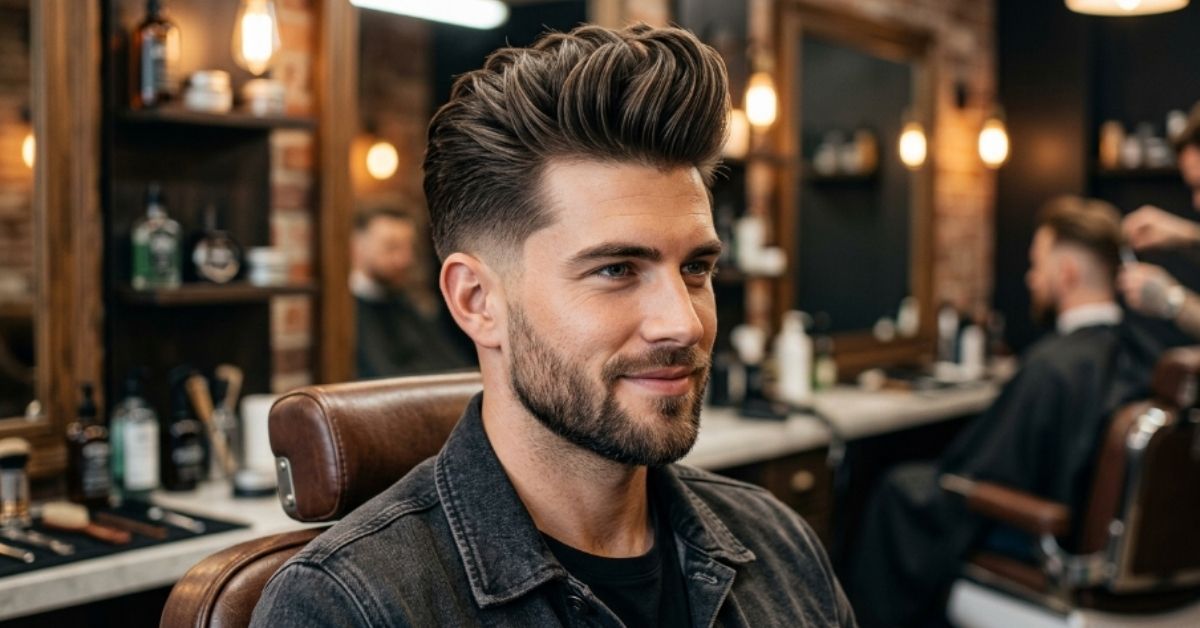
The quiff has outlasted almost every other men’s hairstyle trend, and 2026 proves why. It bends toward whatever a man wants it to be: sharp and businesslike on a Monday, textured and undone on a Saturday night. Barbers are still cutting more quiffs than nearly any other style this year because it works on thick hair, thin hair, straight hair, and curls, and it flatters nearly every face shape when the proportions are right.
This guide breaks down 36 quiff variations you can screenshot and bring to your next appointment, along with the barber terminology to describe them, styling steps that actually hold up through a full workday, product recommendations, and answers to the questions men ask most before booking the chair. Whether you want a low-maintenance everyday cut or a bold statement look, there is a version here built for your hair type and lifestyle.
What Is a Quiff Haircut?
A quiff haircut is a style where the hair on top, especially at the front, is cut longer and styled upward and slightly back to create height and volume. The sides are typically kept shorter, often with a fade, taper, or undercut, so the raised top has room to stand out. It borrows the lift of a pompadour, the sleekness of a side part, and the movement of a brush-up, landing somewhere between all three.
The Origin of the Quiff Hairstyle
The quiff traces back to the 1950s, when rock and roll culture pushed young men toward bolder, more expressive hairstyles. Elvis Presley, James Dean, and other icons of the era popularized the swept-forward look, and it became shorthand for rebellious confidence. The style resurfaced in the 1980s new wave scene, again in the 2010s alongside the undercut boom, and now in 2026 it has settled into something more versatile: less about shock value, more about clean structure and everyday wearability.
Key Features of a Quiff Haircut
Most quiff styles share a few defining traits:
- Short to medium sides, usually tapered, faded, or undercut
- Longer hair on top, generally 3 to 6 inches at the front
- Hair swept upward and back to build height at the crown or hairline
- A defined contrast between the shorter sides and the raised top
- Flexibility to go sleek and polished or textured and messy
Why Men Love Quiff Haircuts
The quiff keeps winning because it solves several problems at once. It adds height and structure to flatter hair, it works with a blow dryer and a small amount of product rather than a lengthy routine, and it transitions easily from the office to a night out. It also grows out gracefully, which matters to anyone who cannot get to the barber every three weeks.
Who Should Get a Quiff Haircut?
The quiff suits most men, but it is especially strong for:
- Men with medium to thick hair who want natural volume
- Those with oval, square, or diamond face shapes
- Anyone who wants a low-effort style that still looks intentional
- Men transitioning from a longer style into something shorter and sharper
- Guys who want one haircut that adapts from formal to casual with a change in product
Top 36 Quiff Haircut Styles for Men in 2026
1. Classic Quiff Haircut
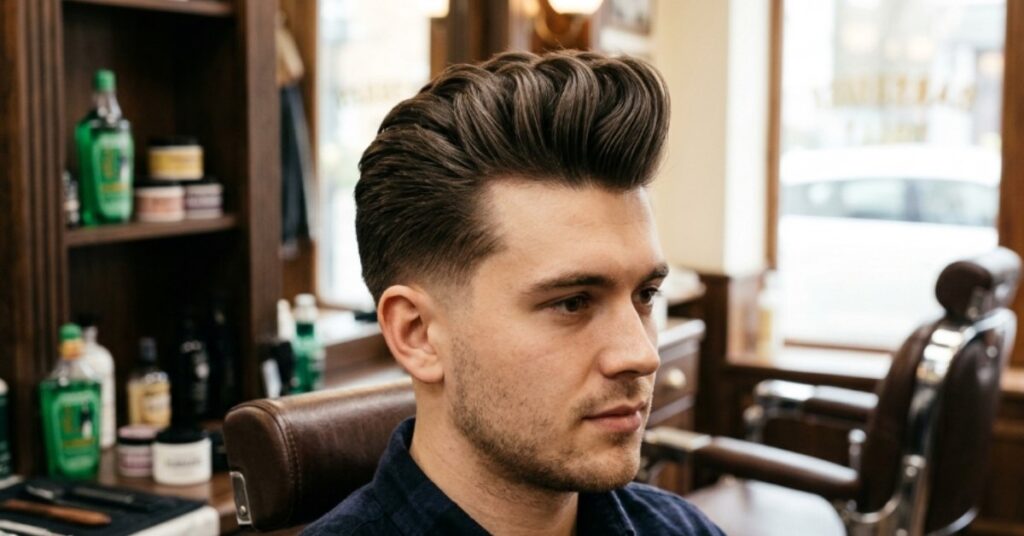
The original silhouette: short, tapered sides with a tall, swept-back top styled with pomade for shine and hold. It reads polished and timeless rather than trendy, which is exactly the point.
Styling tip: Use a medium-shine pomade and a round brush while blow-drying to build the base lift before styling.
2. Modern Quiff Haircut
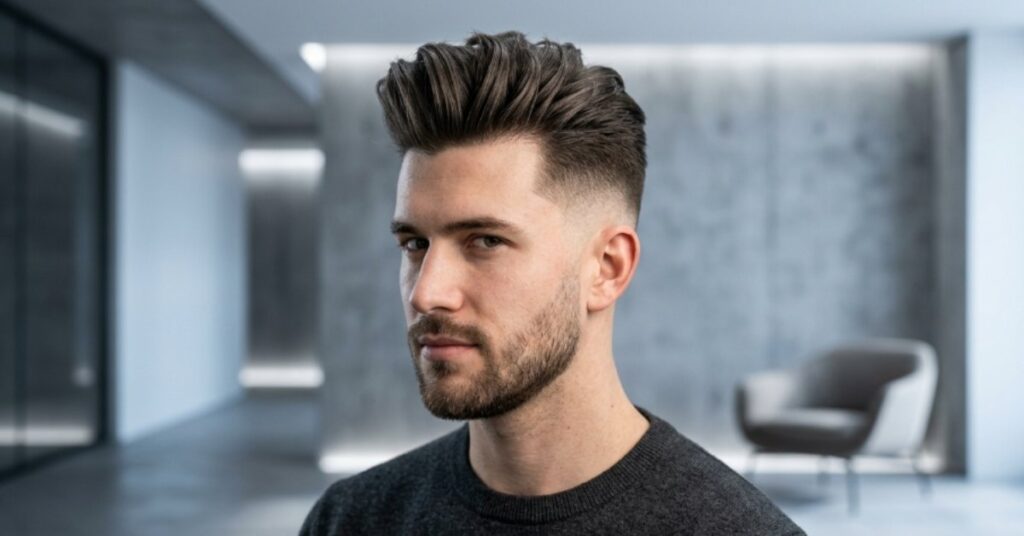
A fresher take on the classic, with a slightly lower fade, more textured finish, and less rigid shine. It keeps the height but trades the slicked look for something more relaxed and current.
Styling tip: Combine a matte clay with a small amount of texture powder for a natural, non-glossy finish.
3. Short Quiff Haircut

Ideal for men who want the quiff silhouette without the daily styling commitment. The top is cut to around 2 to 3 inches, just enough to lift and shape with minimal product.
Styling tip: A light-hold cream is usually enough; heavy pomade will weigh short hair down.
4. Long Quiff Haircut
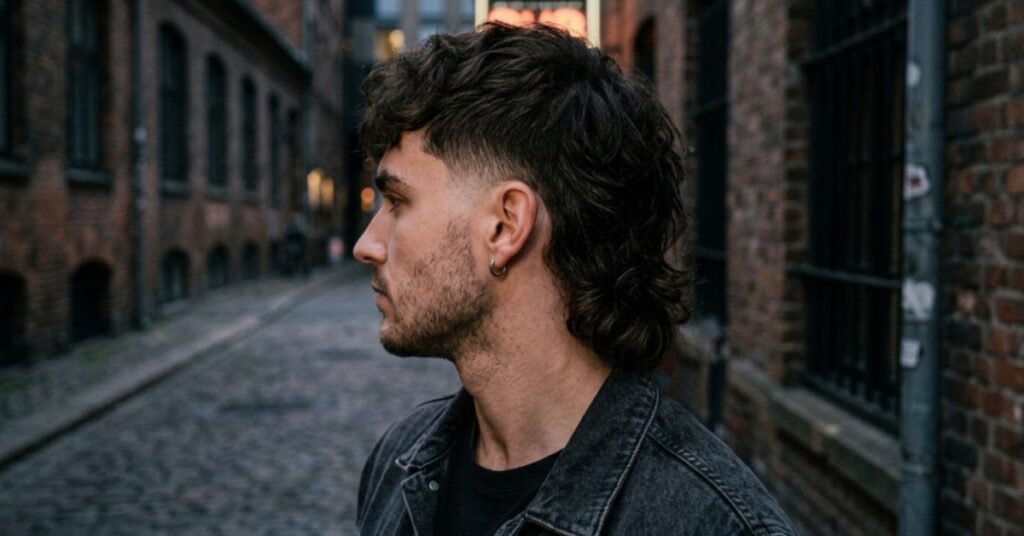
For men who want maximum drama, the top is left at 5 inches or longer, giving the style serious height and movement. It pairs especially well with an undercut or disconnected sides for contrast.
Styling tip: Blow-dry in sections against the direction of growth to maximize lift before applying a strong-hold product.
5. Textured Quiff Haircut
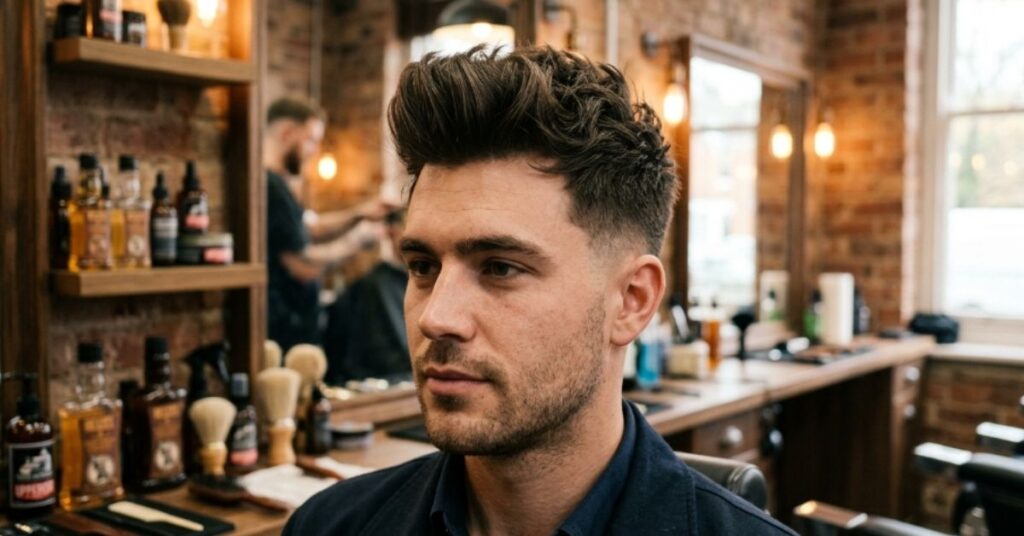
Point-cut layers throughout the top create separation and movement instead of one smooth mass of hair. This version photographs well and adds a lived-in, slightly rugged quality.
Styling tip: Work a matte paste through damp hair with your fingers rather than a comb to keep the texture visible.
6. Messy Quiff Haircut

An intentionally undone finish where pieces fall out of place instead of sitting in a uniform sweep. It looks effortless but actually depends on a precise underlying cut.
Styling tip: Scrunch a sea salt spray or texturizing powder into towel-dried hair, then tousle with your hands, not a comb.
7. Taper Fade Quiff
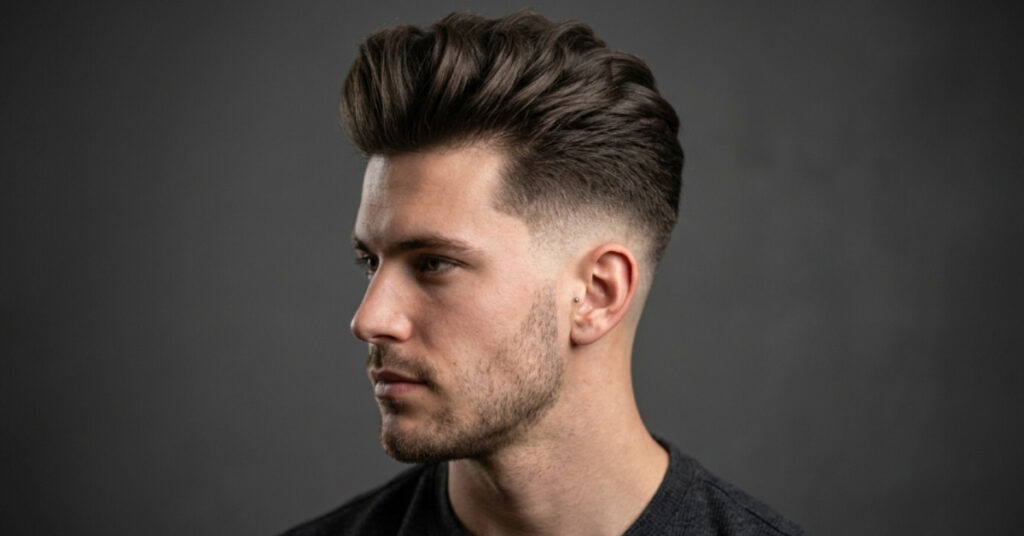
A soft, gradual shortening of the sides and back that blends into the top without a hard line. It is the most versatile fade choice because it suits both formal and casual settings.
Styling tip: Ask your barber for a 30 to 45 minute taper that starts around the ears for the smoothest transition.
8. Low Fade Quiff
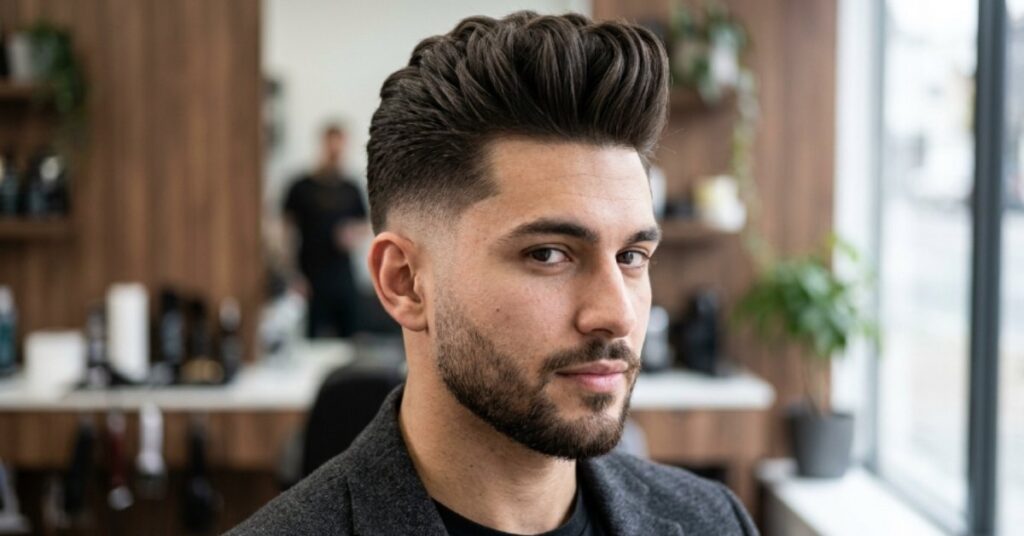
The fade begins just above the ears, keeping more length on the sides for a subtler, more conservative look. It is a strong pick for workplaces with traditional dress codes.
Styling tip: Pair with a side part for an extra-polished, corporate-friendly finish.
9. Mid Fade Quiff
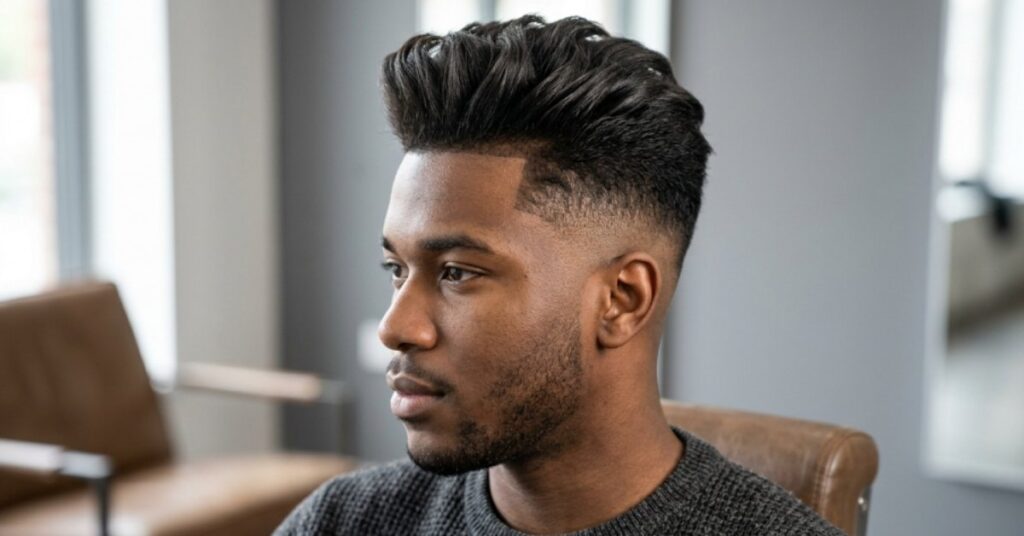
The fade starts around the temple, striking a balance between the low fade’s subtlety and the high fade’s boldness. It is the most requested fade height for quiffs in 2026.
Styling tip: This fade height flatters nearly every face shape, making it a safe first choice if you are new to fades.
10. High Fade Quiff
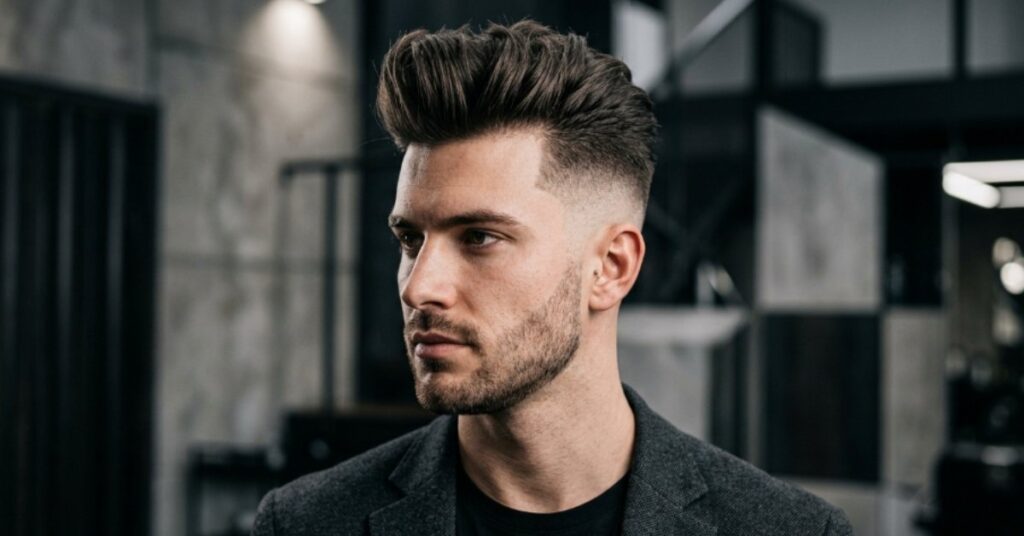
The fade begins near the top of the head, creating a dramatic jump between the short sides and the tall top. It reads athletic, sharp, and confident.
Styling tip: Because so little length remains on the sides, plan on fade maintenance every 2 to 3 weeks to keep the line crisp.
11. Skin Fade Quiff
The sides are faded all the way down to bare skin, giving the sharpest possible contrast against the voluminous top. It is bold, modern, and demands frequent upkeep.
Styling tip: Skin fades grow out fastest of all fade types, so budget for more frequent barber visits than any other quiff on this list.
12. Burst Fade Quiff
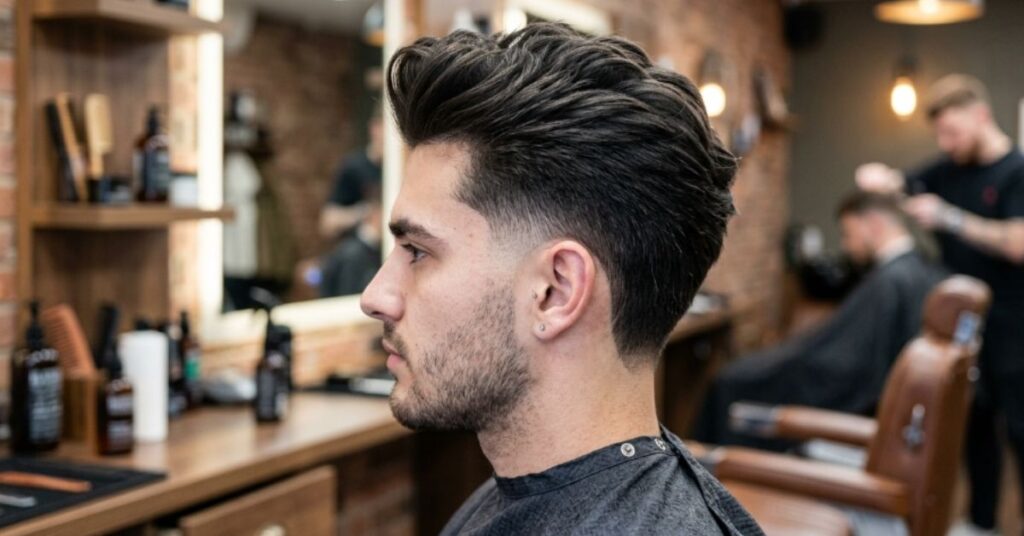
The fade curves around the ear rather than running in a straight line, blending seamlessly into the back and sideburns. It gives a rounder, more natural shape than a standard fade.
Styling tip: This fade works particularly well when paired with a longer quiff for extra visual contrast.
13. Drop Fade Quiff
The fade line dips downward behind the ear before curving back up, adding shape and dimension to the sides. It is a favorite among barbers who want to show off precision cutting.
Styling tip: Ask specifically for a “drop fade,” since it requires more technical skill than a standard taper.
14. Undercut Quiff
The sides and back are cut dramatically shorter than the top, often with clippers on a low guard, creating stark contrast without the gradient of a fade. It is a strong choice for men who want maximum volume on top.
Styling tip: Disconnected undercuts pair especially well with a long, textured quiff for a bold, modern silhouette.
15. Slicked Back Quiff
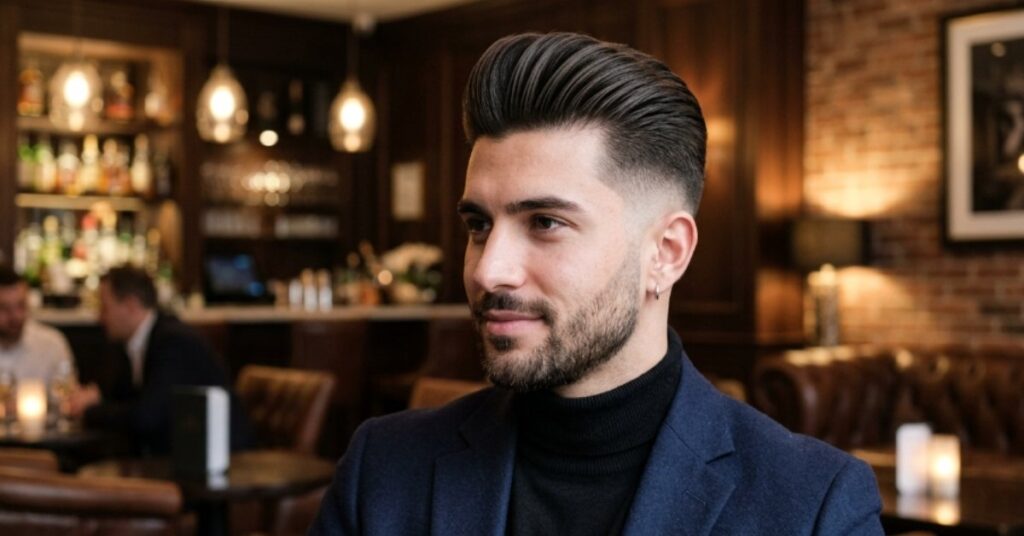
The top is combed straight back with a glossy pomade rather than lifted forward, giving a sleek, formal finish reminiscent of old Hollywood. It reads as the most polished version of the style.
Styling tip: Use a fine-tooth comb and a high-shine pomade, and comb while the product is still slightly damp for the smoothest result.
16. Side Part Quiff
A defined part line runs along one side, with the longer section swept up and over. It combines quiff volume with the structure and formality of a side part cut.
Styling tip: Have your barber cut the part with clippers for a crisp, long-lasting line rather than relying on a comb alone.
17. Comb Over Quiff
The top hair is combed to one side rather than swept straight up, giving a lower-profile, business-appropriate variation of the quiff. It works well for men who want subtlety over height.
Styling tip: A light pomade with a comb, applied to slightly damp hair, keeps this style neat through a full workday.
18. Curly Quiff Haircut
Natural curls are left longer on top and lifted at the root, letting the curl pattern itself create volume instead of forcing straight styling. It looks natural and requires less heat styling than other variations.
Styling tip: Apply a curl cream to soaking wet hair and diffuse on low heat to preserve curl definition while adding lift.
19. Wavy Quiff Haircut
Similar to the curly version but with looser waves, this style uses natural texture to create soft movement across the top rather than a tight, structured sweep. It is one of the lowest-maintenance quiff variations.
Styling tip: A sea salt spray enhances natural wave pattern without the stiffness of a heavier pomade.
20. Thick Hair Quiff
Thick hair holds height naturally, so this version leans into that strength with a fuller, more voluminous top and a fade or taper on the sides to balance the density.
Styling tip: A lightweight clay prevents thick hair from feeling heavy or greasy by midday.
21. Thin Hair Quiff
Cut with shorter layers and styled with volumizing products, this version is designed to create the illusion of density that thin hair does not naturally provide.
Styling tip: Blow-dry upside down before styling to maximize root lift, then finish with a texture powder for extra grip.
22. Asian Quiff Haircut
Tailored for the straighter, often thicker hair texture common among Asian men, this version usually pairs a textured, slightly angled top with a taper or skin fade for sharp contrast.
Styling tip: A matte styling cream works better than pomade on straight, thick hair, since it grips without adding unwanted shine.
23. Pompadour Quiff
A hybrid style that borrows the pompadour’s height and volume at the front while keeping the quiff’s more relaxed, less rigid sweep through the rest of the top.
Styling tip: Focus your styling product at the front hairline for lift, and use a lighter touch through the back to avoid an overly stiff, dated look.
24. Beard with Quiff Haircut
Pairing a full or well-shaped beard with a quiff balances volume up top with weight along the jawline, creating a more proportioned overall look. It is one of the most requested combinations among bearded men in 2026.
Styling tip: Keep beard length proportional to quiff height; a very tall quiff paired with a very short beard can look top-heavy.
25. Razor Fade Quiff
Cut with a straight razor instead of clippers, this fade produces an ultra-smooth, almost seamless gradient on the sides. It is a premium option that usually costs more and takes longer in the chair.
Styling tip: Ask specifically for a razor fade if you want the smoothest possible finish; not every barbershop offers it.
26. Disconnected Quiff
The top and sides are cut with no blending between them at all, creating an intentional, hard contrast instead of a gradual fade or taper. It is one of the boldest quiff variations on this list.
Styling tip: This cut requires confidence and a strong-hold product, since there is no gradual transition to soften the look if styling falls flat.
27. Quiff with Hard Part
A shaved line, rather than a combed one, marks the part, adding a sharp, graphic detail to the style. It is popular with men who want an extra design element without a full undercut.
Styling tip: Hard parts need to be touched up every 1 to 2 weeks to stay crisp, since regrowth fills the shaved line quickly.
28. Brushed Up Quiff
The hair is styled straight up rather than swept back or to the side, creating maximum height with a slightly more casual finish than a classic quiff.
Styling tip: Blow-dry hair upward using a round brush, then finish with a strong-hold paste applied in the same upward direction.
29. Spiky Quiff Haircut
Individual pieces are separated and lifted into defined points rather than one uniform sweep, giving a more youthful, energetic finish.
Styling tip: Use a small amount of wax on dry hair and pinch sections between your fingers to create definition.
30. Professional Business Quiff
A conservative, low-height version designed to meet workplace dress codes while still offering some structure and lift. The fade or taper is subtle, and the finish is neat rather than dramatic.
Styling tip: Keep the top height under 3 inches and use a light-hold pomade for an office-appropriate finish that lasts all day.
31. Quiff Mullet
The quiff volume up front is paired with longer length left at the back, blending two of the boldest trends in men’s hair into one style. It is a strong choice for men who want to stand out.
Styling tip: Ask your barber to keep the back length proportional to the front height so the style reads intentional rather than unfinished.
32. Quiff Mohawk Fade
Both sides are faded down close to the skin, leaving a narrow strip of longer hair down the center that is styled into quiff-like height at the front. It is one of the most attention-grabbing variations here.
Styling tip: This style requires daily restyling and frequent fade maintenance to stay sharp.
33. Low Maintenance Quiff
Cut with shorter layers on top and a soft taper on the sides, this version is built to look good with minimal daily effort, sometimes needing nothing more than towel-drying and a quick comb.
Styling tip: Ask your barber for a cut that air-dries into shape naturally, reducing your reliance on a blow dryer.
34. Volume Quiff Haircut
Cut and styled specifically to maximize height and fullness at the crown, this version often uses layering techniques and root-lifting products to create maximum lift regardless of natural hair density.
Styling tip: Root-lifting mousse applied before blow-drying makes the biggest difference for men chasing extra height.
35. Modern Gentleman Quiff
A refined, grown-up interpretation that pairs a side part with quiff structure for a look that is polished, intentional, and quietly confident rather than flashy.
Styling tip: Style with a matte pomade rather than a high-shine one for a more contemporary, understated finish.
36. Trendy Quiff Haircut
The version barbers are cutting most right now: lived-in texture, a subtle fade, and natural-looking volume that looks great without looking overworked.
Styling tip: Combine texture powder with a small amount of matte clay for a modern finish that holds without stiffness.
How to Ask Your Barber for a Quiff Haircut
Walking in and saying “I want a quiff” is a fine start, but the more specific you are, the closer the result will match what you have in mind.
Choose Your Preferred Quiff Length
Decide roughly how tall you want the top: short (2 to 3 inches) for low maintenance, medium (3 to 4 inches) for the classic look, or long (5 inches or more) for maximum drama.
Decide on the Fade or Taper
Tell your barber whether you want a low, mid, or high fade, or a soft taper instead. If you are unsure, a mid fade or taper is the safest, most universally flattering starting point.
Discuss Texture and Volume
Let your barber know if you want a sleek, slicked finish or a textured, messy one, since this affects how they cut and layer the top.
Show Reference Photos
Bring two or three photos, ideally from angles that show the front, side, and back. Photos communicate far more accurately than verbal descriptions alone.
Mention Your Styling Routine
Be honest about how much time you actually spend styling your hair each morning. A barber can cut a low-maintenance quiff that still looks sharp if they know you are not going to blow-dry it daily.
How to Style a Quiff Haircut (Step-by-Step Tutorial)
Step 1: Wash and Towel Dry Your Hair
Start with clean, product-free hair and towel dry until it is damp, not dripping. Styling products grip damp hair far better than soaking wet or fully dry hair.
Step 2: Apply a Pre-Styling Product
Work a small amount of sea salt spray or volumizing mousse through the roots to give your blow dryer something to build on.
Step 3: Blow Dry for Maximum Volume
Using a round brush, blow-dry the top section upward and slightly back, lifting at the roots as you go. Finish with a short blast of cool air to set the shape.
Step 4: Create the Quiff Shape
Comb or brush the front section upward and back into your desired shape, deciding at this stage whether you want height at the front hairline or further back at the crown.
Step 5: Apply Styling Product
Rub a small amount of pomade, clay, or paste between your palms and work it through from mid-length to ends, avoiding the roots so you do not flatten the volume you just built.
Step 6: Lock the Style in Place
Reshape any loose sections with your fingers and, if needed, a light-hold hairspray to keep everything in place through the day.
Best Hair Products for a Quiff Haircut
Matte Clay for Natural Texture
Clay offers strong hold with a flat, non-shiny finish, making it ideal for textured or messy quiff variations.
Pomade for Shine
Pomade delivers a glossy, polished finish and is the go-to product for classic, slicked-back, or side-part quiffs.
Hair Wax for Strong Hold
Wax provides firm, long-lasting hold and works especially well for spiky or disconnected quiff styles that need pieces to stay separated.
Texture Powder for Volume
Lightweight texture powder adds grip and volume at the root, making it a favorite for thin hair or low-maintenance quiffs.
Sea Salt Spray for Movement
Sea salt spray enhances natural wave and texture without weighing hair down, making it ideal for wavy or curly quiff variations.
Choosing the Right Quiff Haircut for Your Face Shape
Quiff for Oval Faces
Oval faces can wear nearly any quiff variation without restriction, since the balanced proportions of this face shape suit both tall and low-volume styles equally well.
Quiff for Round Faces
A taller quiff with a high or skin fade adds vertical length, helping to visually slim and elongate a round face.
Quiff for Square Faces
A textured or messy quiff softens the strong jawline typical of square faces, while a side part adds asymmetry that balances sharp angles.
Quiff for Diamond Faces
A quiff with moderate height and a taper fade works well, since diamond faces already have strong cheekbone definition that does not need extra emphasis at the sides.
Quiff for Heart-Shaped Faces
A lower-volume quiff with more width through the sides helps balance a heart-shaped face’s narrower jawline and wider forehead.
Best Quiff Haircuts Based on Hair Type
Straight Hair Quiff
Straight hair holds a sleek, structured quiff shape well but may need a strong-hold pomade or clay to prevent the top from falling flat by midday.
Wavy Hair Quiff
Wavy hair adds natural texture and movement, making it well-suited to messy or textured quiff variations with minimal product.
Curly Hair Quiff
Curly hair provides built-in volume, so a curly quiff often needs less styling effort but benefits from a curl-specific cream to define and control the pattern.
Thick Hair Quiff
Thick hair holds height with ease, making it ideal for tall, dramatic quiff styles, though a lightweight product is important to avoid excess bulk.
Thin Hair Quiff
Thin hair benefits from shorter layering and volumizing products, since these techniques create the appearance of density that thin strands lack on their own.
Quiff Haircut vs Pompadour
Main Differences
A quiff sweeps hair upward and slightly back with a more relaxed, natural shape, while a pompadour is combed straight back and up with a more structured, uniform silhouette.
Styling Requirements
Pompadours typically require more product and precise combing to achieve their smooth, structured finish, while quiffs allow for more textured, hands-on styling.
Which Style Offers More Volume?
Pompadours generally offer more height and volume at the front, since the entire top section is combed backward and lifted uniformly.
Which One Is Easier to Maintain?
Quiffs are usually easier to maintain day to day, since their more relaxed shape forgives minor styling imperfections better than a pompadour’s precise structure.
Quiff Haircut vs Comb Over
Key Differences
A quiff is styled with height and volume at the front, while a comb over lies flatter and is directed to one side rather than upward.
Best Face Shapes for Each Style
Quiffs suit round and square faces especially well thanks to the added height, while comb overs work well across most face shapes since they add width rather than length.
Which Haircut Looks More Modern?
Quiffs generally read as more modern and trend-forward in 2026, while comb overs lean toward a more traditional, business-oriented aesthetic.
Quiff Haircut Maintenance Tips
Trim Every 2–4 Weeks
Regular trims keep the shape sharp, especially for shorter or faded variations that grow out quickly.
Use Quality Hair Products
Higher-quality pomades, clays, and waxes distribute more evenly and hold longer without the buildup that cheaper products can cause.
Avoid Excessive Heat Damage
Limit daily blow-drying on high heat, and use a heat protectant if you style with hot tools regularly.
Keep Hair Hydrated
A light conditioner or leave-in treatment keeps hair healthy enough to hold shape and style without becoming brittle.
Maintain Fade Regularly
Faded sides need touch-ups every 2 to 3 weeks to stay crisp, since fades grow out faster than the longer hair on top.
Common Quiff Haircut Mistakes to Avoid
Using Too Much Product
Overloading hair with pomade or wax weighs it down and creates a greasy look instead of clean volume.
Skipping Blow Drying
Air-drying alone rarely creates enough lift for a true quiff shape, especially on straight or fine hair.
Choosing the Wrong Hair Length
A top that is too short limits your styling options, while one that is too long can look unstructured without regular maintenance.
Ignoring Face Shape
Choosing a quiff variation without considering your face shape can emphasize features you would rather balance out.
Neglecting Regular Trims
Skipping trims lets the fade or taper grow out unevenly, making the whole style look unkempt even if the top is styled well.
FAQs
Is a quiff haircut still in style in 2026?
Yes, the quiff remains one of the most popular men’s hairstyles in 2026, now leaning toward textured, natural-looking finishes over rigid, heavily gelled looks.
How long does hair need to be for a quiff?
Most quiffs need at least 3 inches of length on top, though shorter versions can work with as little as 2 inches if styled correctly.
Does a quiff work with thin hair?
Yes, a quiff can work well with thin hair when cut with shorter layers and styled using volumizing products.
How often should I get my quiff trimmed?
Plan on a trim every 2 to 4 weeks, or every 2 to 3 weeks if you have a fade on the sides.
What is the best product for a quiff haircut?
The best product depends on your desired finish: pomade for shine, clay for a matte texture, or wax for maximum hold.
Can I do a quiff with curly hair?
Yes, curly hair naturally adds volume that suits a quiff well, especially when styled with a curl-defining cream.
Is a quiff hard to maintain?
A quiff requires more daily styling than a basic short haircut, but low-maintenance versions with shorter layers can look good with minimal effort.
What is the difference between a quiff and an undercut?
A quiff refers to the swept-up style on top, while an undercut refers to how short the sides are cut; the two are often combined into one style.
Conclusion
The quiff earns its staying power because it never demands you choose between polished and personal. With 36 variations covering every hair type, face shape, and maintenance level, there is a version here that fits your lifestyle rather than forcing you into someone else’s routine. Bring a reference photo, be specific about fade height and top length, and let your barber tailor the details from there. Whichever version you choose, a well-cut quiff is one of the few styles that looks just as sharp on day one as it does three weeks later.
About Ryan Carter
Men’s Hairstyle Writer & Grooming Content Specialist
Ryan Carter covers men’s grooming and hairstyling trends, with a focus on practical, barber-verified advice that readers can bring straight to their next appointment.

Charlotte Aiden is the founder and editor of FaxhionTips.com, where he shares practical insights on the latest haircut trends, hairstyles, grooming tips, and hair care advice. Passionate about modern style and easy-to-follow beauty guidance, Charlotte creates well-researched content to help readers choose the best haircuts and maintain healthy, stylish hair with confidence.