
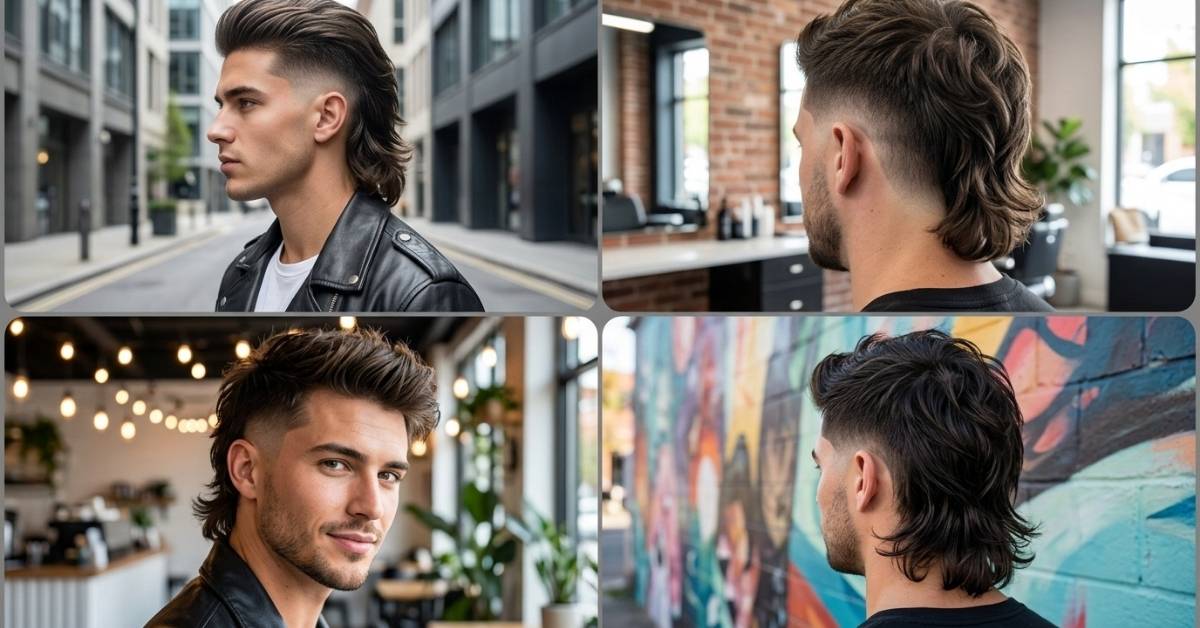
A haircut usually forces a choice. Sharp or relaxed. Office ready or weekend ready. Bold or safe. The low taper mullet skips that trade off entirely. The sides stay tight and controlled, the top carries just enough texture to look intentional, and the back holds length that flows instead of flopping. It reads as polished from the front and expressive from the side, which is exactly why it has become one of the most requested cuts of the year.
This guide breaks the style down properly. You’ll learn what actually separates a low taper mullet from a mid or high version, how to match it to your face shape and hair type, sixteen ways to wear it, the exact words to use in the barber’s chair, and how to keep it looking fresh between visits. If you’ve been on the fence about trying a mullet, this is the place to start.
What Is a Low Taper Mullet
A low taper mullet is a haircut where the sides and back taper down close to the skin near the ear and hairline, then blend upward into a longer, layered section at the back. The word “low” refers to where the taper starts. It sits near the bottom of the head, close to the ears and neckline, rather than climbing higher up the sides.
That low starting point is what makes the cut feel understated compared to louder mullet variations. There’s no dramatic contrast line, no shaved patch that jumps out in a meeting. Instead, you get a soft, gradual transition from short to long. From the front, the outline looks clean and tidy, almost like a standard taper haircut. Turn to the side or back, and the signature mullet length appears, usually resting somewhere between the collar and the shoulders.
Three sections define the shape:
- The top. Length varies by preference, but it’s usually kept shorter than the back and often carries light texture or layers.
- The sides. These taper gradually, getting shorter as they move down toward the ear and neckline, with the closest point sitting right at the skin.
- The back. This is the mullet’s signature zone. Length here can run from just below the ears to well past the collar, depending on how bold you want to go.
Because the taper is gentle rather than shaved, this version of the mullet grows out cleanly. You won’t get an awkward demarcation line after two or three weeks the way you might with a harder fade. That single detail explains a lot of the style’s popularity: it looks deliberate on day one and still looks decent on day twenty five.
Face Shape and Hair Type Guide
Not every haircut flatters every face, but the low taper mullet is more forgiving than most. Because the taper stays close to the head and the length sits mostly at the back, it doesn’t add width or height in ways that clash with your features. Still, small adjustments make a real difference, and knowing your face shape and hair texture before you sit in the chair saves everyone time.
Use the table below as a starting point, not a rulebook. Your barber can fine tune from there once they see your hairline, head shape, and hair density in person.
| Face Shape | What To Ask For | Why It Works |
| Oval | Almost any version, including a bolder back length | Balanced proportions handle contrast well |
| Round | Slightly more height on top, tighter taper at the sides | Adds vertical line and avoids extra width |
| Square | Soft, textured top with a gradual taper | Softens strong jawline angles |
| Diamond | Textured fringe or forward pieces at the front | Balances a narrower chin and wider cheekbones |
| Heart | Fuller top, longer back for visual weight lower down | Balances a wider forehead against a narrower jaw |
| Oblong | Shorter back, fuller sides | Prevents the face from reading as longer |
Hair type matters just as much as face shape, since it decides how the cut behaves day to day.
- Straight hair holds a crisp taper line well and takes layering easily, which is why most barbers add movement through the top and back to avoid a flat, one length look.
- Wavy hair already brings natural texture, so a light shaping approach usually beats heavy layering. Let the waves do the work.
- Curly hair benefits from soft thinning rather than blunt cutting, which keeps curl definition intact instead of creating a bulky triangle shape.
- Coily hair does well with a sharper taper at the temple and neckline paired with minimal thinning up top, since coils already carry volume on their own.
If you’re still unsure which combination suits you, bring two or three reference photos to your appointment. A good barber reads your hairline, head shape, and hair density and steers you toward the version that will actually work, not just the one that looks best in a photo of someone else.
Variations
The low taper mullet isn’t one fixed haircut. It’s a framework that flexes based on how much contrast you want, how long you’re willing to grow the back, and how much daily styling you’re up for. Below are sixteen ways to wear it, ranging from the entry level version to bolder takes for guys who want more attention on the length.
1) Low Taper Mullet (Baseline)
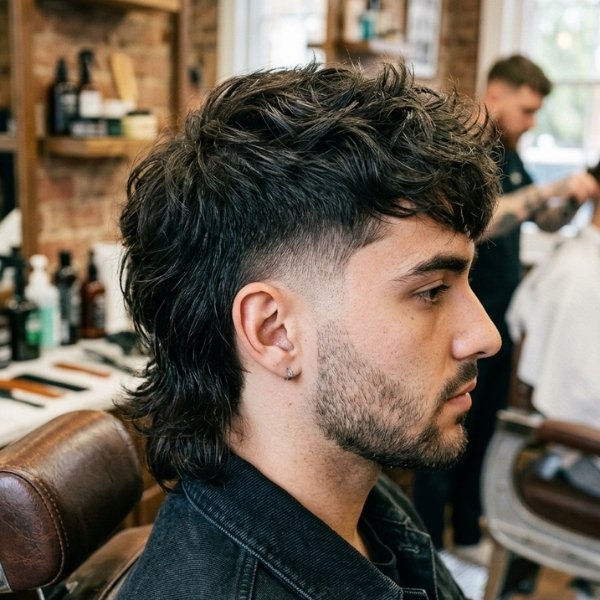
This is the version to start with if you’re new to the style. It uses a gentle taper at the ear and neckline, a lightly textured top, and a layered back that falls somewhere near the collar. Nothing about it feels extreme, which makes it easy to request and easy to live with while you decide if you want to grow it out further later.
2) Low Taper Mullet Fade
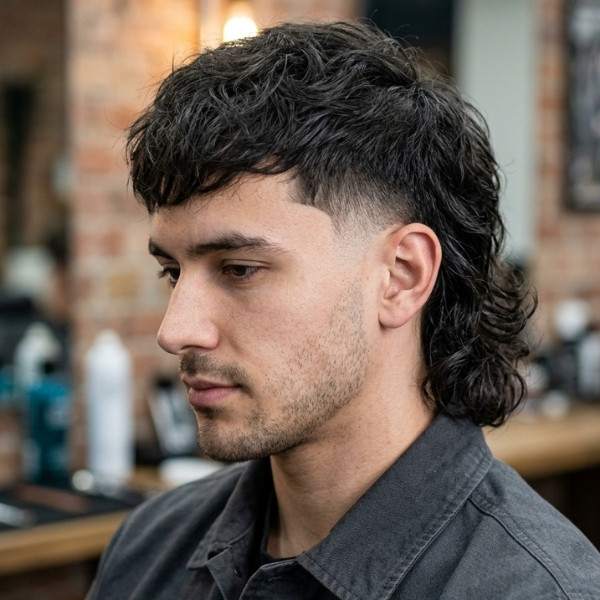
Here the blend sharpens. Instead of a soft gradual taper, the sides shorten more cleanly near the ear before opening back up into the top and back sections. It suits thick hair particularly well, since the tighter fade removes bulk around the cheek area without touching the length at the back.
3) Low Taper Mullet Straight Hair
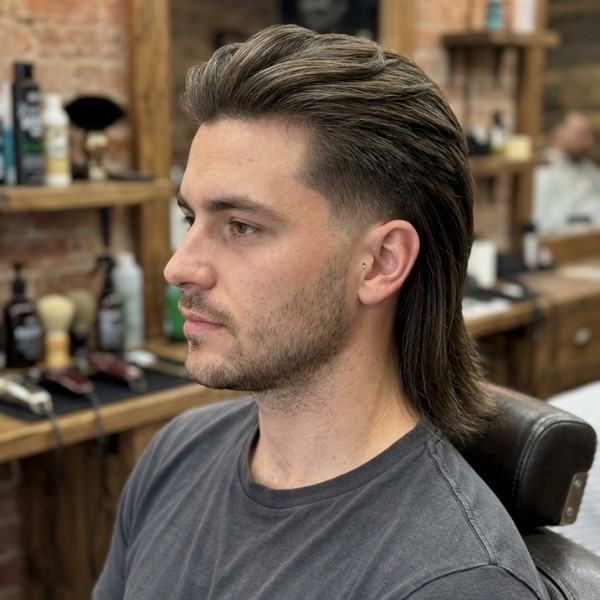
Straight strands hold a taper line cleanly, so this version leans into layering through the top and back to stop the cut from looking one dimensional. Ask for graduated layers rather than a single blunt length, and the back will move naturally instead of sitting flat.
4) Low Taper Mullet Curly Hair
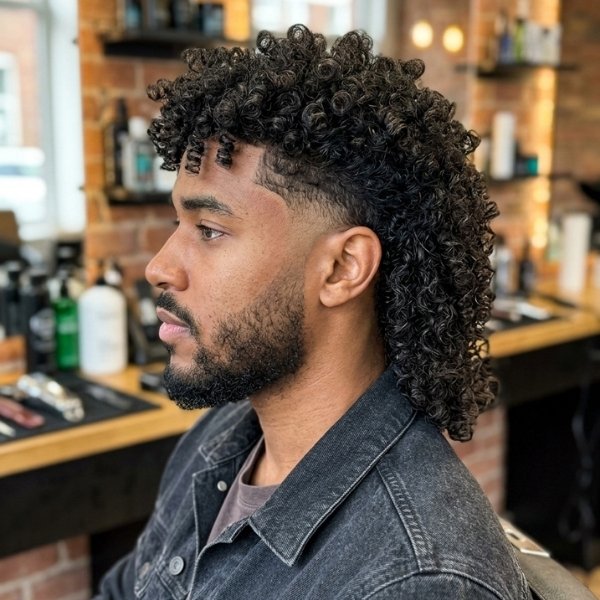
Curls add volume on their own, so the goal here is control, not more texture. Soft thinning through the back keeps curl pattern defined while the low taper frames the face cleanly. A curl cream with a touch of light gel on damp hair helps hold the shape without weighing curls down.
5) Low Taper Mullet Wavy Hair
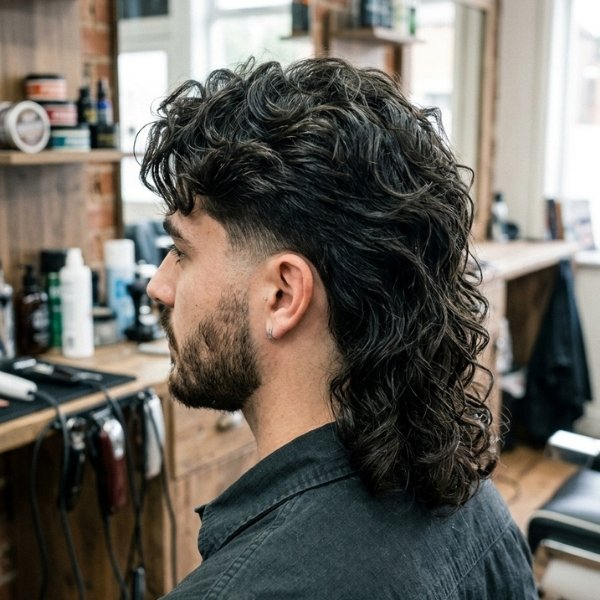
Wavy hair sits right between straight and curly, and this cut is built to show that off. The taper stays low and tidy at the sides and neckline while longer layers through the crown and back let the natural wave pattern lead. Sea salt spray on damp hair enhances the texture without extra effort.
6) Modern Mullet Taper Fade
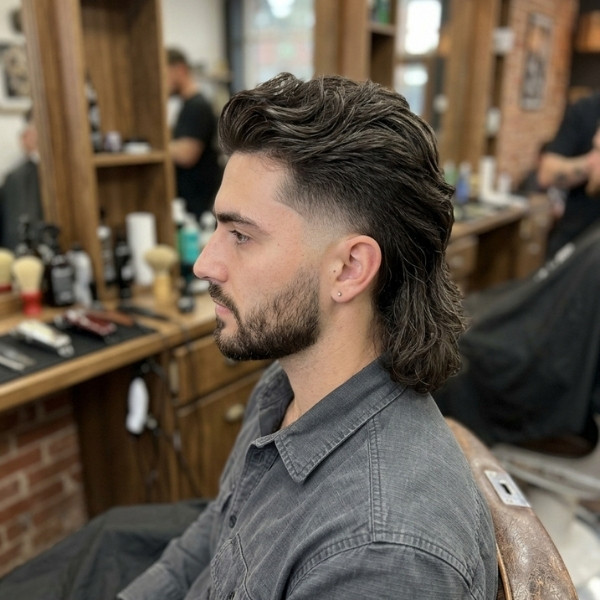
A refined take on the classic shape, this version blends layered top hair with faded sides for a smoother front to back flow. It reads as more polished than a traditional mullet and suits straight or wavy hair especially well, balancing an edgy silhouette with an office friendly finish.
7) Taper Mullet Fade
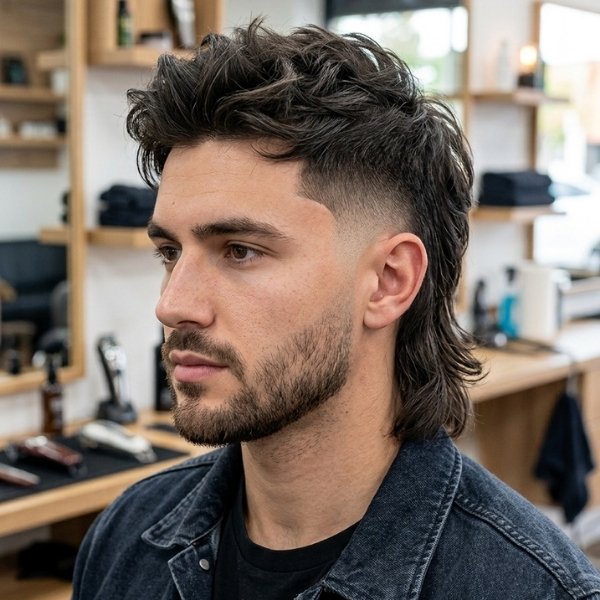
This variation brings more contrast than a standard taper. The sides shorten cleanly and open directly into the top and back, creating a leaner side profile while the back keeps its flowing length. It’s a strong pick if you want the mullet shape to be unmistakable without going into high fade territory.
8) Mid Taper Mullet
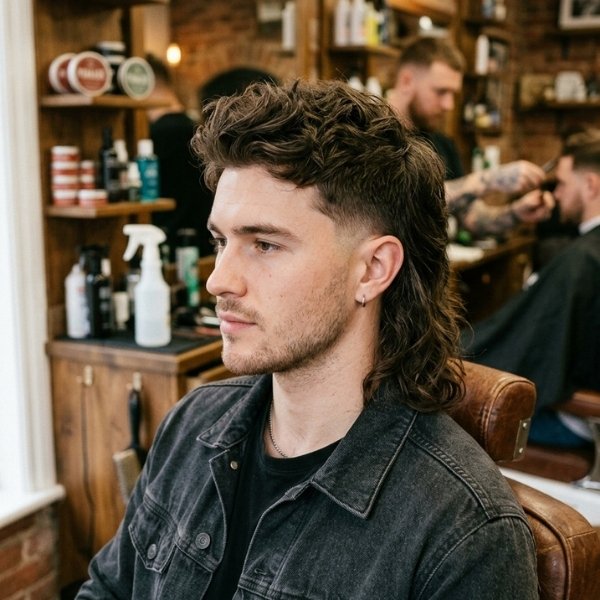
Raising the taper slightly higher up the side gives a slimmer look overall and works especially well for rounder faces, since it adds height and helps carve out the cheek area. Keep the back at a medium length for balance, and expect the cut to hold its shape well on a four to six week trim cycle.
9) High Taper Mullet
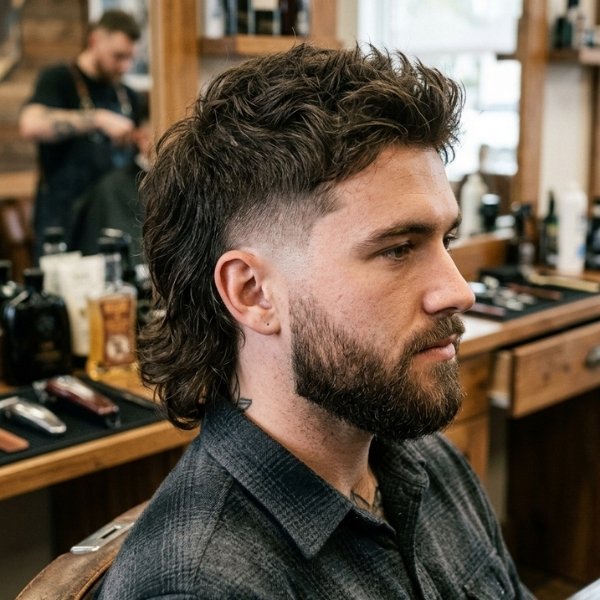
For guys who want maximum contrast, the taper climbs higher up the sides, leaving a sharper divide between the short sides and the length on top and in back. It’s bolder and more attention grabbing than the low or mid versions, and it suits angular face shapes that can handle stronger lines.
10) Tapered Mullet
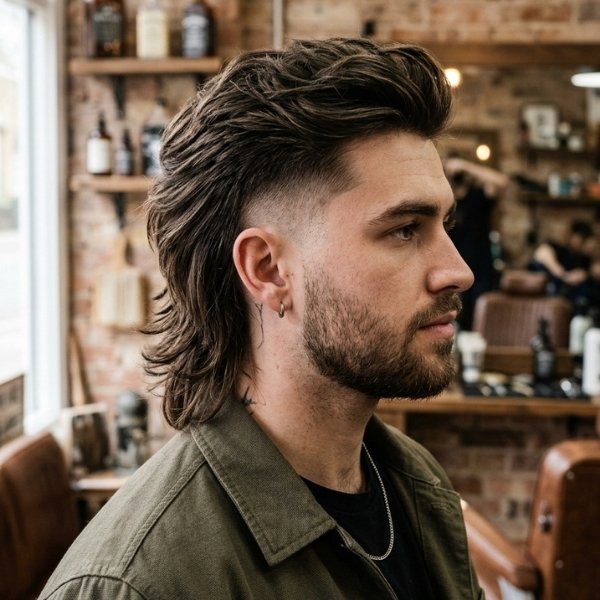
A broader, more general term that covers any mullet with gradually shortening sides rather than an abrupt fade line. It’s a good phrase to use with a barber who isn’t familiar with more specific naming, since it communicates the core idea: smooth, seamless blending rather than a shaved contrast.
11) Short Low Taper Mullet
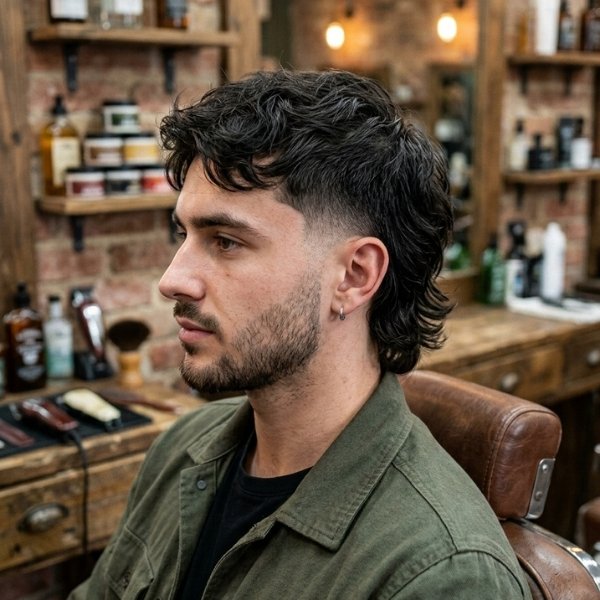
For anyone hesitant about committing to serious length, this version keeps the back modest while still tapering the sides low and clean. It reads as a subtle nod to the mullet shape rather than a full statement, and it suits active lifestyles since there’s less length to manage day to day.
12) Low Taper Mullet Middle Part

Adding a middle part changes the entire front profile, framing the face symmetrically while the low taper and longer back stay consistent underneath. It works particularly well with straight or lightly wavy hair that’s thick enough to hold a defined part without collapsing by midday.
13) Low Taper Mullet Flow
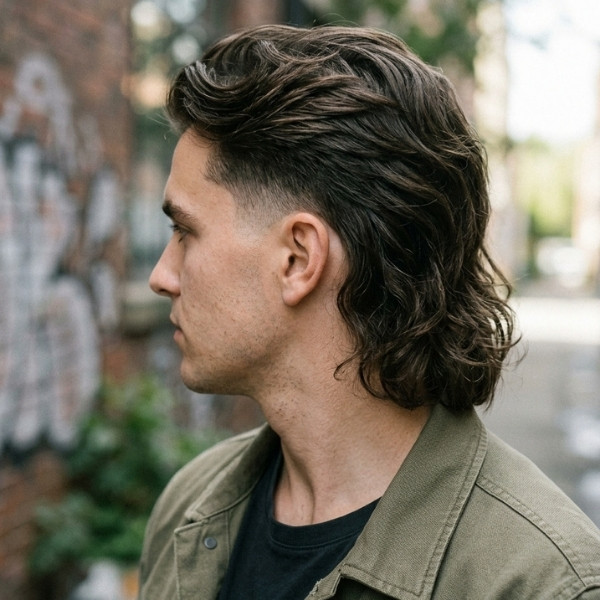
This take skips the slicked or structured finish and lets the top move naturally instead. Think tousled layers paired with a sea salt spray for grip rather than hold. It’s the most laid back version on this list and suits wavy hair especially well, since the texture logic is built around natural movement.
14) Men’s Low Taper Mullet
A general, everyday framing of the cut built for versatility over statement making. Everything stays soft and gradual: a gentle taper, a light top, and a back that sits just past the collar. It fits stricter dress codes while still carrying the mullet’s personality, making it a solid choice if you work somewhere conservative.
15) Low Taper Mullet With Beard

Pairing the cut with a well maintained beard adds balance, especially for diamond or heart shaped faces where a sculpted beard helps widen the lower half visually. Keep the beard’s edges as clean as the taper itself so the two elements read as one intentional look rather than two separate styling choices.
16) Low Taper Mullet Fade for Wavy, Curly, Straight
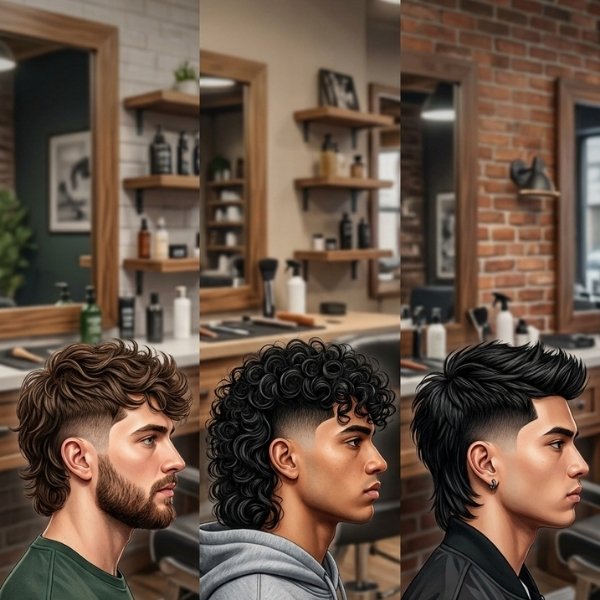
This is the most adaptable version on the list, tuned entirely to your natural texture instead of forcing one universal approach. Add layers for straight hair, use soft thinning through the back for curls, and keep light shaping for waves. Whatever your texture, the fade stays neat with a quick blow dry and a small amount of product.
How to Style in Three Steps
Daily styling for a low taper mullet doesn’t need to eat up your morning. Most guys can get it looking sharp in under five minutes with the right routine.
- Prep on damp hair. Towel dry after washing so hair is damp, not soaking. Apply a sea salt spray or light styling cream from roots to mid lengths. This adds grip and body without stiffness, which matters more here than heavy hold products.
- Blow dry with direction. Use low to medium heat and guide the hair with your fingers or a vent brush, pushing the top and back in the direction you want it to fall. This is where the mullet’s flow gets shaped, so take your time on this step rather than rushing it.
- Finish and set. Work a small amount of matte pomade or clay through the top for texture, then run your fingers lightly through the back to keep it loose rather than flat. If you have a fringe or front piece, pinch it into place for a few seconds while it cools.
The whole process takes about three to five minutes once you’ve done it a handful of times, and it works across straight, wavy, and curly textures with only minor product adjustments.
Barber Instructions
Vague requests lead to disappointing haircuts. “Give me a mullet” can mean ten different things depending on who’s holding the clippers, so specific language matters here more than almost any other cut.
- Name the taper clearly. Say “low taper” rather than just “taper” or “fade,” and mention where you want the blend to start, for example about an inch above the ear.
- Reference clipper guard sizes if you know them. A low taper typically opens with a shorter guard, like a 1 or 2, near the hairline and blends up into a longer guard, like a 4 or 5, as it climbs.
- Describe the top and back separately. These lengths don’t need to match, so be specific about each one instead of letting your barber assume they’re connected.
- Mention your neckline preference. A squared neckline can look rough within two weeks of growth, while a rounded or naturally tapered neckline stays tidy for longer between visits.
- Bring a reference photo. Even a rough visual reduces the chance of miscommunication, especially for a style with as many variations as this one.
If you want more contrast than the low version offers, mention the mid taper mullet or high taper mullet by name as alternatives your barber can compare against. That single line of communication prevents the classic mismatch between the photo you saved and the cut you actually walk out with.
Care and Upkeep
Part of why this cut has taken off is how little daily effort it demands once it’s properly shaped. A few habits keep it looking sharp between appointments.
- Trim on a schedule. Most guys get the cleanest results with a trim every four to six weeks. The sides grow out fastest, so that’s usually the section that needs the most frequent attention even if the back is left to grow longer.
- Wash smart, not constantly. Two to three washes a week is enough for most hair types. Over washing strips natural oils that actually help the back section hold its shape and shine.
- Keep products light. A fingertip of matte pomade, clay, or texture cream is plenty. Heavier products weigh down fine hair and can make thicker hair look greasy rather than textured.
- Refresh curls and waves between washes. A light mist of water plus a small amount of curl cream or sea salt spray brings texture back to life on second or third day hair without a full restyle.
- Watch the neckline and sideburns. These areas grow in fastest and are the first place a low taper starts looking untidy, so a quick cleanup between full trims goes a long way.
Follow that routine and the blend stays smooth for weeks at a time, which is exactly the low maintenance payoff that makes this cut worth the initial commitment.
FAQs
What is a low taper mullet?
It’s a haircut with a gentle taper near the ear and neckline that blends into a longer, layered back, offering a polished front and expressive length behind.
Is a mullet good for work?
Yes, especially the low taper version. The front and sides stay clean and controlled, so it reads as tidy even in conservative office settings.
How often should I trim a taper mullet?
Every four to six weeks keeps the taper sharp, though you can stretch it slightly longer if you’re deliberately growing out the back.
What’s the difference between a low taper mullet vs fade mullet?
A low taper blends gradually and gently, while a fade mullet uses a sharper, more defined contrast line between the short sides and the length on top.
Can I style a low taper mullet at home?
Absolutely. A sea salt spray, a low heat blow dry, and a small amount of matte product are all you need for a clean look in a few minutes.
Conclusion
The low taper mullet earns its popularity honestly. It doesn’t ask you to choose between looking sharp and having personality, and it doesn’t punish you for skipping a day of styling. Whether you land on the baseline version, add a beard for balance, or lean into a bolder mid or high taper down the line, the underlying formula stays the same: tight, controlled sides that blend into length shaped on purpose. Bring the right words into the barber’s chair, match the cut to your hair type and face shape, and keep up with trims every four to six weeks. Do that, and this haircut will carry you from the office to the weekend without a single compromise.

Charlotte Aiden is the founder and editor of FaxhionTips.com, where he shares practical insights on the latest haircut trends, hairstyles, grooming tips, and hair care advice. Passionate about modern style and easy-to-follow beauty guidance, Charlotte creates well-researched content to help readers choose the best haircuts and maintain healthy, stylish hair with confidence.