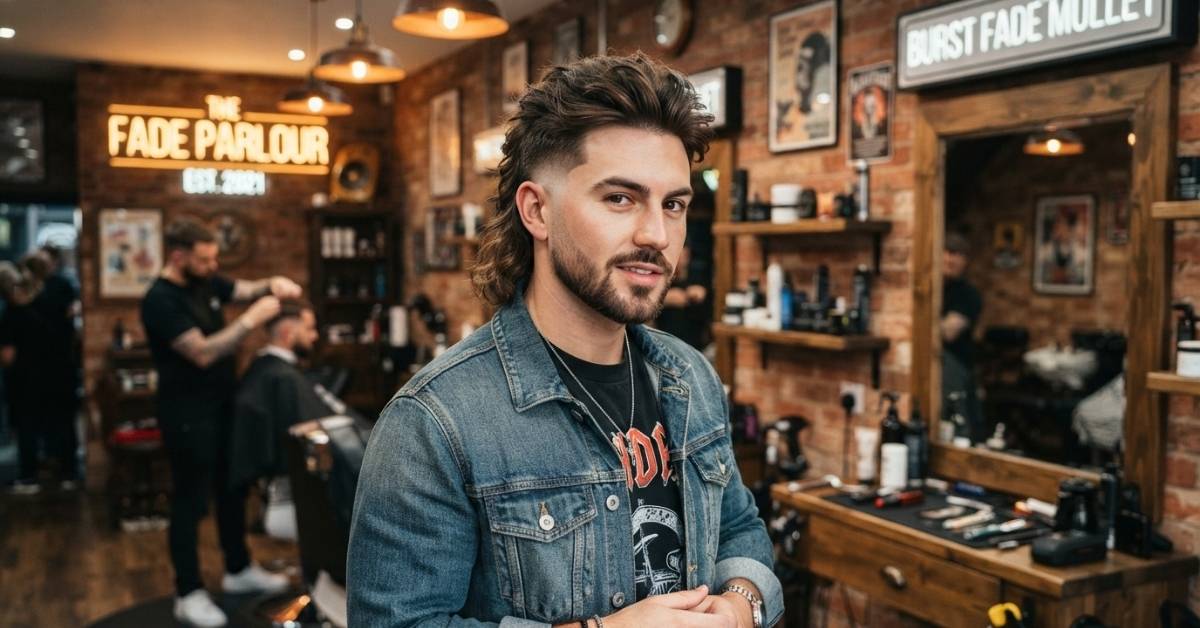
The burst fade mullet has taken over barbershops in 2026, and it’s easy to see why. It pairs the sharp, curved fade that hugs the ear with the extra length and personality of a mullet, so you get a cut that looks clean up front and bold from the back. Whether your hair is straight, curly, thick, or thin, there’s a version of this style built for you. This guide breaks down 25 standout looks, explains how the cut works, and shows you exactly how to ask for it, style it, and keep it fresh between trims.
What Is a Burst Fade Mullet Haircut?
A burst fade mullet is a fade that curves in a rounded, horseshoe shape around the ear instead of running in a straight line around the whole head. That curved shape is what separates a burst fade from a drop fade or a standard taper fade. The rest of the sides and back stay shorter, while length is left at the crown and nape to create the classic mullet silhouette.
Barbers like this fade shape because it flatters the ear and jawline without shaving the entire head. The top can be left long, textured, or slicked back, and the back can flow, curl, or sit in a defined V shape depending on how you want the mullet to read. Because the fade only wraps around the ear rather than the full perimeter, it also tends to grow out more gracefully than a full skin fade, though it still needs regular upkeep.
Who Should Try a Burst Fade Mullet?
This cut isn’t limited to one hair type or face shape, which is a big part of why it has become so popular. Consider it if any of these apply to you:
- You have an oval, square, or heart shaped face, since the added crown volume and back length balance strong jawlines and add height to rounder faces.
- You want a low commitment way to grow your hair out without looking messy.
- Your hair is straight, wavy, curly, or thick, since the burst fade adapts to nearly every texture.
- You like a haircut that looks polished at work and edgy on the weekend.
- You’re comfortable visiting the barber every few weeks to keep the fade crisp.
If you have very fine or thinning hair, ask your barber about a shorter mullet length so the back doesn’t look flat or stringy.
25 Eye-Catching Burst Fade Mullet Styles for Men in 2026
From subtle and office friendly to loud and statement making, these 25 variations show just how far you can push this haircut.
1. Low Burst Fade Mullet
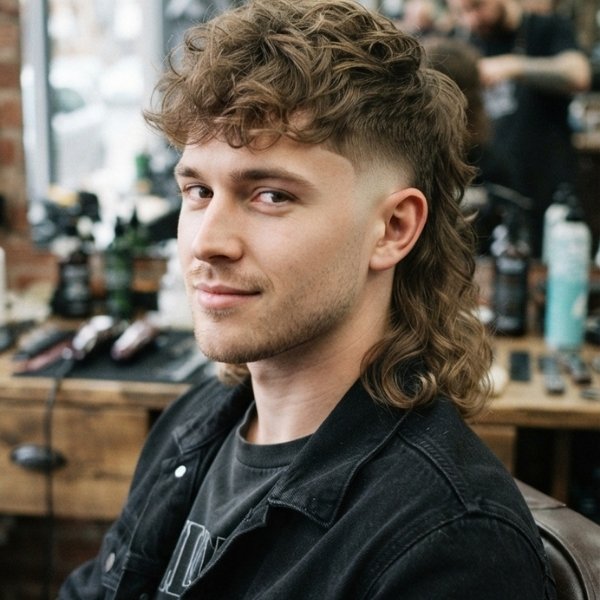
The fade sits close to the ear and neckline instead of climbing toward the temple. It’s the most subtle version of the cut and works well for a first time mullet or a more professional setting.
2. Mid Burst Fade Mullet
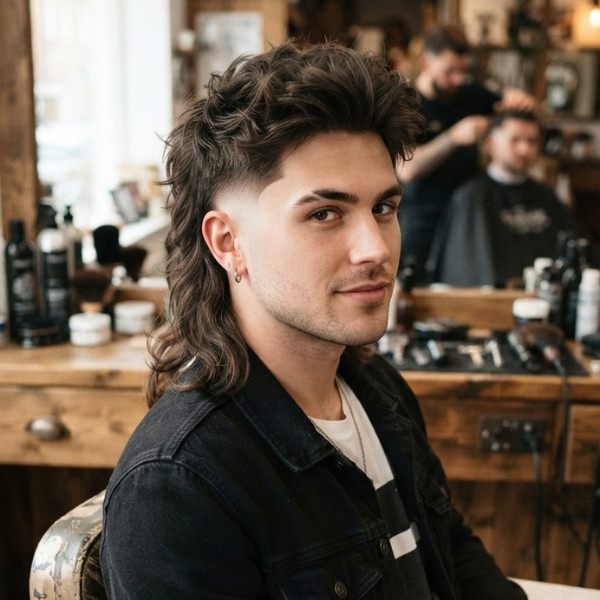
Starting a bit higher around the ear, the mid burst fade mullet balances contrast and wearability. It suits most face shapes and hair textures without looking too extreme.
3. High Burst Fade Mullet
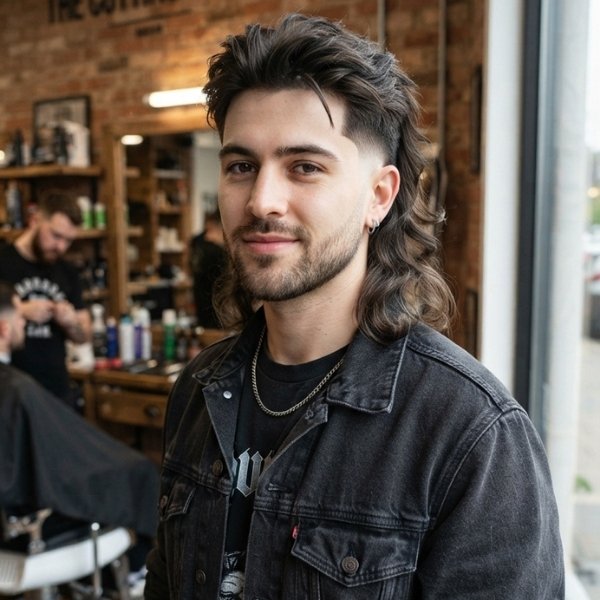
This version begins near the temple for a dramatic, high contrast look. It pairs especially well with thick hair or angular features that can carry the sharper line.
4. Curly Hair Burst Fade Mullet
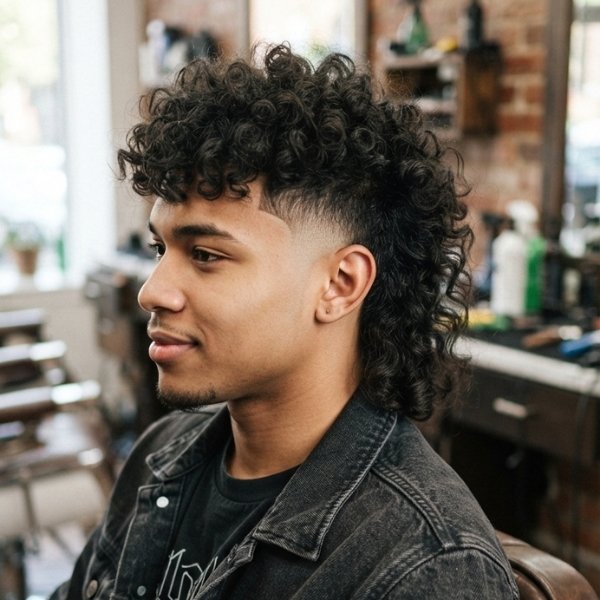
Natural curls add volume at the back, while the clean burst fade around the ear keeps the sides controlled for one of the boldest picks on the list.
5. Straight Hair Burst Fade Mullet

Straight hair lets the mullet flip or flow naturally at the back without added product. Layering the ends helps prevent the classic mullet from looking flat or heavy.
6. Messy Burst Fade Mullet
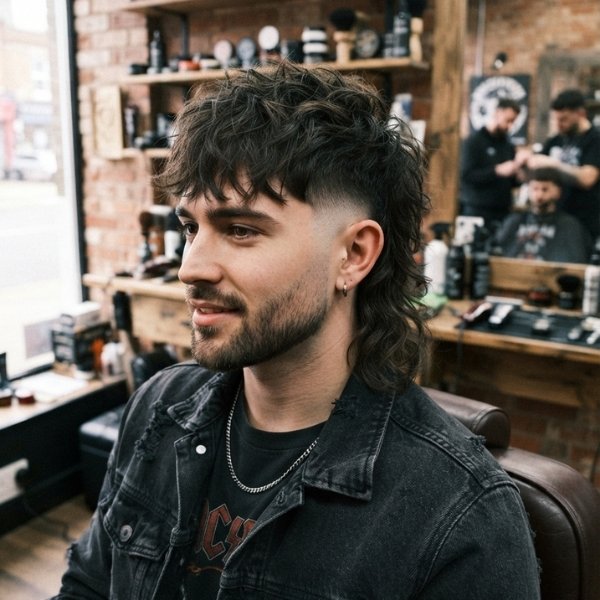
Point cutting and light texturizing create a tousled, lived-in finish. A bit of sea salt spray scrunched through damp hair brings out the effortless, undone look.
7. Textured Burst Fade Mullet
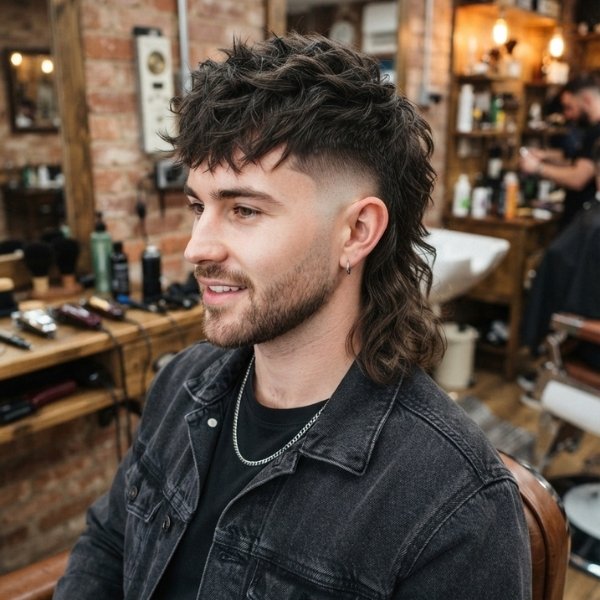
Layers cut through the top and back add movement and separation using texturizing scissors or a razor to break up bulk on medium to thick hair.
8. Skin Burst Fade Mullet
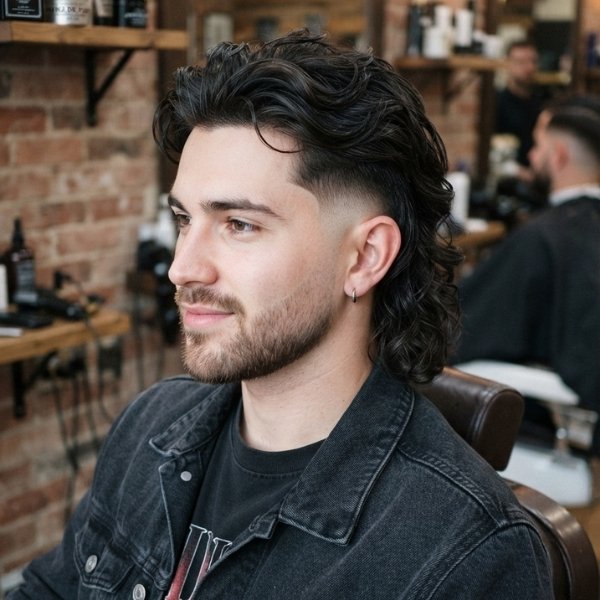
The fade blends all the way down to bare skin for maximum contrast against the length up top. It looks razor sharp fresh out of the chair, but needs more frequent touch ups than a taper.
9. Taper Burst Fade Mullet
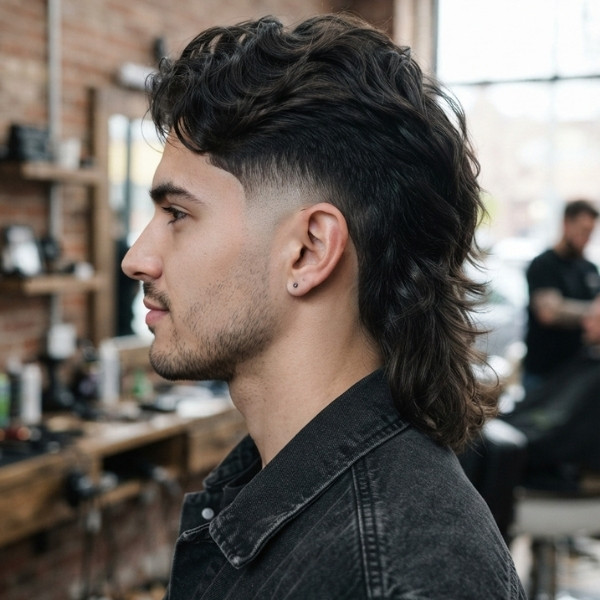
Instead of a hard fade line, the sides blend gradually with no visible demarcation. It’s a lower maintenance option that still keeps the burst shape around the ear.
10. Drop Burst Fade Mullet
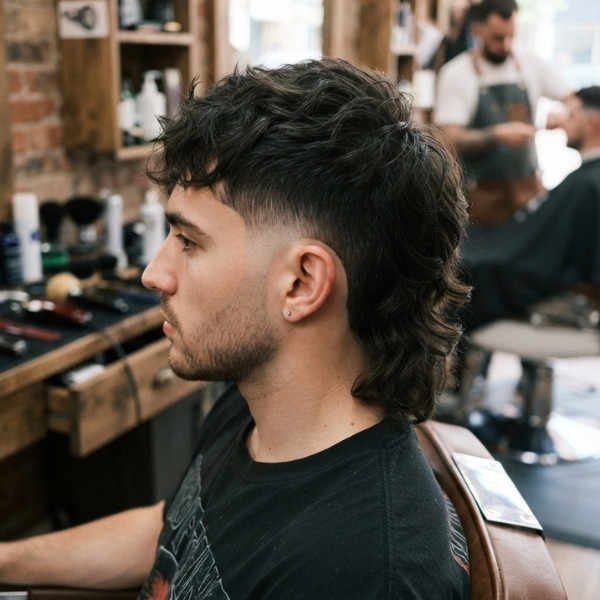
The fade line dips lower behind the ear before curving back up, adding extra shape for guys who want something different from the standard arc.
11. Burst Fade Mullet with Design
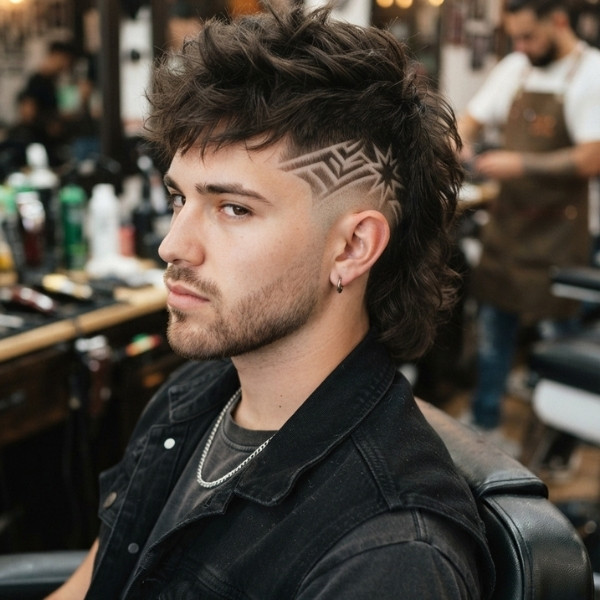
A shaved line, star, or geometric pattern is added within the fade for a personalized touch. This works best on shorter, cleaner fades where the design has room to stand out.
12. Undercut Burst Fade Mullet
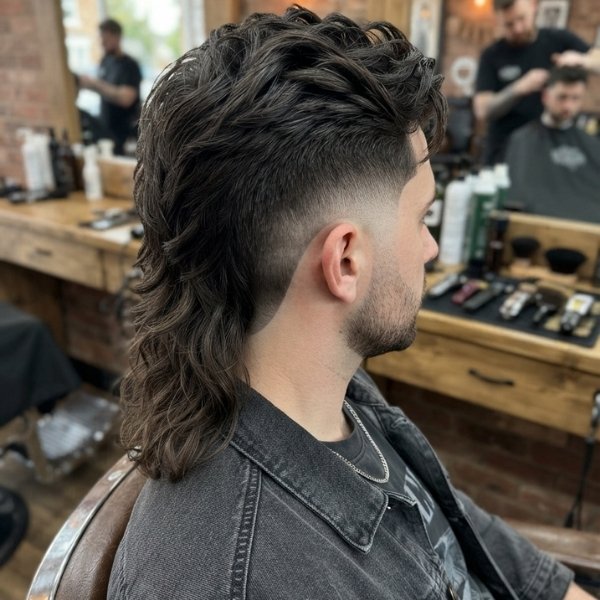
The sides are cut much shorter than the top using clippers, creating heavy contrast for guys who want an edgier silhouette.
13. Fluffy Burst Fade Mullet
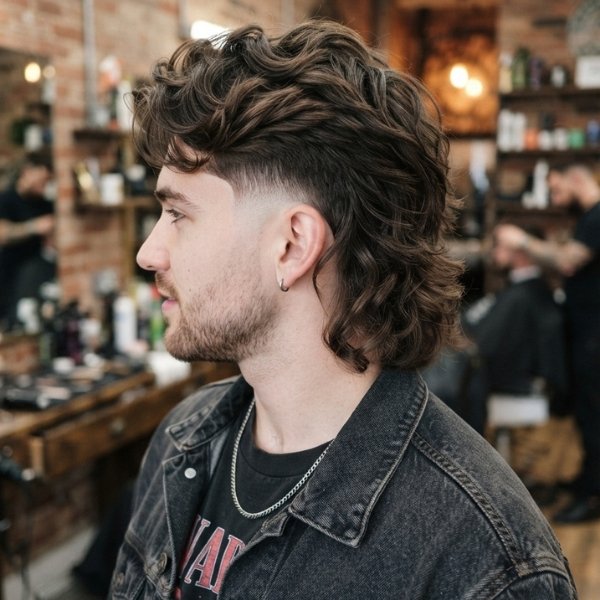
Blow drying the top with a round brush and a texturizing product creates lift and volume at the crown. The fluffy finish softens the sharp fade for a more playful overall look.
14. Modern Burst Fade Mullet
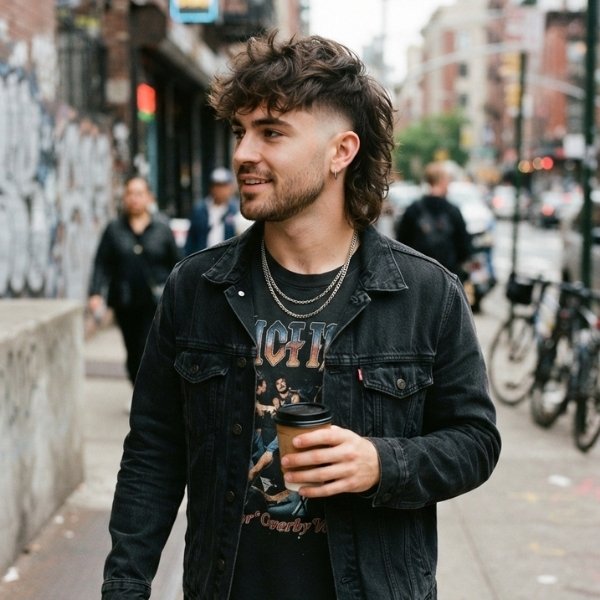
This version keeps the top shorter and more tapered than a classic ‘80s mullet, with subtle length at the nape instead of a dramatic tail, so it reads as fresh rather than a throwback.
15. Short Burst Fade Mullet
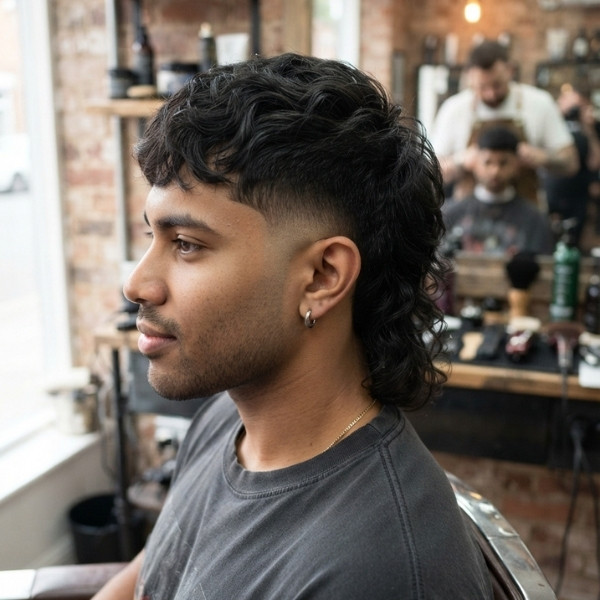
Ideal for guys who want the mullet silhouette without much length to manage, this style keeps the back just long enough to read as a mullet while staying easy to maintain.
16. Long Burst Fade Mullet
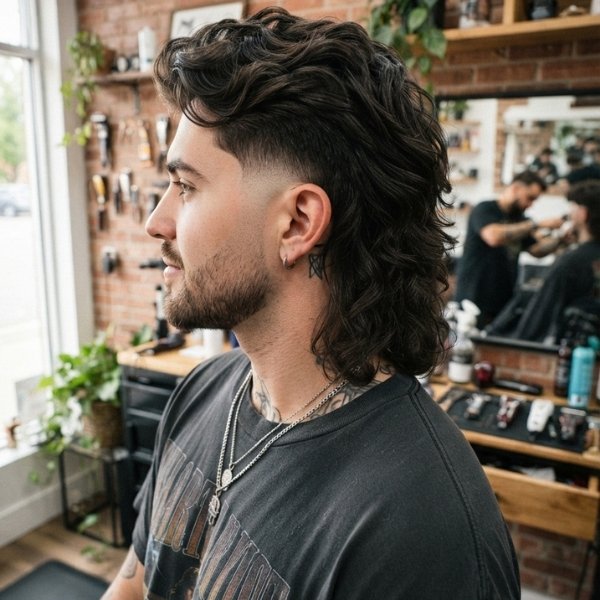
The back is grown out well past the collar for maximum flow and movement. It takes longer to grow in, but it delivers the most dramatic version of the cut.
17. Burst Fade Mullet with Beard
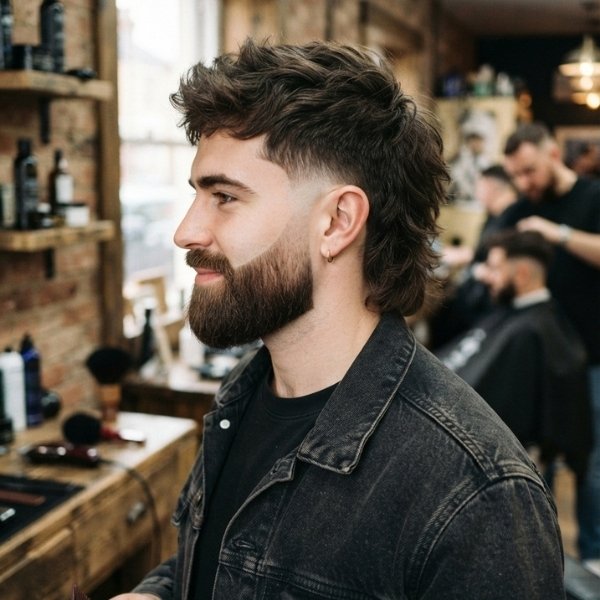
Pairing the fade with a tapered, well groomed beard creates a cohesive look from the sideburns to the jaw. Regular trims keep the style looking intentional.
18. Asian Burst Fade Mullet
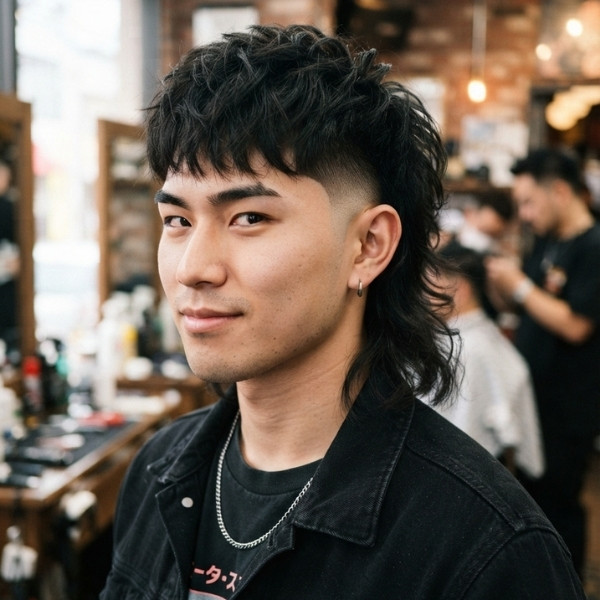
Layered, feathered ends at the top and back suit straight or slightly wavy hair textures, often with softer, swept fringe up front inspired by K-pop styling.
19. Blonde Burst Fade Mullet
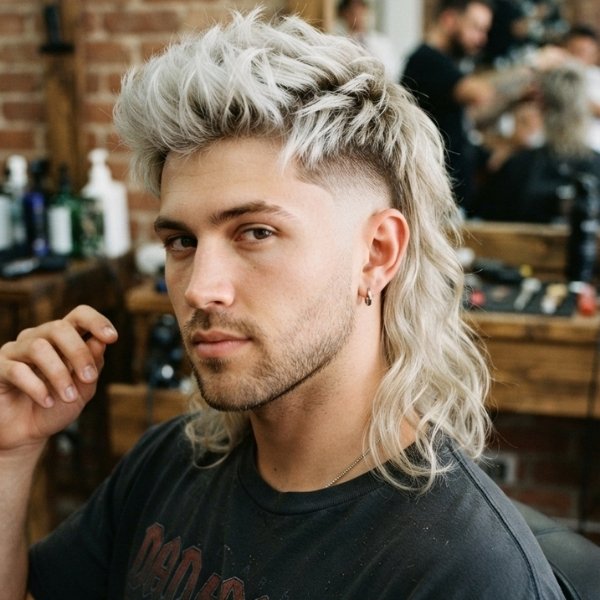
Full color or subtle highlights add contrast and dimension to the back length, making the texture and movement of the mullet even more noticeable.
20. Wavy Hair Burst Fade Mullet

Natural waves add texture and body without extra styling effort. A light sea salt spray enhances the wave pattern while keeping the burst fade sides crisp and defined.
21. Burst Fade Mohawk Mullet
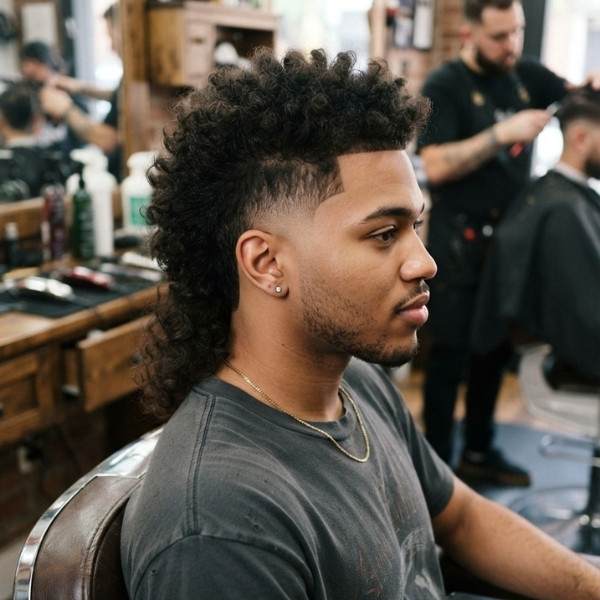
The center strip of hair is left longer and styled upward into a faux hawk, while the sides burst fade and the back flows like a mullet for one of the boldest, most high fashion takes on the style.
22. Edgar Burst Fade Mullet
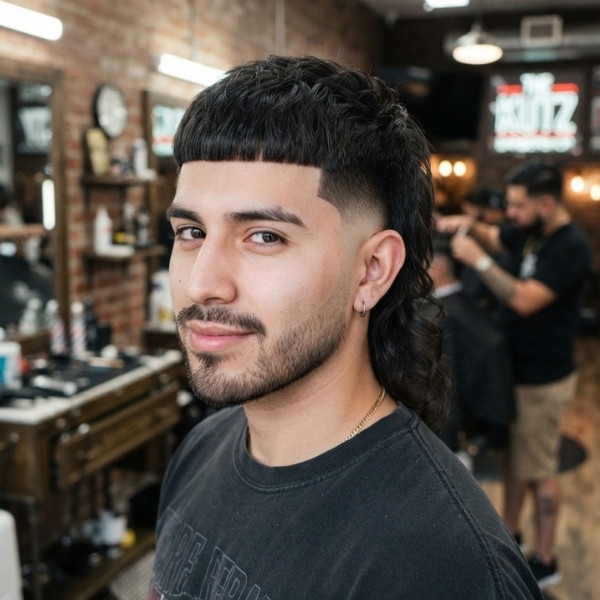
This style combines the blunt, straight across fringe of an Edgar cut with a burst fade and mullet length at the back, a favorite for guys who want a strong, geometric front paired with an edgy back.
23. Burst Fade Mullet with Fringe
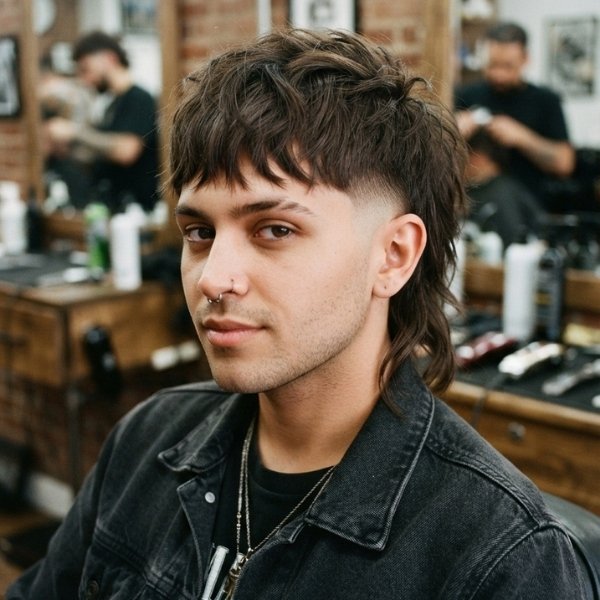
A soft, swept fringe at the front softens the overall look and works especially well with straight or wavy hair. It adds a bit of coverage for guys with a higher hairline.
24. Burst Fade Mullet for Thick Hair

Thick hair holds volume and shape well at the crown and back, so this version often leans into a high or skin fade for extra contrast. Thinning shears help manage bulk without losing body.
25. Burst Fade Mullet for Thin Hair
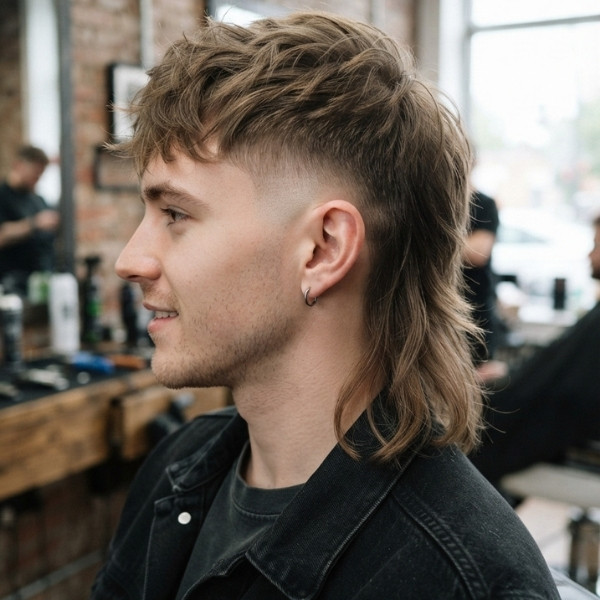
Keeping the mullet length shorter and adding light layers prevents thin hair from looking flat or stringy at the back. A texturizing spray at the roots also helps create the illusion of extra density.
Modern Mullet Haircut vs Traditional Mullet
The traditional mullet from the ‘80s was a blunt, often uneven cut with heavy length at the back and little shaping on the sides, a straightforward “short on top, long in back” style with minimal blending.
A modern mullet haircut, like the burst fade mullet, brings in barbering techniques that didn’t exist in the traditional version:
- A precisely shaped fade around the ear instead of a rough or grown out side
- Layering and point cutting for texture rather than one blunt length
- Customizable fade height and design work, from low tapers to skin fades
- A shorter, more tapered top that looks intentional rather than accidental
In short, the modern version keeps the rebellious spirit of the mullet while applying the same precision you’d expect from any current men’s haircut.
How to Get and Style a Modern Mullet Haircut
How to Prepare Before Getting a Burst Fade Mullet
If you’re starting from short hair, expect to grow the back out for roughly four to six months before there’s enough length for a proper mullet. Save two or three reference photos from the front, side, and back so your barber can see the exact fade height and mullet length you want. If you already have a fade or undercut, this transition is faster since the top and back just need extra time to grow.
What to Tell Your Barber for the Perfect Burst Fade Mullet
Vague requests like “give me a mullet” leave too much room for interpretation:
- Ask for a burst fade around the ear, and specify low, mid, or high
- Tell them how short you want the top, and how much length to leave at the back
- Mention whether you want the fade to blend to skin or stop at a taper
- Ask for texturizing or point cutting if you want a messier finish
- Bring a photo, since fade shapes are far easier to show than describe
Best Styling Techniques for a Burst Fade Mullet
Start with damp, towel dried hair and apply a small amount of product before blow drying for volume at the roots. Use your fingers rather than a comb to shape the top, since a comb flattens the texture the fade is built to highlight. For the back, either air dry for natural movement or use a diffuser on low heat for curls and waves. Never apply heavy product directly onto the faded sides, since it clogs the skin and dulls contrast.
Best Hair Products for a Burst Fade Mullet
Hair Wax
Wax gives a strong, matte hold for defining texture on top without looking greasy, especially for shorter, spikier styling at the crown.
Pomade
Pomade offers a shinier finish and flexible hold, a solid choice for slicking back longer mullet lengths or polishing straight hair.
Texturizing Spray
This lightweight spray adds grip and volume at the root, useful for thin or fine hair that needs a bit of lift.
Styling Cream
Cream gives a softer, natural hold with added shine, a good everyday option for wavy or curly hair that just needs light control.
Sea Salt Spray
Sea salt spray enhances natural texture and waves, giving the back of the mullet an effortless, beachy movement.
Hair Clay
Clay delivers a strong matte hold with more texture than wax, useful for thick hair that needs extra control all day.
Choosing the Right Product for Your Hair Type
Fine or thin hair generally does best with lightweight texturizing sprays or creams that add volume without added weight. Thick or coarse hair usually needs a stronger hold product like clay or wax to keep shape throughout the day. Curly or wavy hair benefits most from sea salt spray or a leave-in conditioner to keep curls defined and hydrated instead of dry or frizzy.
How to Maintain a Fresh Burst Fade Mullet Look
A burst fade mullet typically holds its shape for two to four weeks before the fade line starts to blur, though skin fades grow out faster than low tapers. Book a barber visit every two to three weeks for a crisp fade, and trim the back every four to six weeks unless you’re growing it out. Between visits, a detail trimmer can trace the neckline and the curve around the ear, but stick to the existing line rather than extending the fade yourself. Washing two to three times a week, rather than daily, also prevents the back length from drying out and frizzing.
Step-by-Step Burst Fade Mullet Tutorial
- Start with clean, dry or slightly damp hair so the barber can see the natural fall and texture.
- Section off the length you want to keep at the crown and back, clipping it out of the way.
- Use clippers to establish the burst fade, starting with a longer guard and working down in stages around the ear.
- Blend the fade into the sides and back with clipper-over-comb or shear-over-comb for a seamless transition.
- Cut the top to length, using scissors and point cutting for texture if a messier finish is wanted.
- Shape the back into the mullet, layering the ends so it flows rather than sitting in one blunt line.
- Clean up the neckline and ears with a straight razor or detail trimmer for sharp, defined edges.
- Finish with a product suited to your hair type, then blow dry or air dry to set the shape.
Common Mistakes to Avoid With a Burst Fade Mullet
- Waiting too long between trims, which lets the fade line blur and lose its shape
- Applying heavy product directly onto the faded skin, which clogs pores and dulls contrast
- Overwashing, which strips moisture and causes the back length to frizz
- Using a comb instead of fingers to style, which flattens the texture the cut relies on
- Giving your barber a vague request instead of specific fade height and length details
FAQs
What is a burst fade mullet?
It’s a mullet haircut with a fade that curves in a rounded arc around the ear, paired with longer hair left at the back and crown.
How long does it take to grow hair for a burst fade mullet?
Most people need around four to six months of growth at the back before there’s enough length for a proper mullet shape.
How often should I get my burst fade mullet trimmed?
Plan on a touch-up every two to three weeks for the fade, and a back trim every four to six weeks.
Does a burst fade mullet work well with curly hair?
Yes, curly hair adds extra volume at the back, and the clean fade around the ear helps the curls stand out.
What’s the difference between a burst fade and a drop fade?
A burst fade curves in a rounded shape around the ear, while a drop fade dips lower behind the ear in more of a downward arc.
Is a burst fade mullet high maintenance?
Skin fade versions need frequent touch-ups to stay sharp, but taper or low fade versions grow out more gracefully and need less frequent visits.
Can I style a burst fade mullet at home?
Yes, with the right product for your hair type and a bit of practice using your fingers to shape instead of a comb, daily styling is easy to manage.
Does a burst fade mullet suit every face shape?
It’s especially flattering on oval, square, and heart shaped faces, though the fade height and mullet length can be adjusted to suit most face shapes.
Conclusion
The burst fade mullet earns its spot as one of the most requested men’s haircuts in 2026 because it works on nearly any hair type, face shape, and lifestyle. From a subtle low taper to a full skin fade with a shaved design, there’s a version for guys who want something safe and a version for guys who want to make a statement. Pick the style that matches your hair texture, bring a clear reference photo to your barber appointment, and stay consistent with trims and products to keep it sharp all year long.

Charlotte Aiden is the founder and editor of FaxhionTips.com, where he shares practical insights on the latest haircut trends, hairstyles, grooming tips, and hair care advice. Passionate about modern style and easy-to-follow beauty guidance, Charlotte creates well-researched content to help readers choose the best haircuts and maintain healthy, stylish hair with confidence.