If you have been searching for a haircut that looks clean, modern, and effortlessly sharp, the low taper fade might be exactly what you need. It has become one of the most requested men’s hairstyles in barbershops across the country, and for good reason. The cut suits a wide range of hair types and face shapes, making it one of the most versatile options available to white guys today.
Whether you prefer a polished office look or a relaxed weekend vibe, the low taper fade adapts to your lifestyle without much effort. In this guide, you will find the top style variations, barber tips, product recommendations, and everything you need to walk into your next appointment with confidence.
Low Taper Fade White Guy Hairstyles Variations
Here are the best low taper fade styles for white guys right now, each with its own character, charm, and level of styling effort.
Low Taper Fade + Curly Hair
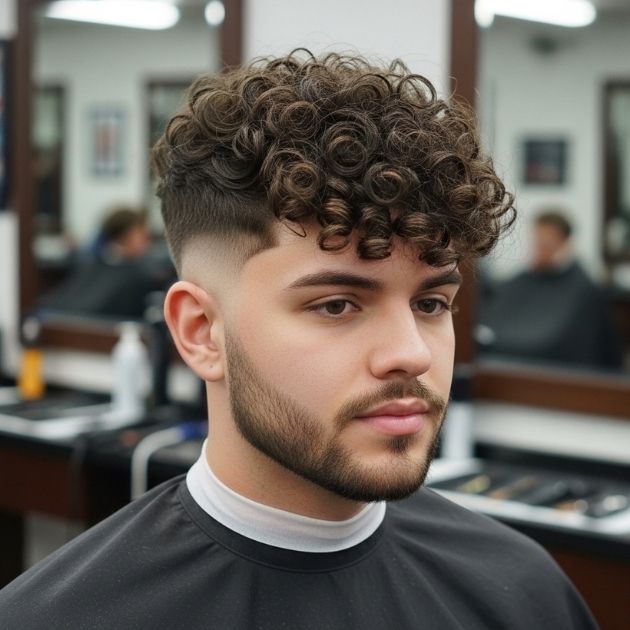
Curly hair and a low taper fade are a natural match. The fade reduces bulk on the sides where curls tend to expand outward, while the top gets to show off its natural texture. The result is a well-shaped, intentional look that stands out without trying too hard.
Best for: Medium to thick curly hair, oval and round face shapes.
Barber tip: Ask your barber to start the taper just above the ear and blend down to a skin fade at the neckline. Keep at least two to three inches of length on top so the curls have enough room to form properly.
Product tip: Work a curl-defining cream or light mousse through damp hair, scrunch upward, and let it air dry. A diffuser attachment on your blow dryer adds extra volume and definition.
Low Taper Fade + Slick Back
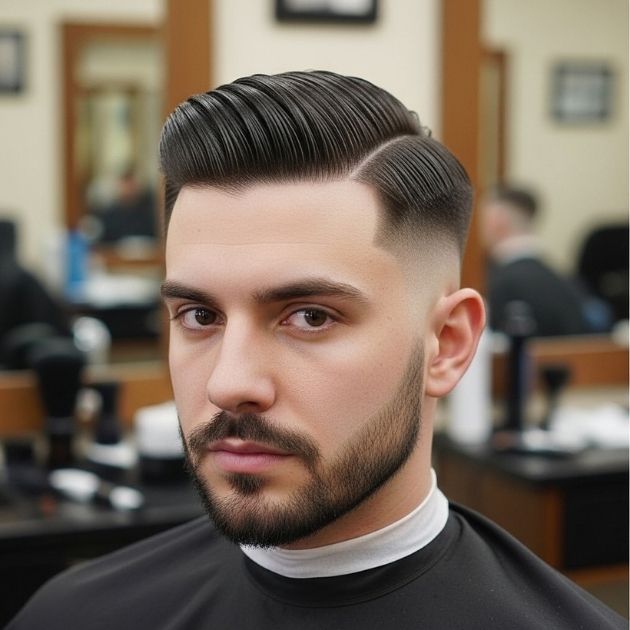
The slick back with a low taper fade is a timeless combination that never looks out of place. The sides stay tight and neat while the top is combed straight back for a smooth, polished silhouette. This style works especially well with straight or slightly wavy hair because the natural fall of the hair makes the slick back look effortless.
Best for: Straight or wavy hair, square and oval face shapes, professional settings.
Barber tip: Tell your barber to blend the fade smoothly starting at the temple, keeping the top long enough to comb back cleanly. Three to four inches of length on top is usually the sweet spot.
Product tip: Apply a medium-hold pomade on slightly damp hair and use a fine-tooth comb to sweep everything straight back. A low-heat blow dryer helps set the direction for all-day hold.
Low Taper Fade + Comb Over
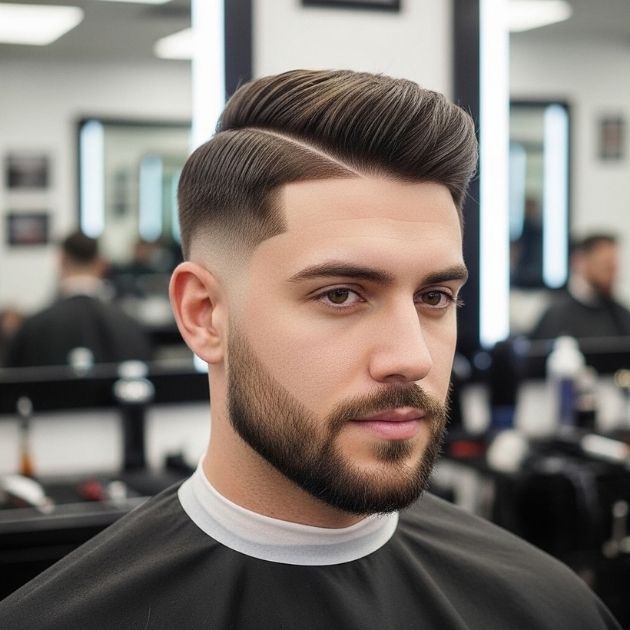
The comb over has had a serious style upgrade in recent years, and pairing it with a low taper fade is exactly why. The hair is swept to one side from a defined part, creating a voluminous, structured look on top. The taper adds contrast along the sides without making things look too aggressive or edgy.
Best for: Straight to wavy hair, oval and square face shapes, office and formal settings.
Barber tip: A deep side part or even a shaved-in part adds extra definition and makes the comb over look more intentional.
Product tip: Use a lightweight pomade or styling cream for hold. Apply on damp hair, comb from the part to one side, and finish with a small amount of product for shine and control.
Low Taper Fade + Textured Crop / Fringe
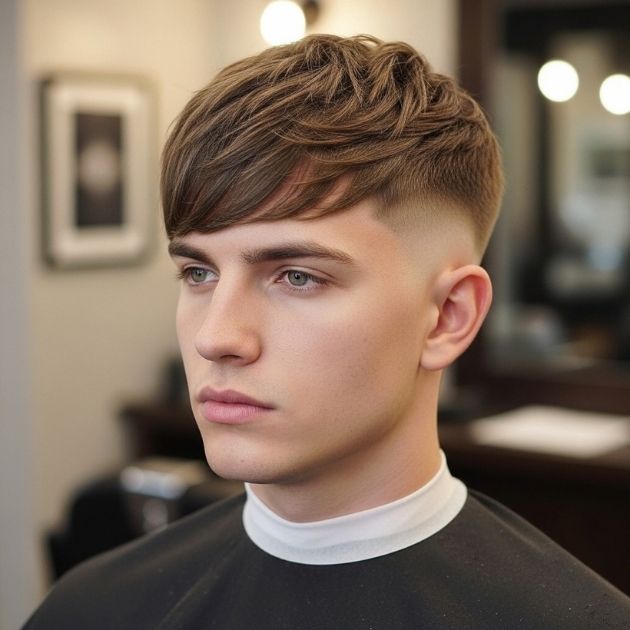
The textured crop with a low taper fade is one of the most popular modern haircuts for white guys right now. The top is cut short and styled forward with choppy, uneven ends that land just above or on the forehead as a fringe. The low taper keeps the sides clean while the textured top adds visual weight and a casual, cool energy.
Best for: Straight, fine, or slightly wavy hair, all face shapes, low-maintenance seekers.
Barber tip: Ask for choppy, point-cut ends on top to create natural texture. Avoid a blunt fringe if you want a more modern, undone look.
Product tip: A matte wax or sea salt spray works perfectly here. Work it through dry or slightly damp hair and push the fringe forward. No comb needed, the messier the better.
Low Taper Fade + Buzz Cut
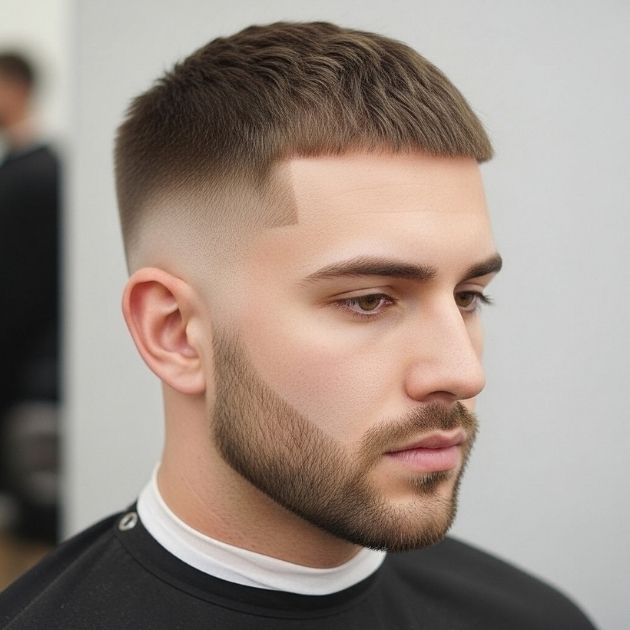
If you want something minimal, clean, and bold, the buzz cut with a low taper fade delivers exactly that. The top is clipper-cut to a uniform short length, and the low taper brings a gradual reduction down the sides for a more refined finish than a standard buzz cut alone.
Best for: All hair types, men with symmetrical or strong facial features, those who prefer zero styling time.
Barber tip: The most popular length combinations are a number 3 or 4 on top with a skin fade at the neckline. A number 2 on top gives a slightly sharper, more military-inspired finish.
Product tip: No styling product is needed for this one. A light scalp moisturizer or balm keeps things looking healthy without unwanted shine.
Low Taper Fade + Undercut
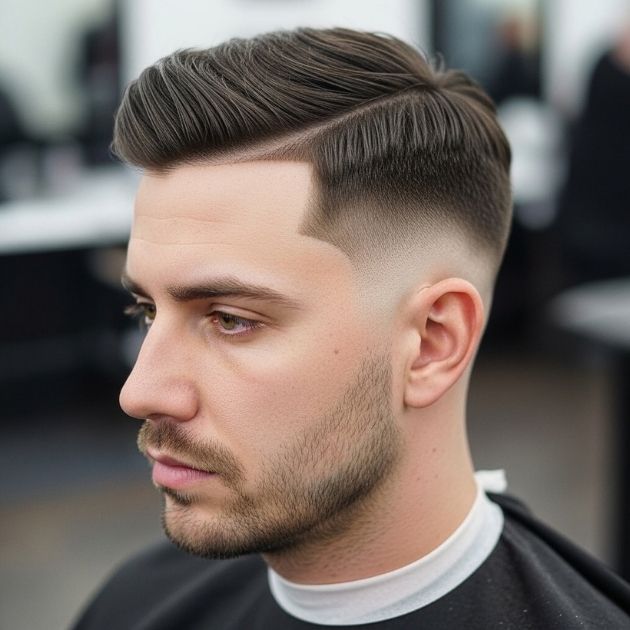
The undercut with a low taper fade is a hybrid style that gives you disconnected sides with a softer fade at the neckline. Unlike a full disconnect undercut, the low taper keeps the transition subtle at the bottom while the sides are still significantly shorter than the top. It is edgy enough to turn heads but clean enough for everyday wear.
Best for: Thick or coarse hair, oval and oblong face shapes, men who want volume on top.
Barber tip: The key is to keep the undercut line sharp but not too high. Starting the disconnect just above the ear gives a modern result without looking too dramatic.
Product tip: Use a matte clay for texture or a high-shine pomade for a slick finish. Blow-dry the top forward or upward depending on the style you are going for.
Low Taper Fade + Dreads
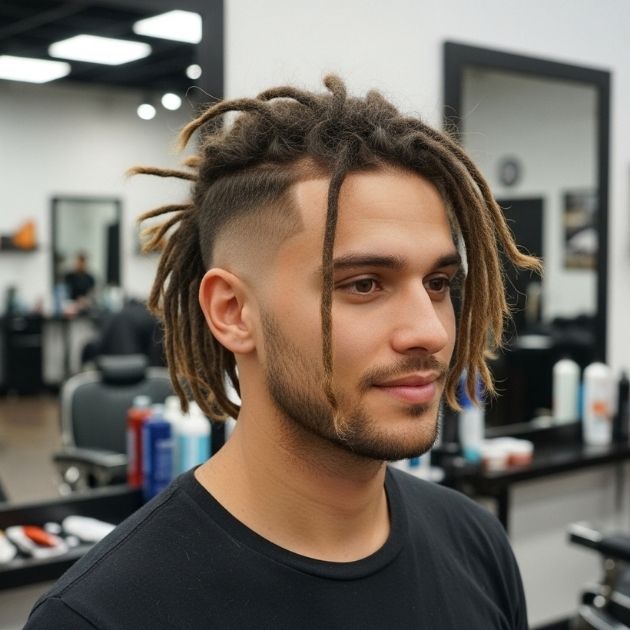
Dreads with a low taper fade create a striking contrast between the freeform locks on top and the sharp, clean sides. The taper acts as a visual frame, making the dreads appear fuller and more sculptural. This combination works beautifully for white guys who have committed to growing dreadlocks and want a more polished, barbershop-finished look.
Best for: Medium to long dreads, all face shapes.
Barber tip: Keep the fade only around the natural hairline curve. Avoid pushing the taper too far up or it can disrupt the flow and weight of the dreads.
Product tip: Use a light oil or loc spray to keep the dreads moisturized. Avoid heavy waxes that can cause buildup and dull the look over time.
Low Taper Fade + Afro
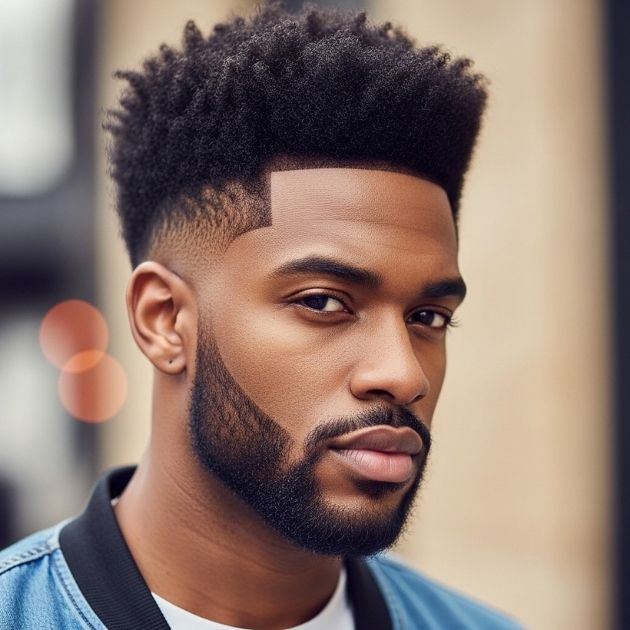
For white guys with naturally thick, tightly coiled hair, the afro with a low taper fade is a bold and confident choice. The low taper acts as a clean border that frames the face and neck, making the afro appear fuller and more perfectly shaped. The contrast between the rounded top and the tapered sides elevates the entire profile from casual to commanding.
Best for: Thick, coily, or tightly curled hair, oval and heart face shapes.
Barber tip: Leave the taper slightly darker at the temple and use a zero fade only at the neckline to preserve the natural flow of the afro shape.
Product tip: Daily moisture is key. A light mist of water or rosewater followed by a curl-sealing oil keeps the afro looking healthy, defined, and voluminous.
Low Taper Fade + Side Part
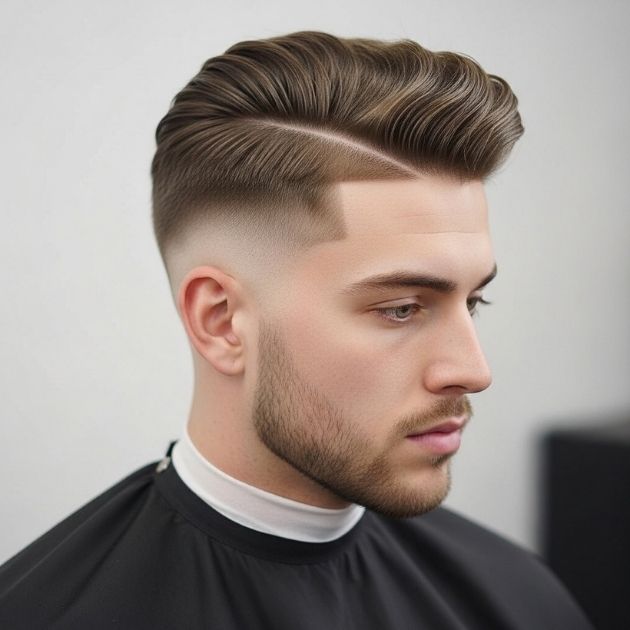
The side part with a low taper fade is a refined, classic combination that works just as well in a boardroom as it does at a weekend barbecue. The hair is neatly parted on one side and combed over with volume, while the low taper adds structure and contrast along the sides and neckline. It is clean, confident, and easy to maintain.
Best for: Straight or wavy hair, all face shapes, professional environments.
Barber tip: A natural side part is always a safe choice, but a shaved-in hard part adds extra definition and makes the style look more intentional and fresh out of the barbershop.
Product tip: A light pomade or styling cream applied with a comb gives you the hold you need without making the hair look stiff or overdone.
Low Taper Fade + Blowout
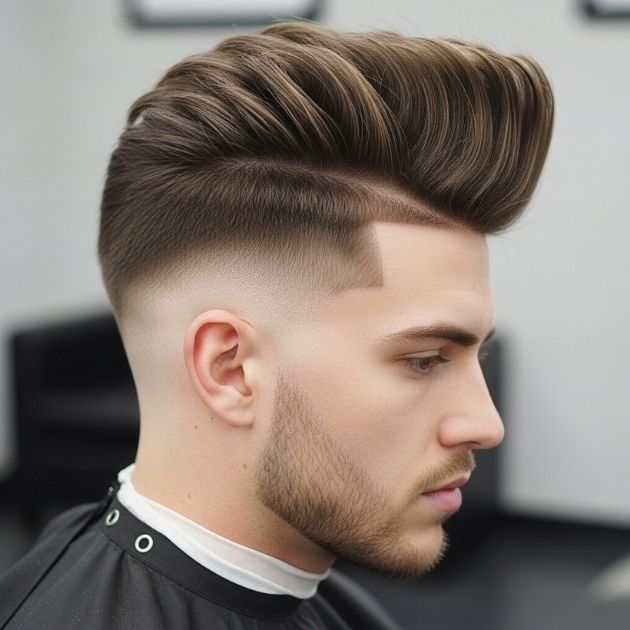
The blowout with a low taper fade is one of the most popular styles among white guys with straight hair right now. The hair on top is blow-dried upward and outward for significant volume and a fluffy, tousled finish. The low taper grounds the look by keeping the sides and neckline tight and clean. The contrast between the voluminous top and the sharp taper is what makes this style so eye-catching.
Best for: Straight or fine hair, round and oval face shapes, men who want added height.
Barber tip: Ask your barber to keep the taper low and tight to avoid a wide, mushroom-shaped silhouette. The top should be long enough to hold volume when blown out.
Product tip: Apply a volumizing mousse to damp hair before blow-drying. Use a round brush or your fingers to push the hair upward and outward as you dry. Finish with a light texturizing spray for hold and movement.
What is Low Taper Fade White Guy Styles
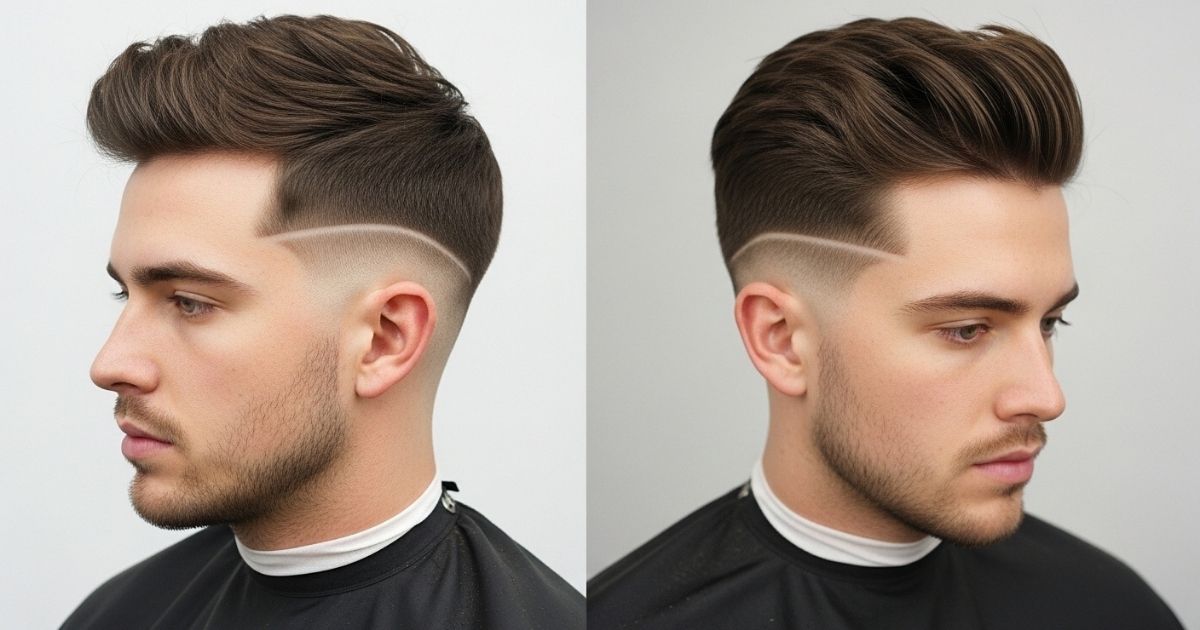
A low taper fade is a barbering technique where the hair on the sides and back of the head is gradually shortened starting from just above the ear and blending down toward the neckline. Unlike a high fade, which begins at the temple, or a mid fade, which starts around the middle of the sides, the low taper keeps most of the length intact and only removes hair in the lower portion of the head.
For white guys, this translates to a clean, polished finish that looks sharp without being overly dramatic. The fade is subtle enough to suit formal settings but modern enough to keep up with current men’s grooming trends. It works with virtually every hair type, from straight and fine to wavy, curly, and even coily textures.
Key characteristics of the low taper fade include:
- The fade starts just above the ear and blends toward the neckline
- The transition is gradual and smooth, never abrupt or blocky
- The top retains its natural length and texture
- It pairs seamlessly with nearly any top style
- It suits most face shapes including oval, square, round, and oblong
This is why the low taper fade has become a go-to recommendation from barbers for men who want a versatile, low-maintenance, and consistently stylish cut.
The Evolution of Low Taper Fade White Guy Style
The taper fade has roots in military grooming traditions, where clean, close-cropped sides were a practical requirement for soldiers. Over decades, barbershops across America and Europe adapted the style for civilian men, refining the technique and pairing it with longer, more expressive top styles.
By the early 2000s, the fade had become a staple of urban barbershop culture. The low taper variation gained traction as men began seeking a more subtle, polished alternative to the dramatic high and skin fades that dominated that era.
In the 2010s, social media platforms like Instagram and later TikTok played a major role in popularizing the low taper fade among white guys. Barbers began showcasing their work online, and clients started arriving at appointments with reference photos. Styles like the textured crop, slick back, and comb over fade went viral repeatedly, cementing the low taper as one of the defining men’s haircuts of the decade.
Today in 2026, the low taper fade continues to dominate barbershop request lists. Its staying power comes from adaptability. Trends come and go, but the clean structure of a low taper fade gives any top style a sharp, finished edge that never looks dated.
FAQ’s
What is the difference between a low taper fade and a regular taper?
A regular taper gradually shortens the hair toward the neckline but stops before reaching the skin. A low taper fade takes it further by blending the hair all the way down to the skin, typically at the neckline and around the ears.
How often should I get a low taper fade touched up?
Most barbers recommend a touch-up every two to three weeks to keep the fade looking crisp and fresh. Waiting longer causes the blend to grow out and lose its clean definition.
Does a low taper fade work for thin or fine hair?
Yes, a low taper fade actually works very well for thin or fine hair. The reduced bulk on the sides makes the top appear fuller and more voluminous by comparison, which creates a flattering overall shape.
What face shape is best suited for a low taper fade?
The low taper fade works for most face shapes. Oval faces can pull off almost any variation. Round faces benefit from styles that add height on top. Square faces look great with softer, textured tops that balance strong jawlines.
Can white guys with straight hair pull off a low taper fade?
Absolutely. Straight hair is one of the most versatile hair types for a low taper fade. Styles like the slick back, comb over, textured crop, and blowout all work exceptionally well with straight hair.
How do I ask my barber for a low taper fade?
Tell your barber you want a low taper fade that starts just above the ear and blends down to a skin fade at the neckline. Bring a reference photo for the top style you want, and specify the length you are looking for on top.
Conclusion
The low taper fade is one of the most reliable, stylish, and versatile haircuts available to white guys in 2026. From the effortless volume of a blowout to the clean minimalism of a buzz cut, there is a variation that suits every personality, hair type, and lifestyle. The key is pairing the fade with a top style that complements your natural texture and face shape.
Next time you visit the barbershop, bring a reference photo, communicate clearly with your barber, and do not be afraid to try something new. The low taper fade is easy to wear, simple to maintain, and consistently sharp no matter how you choose to style the top. That is exactly why it continues to be one of the most popular men’s haircuts year after year.

Charlotte Aiden is the founder and editor of FaxhionTips.com, where he shares practical insights on the latest haircut trends, hairstyles, grooming tips, and hair care advice. Passionate about modern style and easy-to-follow beauty guidance, Charlotte creates well-researched content to help readers choose the best haircuts and maintain healthy, stylish hair with confidence.