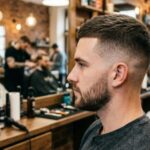

A low fade crew cut is one of the easiest haircuts to keep looking sharp all week. The top stays short and tidy, the sides stay slim, and the blend near the ear sits close to the skin without shouting for attention. It works in the office, in the gym, and in every photo in between.
This guide breaks down what a low fade crew cut actually is, who it suits, and how to describe it to your barber so you get the same result every time. You’ll also find 12 variations, from a classic finish to a curly top, plus quick styling steps you can follow at home.
What Is a Low Fade Crew Cut
A crew cut is a short, even haircut with slightly more length left at the front than at the crown, giving the top a soft, brushed forward shape. A low fade takes the sides and back down to a short guard length or bare skin, but the transition starts low, roughly at or just above the ear rather than at the temple.
Because the fade sits low on the head, the contrast between the top and the sides is gentler than a mid or high fade. Barbers build the blend with clippers, guard changes, and scissor over comb work along the temple, sideburn, and nape so there’s no visible line where one length meets the next.
The result is a cut that reads as neat and controlled rather than dramatic. It’s a favorite among men who want a low maintenance style that still looks intentional, and it’s a common request from anyone growing out a buzz cut into something with a little more shape on top.
Who It Suits
A low fade crew cut isn’t limited to one age group, job, or hair color. It shows up on teenagers heading back to school, professionals in client facing roles, and older men who want a cut that needs less daily upkeep.
It suits you if:
- You want short hair that still has a bit of texture or movement on top
- You’re tired of restyling your hair every morning
- You need a cut that looks sharp for work but isn’t too severe
- You’re transitioning from a buzz cut and want more length to play with
- You want a fade that grows out gracefully between barber visits
Because the fade line sits low, regrowth is far less noticeable than with a high fade, which means you can often stretch two to three weeks between trims without the cut looking messy.
Face Shapes and Hair Types
The right top length and fade height can make a jawline look sharper or a round face look longer. Here’s a quick reference.
| Face Shape | Best Approach |
| Oval | Nearly any top length works well. Ask for light texture on top for natural movement. |
| Square | A low fade softens the temple area and lets a strong jawline stand out without adding extra width. |
| Round | Keep a little extra height at the crown to add length to the face rather than width. |
| Oblong | Choose a shorter top with a calm, close fade so the cut doesn’t stretch the face further. |
| Diamond | A textured top with light volume balances a narrower chin and forehead. |
Hair type matters just as much as face shape when you’re choosing a variation:
- Straight hair can look flat on top without some texture, so ask your barber for point cutting or a texturizing spray.
- Wavy hair tends to look better once the sides are thinned out, since the fade removes bulk and lets the waves fall naturally instead of puffing up.
- Curly hair holds its shape best with a flatter crown. Too much length on top and curls can balloon rather than sit close to the head.
- Thick hair benefits from a shorter guard on top to avoid excess volume, while fine or thin hair looks fuller with a touch more length.
Edges and Details
The details around the hairline are what separate an average fade from one that looks freshly cut for weeks. A few options to discuss with your barber:
- Line up: A crisp, straight edge cut along the forehead and temple for sharper corners.
- Hard part: A shaved line through the side part that adds definition and works well with a comb over top.
- Natural neckline: A soft, rounded finish at the nape that grows out with no hard edge to maintain.
- V shape nape: A pointed cut at the back of the neck that gives the cut a slightly more structured finish.
- Beard fade: If you wear facial hair, asking your barber to blend the fade into the cheek line keeps the whole look connected rather than looking like two separate cuts.
None of these details are required, but even one can change how polished the finished cut looks.
12 Variations Low Fade Crew Cut Hairstyle
Classic Low Fade Crew Cut

The classic version keeps the top short and even, with a soft blend that starts right at the ear. There’s no heavy texture and no styling required beyond running a comb through it. It’s the safest choice for interviews, client meetings, or anyone who wants a cut that never looks out of place.
Textured Low Fade Crew Cut

Here the barber point cuts the top to add movement and a slightly choppy finish, rather than leaving it flat. A small amount of matte clay or paste brings out the texture without adding shine. This version suits straight and wavy hair especially well.
Messy Low Fade Crew Cut

A messy finish keeps the perimeter of the cut clean while letting the top sit loose and a little disheveled. The key is a flatter crown paired with a sharp fade, so the messy top reads as a deliberate style rather than unkempt hair.
Skin Low Fade Crew Cut

Instead of fading down to a short guard, the sides taper all the way to bare skin. This creates the sharpest possible contrast against the top and gives the cut a cleaner, more modern edge. It requires slightly more frequent trims to keep the skin fade looking fresh.
Drop Low Fade Crew Cut

The fade line dips downward behind the ear rather than staying level, following the natural curve of the skull. This keeps the back of the head looking tidy on rounder head shapes and gives a leaner profile from the side.
Buzz Crew Cut Low Fade

This version keeps the top almost as short as the fade itself, closer to a uniform buzz with just enough length to show the crew cut shape. It’s the lowest maintenance option on this list and suits anyone who wants zero daily styling.
Low Fade Crew Cut with Beard

Pairing the cut with a full or short beard works best when the fade is mirrored into the cheek line. This ties the top, sides, and facial hair together into one cohesive shape instead of three separate styling decisions.
Low Fade Crew Cut with Line Up

Adding a line up along the front hairline and temples gives the cut crisp, camera ready corners. It’s a popular choice among men with naturally curly or coily hair, since the sharp edge contrasts nicely against the softer curl pattern on top.
Low Fade Crew Cut with Hard Part

A shaved part line runs through one side of the top, giving the cut a defined styling direction. This variation works especially well when the top is combed to one side with a light hold pomade.
Straight Hair Low Fade Crew Cut

Straight hair holds a crisp, clean shape on top with minimal effort. A light texturizing spray or matte pomade stops the top from looking too flat while keeping the overall silhouette tidy.
Wavy Low Fade Crew Cut

Removing bulk from the sides through the fade lets natural waves show through on top without looking heavy. A sea salt spray or light cream enhances the wave pattern instead of weighing it down.
Curly Low Fade Crew Cut

Keeping the crown slightly flatter helps curls sit close to the head instead of expanding upward. A curl defining cream applied to damp hair after washing keeps the curl pattern looking neat between cuts.
Barber Script
Not sure how to explain the cut in the chair? Use this:
“I’d like a low fade crew cut. Keep the top short with a little texture, and take the sides down to a true low fade starting at the temple and nape, not any higher. Keep the crown flat, and finish the neckline natural, or square it off if that looks cleaner on me. I’d also like to add [a line up, a hard part, a beard fade], if it works with my hair.”
Bringing a reference photo alongside this script gives your barber both the words and the visual, which cuts down on miscommunication.
Quick Styling Steps
- Towel dry hair until it’s damp, not soaking wet.
- Apply a small, coin sized amount of matte paste, clay, or texturizing cream.
- Work the product through the top using your fingers, not a comb, for a more natural texture.
- Blow dry briefly on a low heat setting while lightly pushing hair in your preferred direction.
- Finish by shaping with your fingers rather than flattening with a brush.
The whole process takes under five minutes once you know your preferred product and direction, which is part of why this cut stays popular with men who don’t want a long morning routine.
Photos and Description
Every variation above photographs differently depending on lighting and angle, but the shared thread across all 12 is the same: a short, controlled top and a fade that starts low and finishes clean at the ear and nape. Save a few reference photos of the version you like best, ideally from the front, side, and back, and bring them to your next appointment so your barber can match the exact blend height and top length you want.
Frequently Asked Questions
How short is a low fade crew cut on the sides?
The sides typically start their taper around ear level and can finish anywhere from a short guard length to bare skin near the hairline.
How long can I go between trims?
Most men return every two to three weeks, since the low fade grows out more gracefully than a mid or high fade.
Does a low fade crew cut work with thinning hair?
Yes. The shorter, even top helps minimize the appearance of thinning areas, and many barbers recommend it for exactly that reason.
Can I get a low fade crew cut at home?
Basic maintenance between visits is possible with clippers and guards, but the blended fade itself is best left to a barber for a smooth, line free result.
What’s the difference between a low fade and a low taper?
A taper is a gradual, subtle shortening with no hard blend line, while a fade includes a closer, more defined transition down to skin or a very short guard.
Conclusion
A low fade crew cut delivers a clean, modern shape without demanding much from your morning routine. Whether you lean toward the classic finish, a textured top, or a version with a beard fade or line up, the core formula stays the same: short, tidy hair on top and a fade that blends low and smooth near the ear. Bring the barber script and a reference photo to your next appointment, and you’ll walk out with a cut that holds its shape for weeks.

Charlotte Aiden is the founder and editor of FaxhionTips.com, where he shares practical insights on the latest haircut trends, hairstyles, grooming tips, and hair care advice. Passionate about modern style and easy-to-follow beauty guidance, Charlotte creates well-researched content to help readers choose the best haircuts and maintain healthy, stylish hair with confidence.