The truth is, this isn’t really a competition. A barbershop and a salon are trained for different jobs, and picking the wrong one for your hair type or goals is usually why a cut looks “off” even when the persoEvery man reaches this fork in the road eventually. You need a haircut, and you’re standing between two doors: the barbershop with the striped pole and the hum of clippers, or the salon with soft lighting and a menu of styling services you don’t fully understand.
The truth is, this isn’t really a competition. A barbershop and a salon are trained for different jobs, and picking the wrong one for your hair type or goals is usually why a cut looks “off” even when the person holding the scissors is skilled.
This guide breaks down exactly what each place specializes in, when a traditional barber shop is the smarter choice, when a salon actually serves you better, and why the atmosphere of each space matters more than most men realize. By the end, you’ll know precisely where to book your next appointment, and why.
What a Barbershop Actually Specializes In

A traditional barbershop is built around one core skill: men’s grooming with clippers, razors, and precision line work. Barbers train specifically in short haircuts, facial hair, and the kind of clean, structured shapes that need to be maintained every two to three weeks.
Here’s what a barbershop typically handles better than anywhere else:
- Fades and tapers. Skin fades, mid fades, and tapered sides require constant clipper work and blending. This is the bread and butter of a barber’s training.
- Straight razor shaves and edge work. Sharp hairlines, neck shaves, and hot towel treatments are a barbershop specialty rarely offered at a general salon.
- Beard trims and shaping. Barbers are trained to line up a beard with the same precision as a haircut, keeping the whole look balanced.
- Quick, no-fuss service. Most barbershops run on walk-ins or short-notice bookings, and a standard cut rarely takes more than 20 to 30 minutes.
- Lower, predictable pricing. Because services are more standardized, pricing tends to be simpler and often more affordable than a salon visit.
In most regions, barbers work under a barber license rather than a full cosmetology license. That license is specifically focused on men’s hair, shaving, and facial hair services, which is exactly why barbers tend to be so consistent at these particular cuts.
What a Salon Actually Specializes In

A salon (including men’s grooming lounges and unisex salons) is built on a broader foundation. Stylists usually hold a cosmetology license, which covers scissor cutting, coloring, chemical treatments, and hair care across every length and texture.
Salons tend to pull ahead in these areas:
- Longer hair and scissor work. If your hair falls past two inches, a salon stylist is generally better equipped for layering, texturizing, and shaping length.
- Color and chemical services. Highlights, gray blending, and any kind of dye job fall squarely into salon territory.
- Curly or textured hair. Stylists often have more hands-on training with curl patterns, volume control, and product recommendations for texture.
- Styled, “finished” looks. If you want a cut that’s blow dried and styled before you leave, a salon is set up for that extra step.
- Scalp and hair health treatments. Some salons offer deep conditioning, scalp treatments, or consultations for thinning hair.
The tradeoff is usually time and cost. Salon appointments run longer, often 45 minutes to an hour, and pricing reflects the added consultation, product use, and finishing work.
When a Traditional Barber Shop Is the Right Call

Choose a barbershop when your priority is speed, structure, and a classic men’s look. A few clear signals point straight to a barber:
- You get the same short cut every few weeks. A fade, a crew cut, or a buzz cut doesn’t need scissor artistry, it needs consistency, and that’s a barber’s specialty.
- You want a sharp beard line-up. Barbers routinely combine haircuts and beard trims in one visit, keeping the whole face balanced.
- You value walk-in convenience. If your schedule is unpredictable, barbershops are typically far more flexible about same-day service.
- You want a straight razor shave. This is a traditional service that most standard salons simply don’t offer.
- You prefer a lower price point for a simple service. For a basic, clean cut, a barber shop usually delivers better value.
- You like the community feel. Many men return to the same barber for years because of the familiarity and conversation, not just the haircut.
If your grooming routine is straightforward and mostly involves clippers, a barber shop is almost always the more practical choice.
When a Salon Might Actually Be Better

A salon earns its price tag once your needs go beyond a basic clipper cut. Consider a salon if:
- Your hair is medium to long. Layering, texture, and movement require scissor-based training that goes beyond most barber curriculums.
- You want color or gray coverage. This is a chemical service that requires cosmetology training and specific product knowledge.
- You have curly, wavy, or thick textured hair. Salons often invest more in ongoing education around texture-specific cutting and styling.
- You’re dealing with thinning hair or a receding hairline. A stylist can help design a cut that works with your hair rather than against it.
- You want a complete grooming experience. Some salons bundle in facials, scalp treatments, or skincare that a barbershop typically won’t offer.
- You want a quieter, slower-paced appointment. If you actually enjoy a longer, more relaxed session, a salon environment is built for that pace.
Neither choice is a downgrade. A salon simply serves a different set of hair goals, and for the right client, it’s the better fit every time.
The Atmosphere Difference (and Why It Matters)
Atmosphere isn’t just a nice-to-have, it directly shapes how comfortable you feel in the chair, which affects how relaxed you are and, honestly, how good the end result feels.
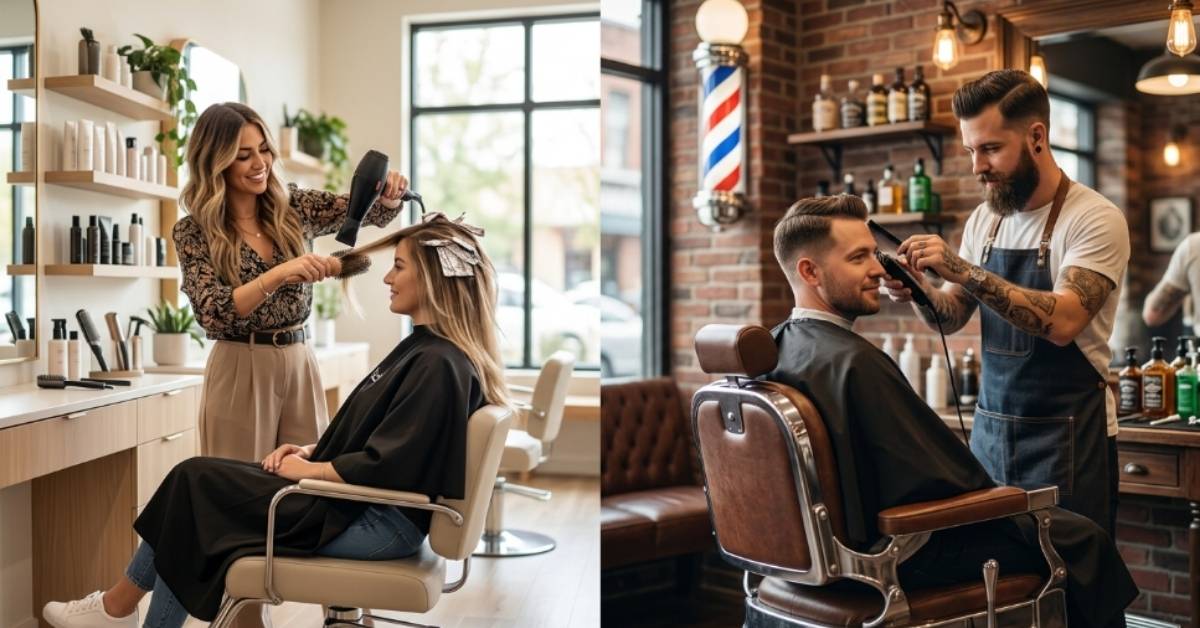
Barbershops tend to have a distinct, no-frills energy: exposed brick or vintage decor, sports playing in the background, the buzz of clippers, and easy conversation with the barber and other customers waiting their turn. It’s built to feel familiar and low-pressure, almost like a neighborhood hangout that happens to also cut hair.
Salons usually lean into a calmer, more polished setting: softer lighting, quieter music, and a more private one-on-one focus between you and your stylist. The pace is slower, the consultation is more detailed, and the whole visit is designed to feel like a bit of an occasion rather than a quick errand.
Neither atmosphere is objectively better. Some men want the fast, social, in-and-out experience of a barbershop. Others want the slower, more personalized attention a salon provides. Matching the environment to your personality is just as important as matching the service to your hair type, since a place you actually enjoy visiting is one you’ll keep coming back to consistently, and consistency is what keeps any haircut looking sharp.
Conclusion
The barber versus salon debate isn’t about which one is universally superior. It comes down to matching the right professional to the right job. A traditional barber shop is unbeatable for fades, beard trims, straight razor shaves, and fast, affordable, no-nonsense service. A salon steps in when you need scissor precision, color, texture work, or a longer, more styled result.
Some men stick with one option for years. Others move between both, depending on what a particular visit calls for. Either way, once you know what each place actually specializes in, choosing becomes simple: think about your hair length, your styling goals, and the experience you want, then pick the door that fits.
Frequently Asked Questions
Is it better for men to go to a barber or a salon?
Neither is universally better. Barbers excel at short, structured cuts, fades, and shaves, while salons handle longer hair, color, and texture work more effectively.
Can a barber cut longer hair well?
Some barbers can handle moderate length, but scissor-heavy layering and texture work are usually done more precisely by a trained salon stylist.
Do barbershops offer beard trims?
Yes, beard trims and line-ups are a core barbershop service, often included with a regular haircut appointment.
Why do salon haircuts cost more than barbershop cuts?
Salon visits typically involve longer appointments, added consultation time, and styling products, which increases the overall cost compared to a standard barber cut.
Can I switch between a barber and a salon depending on the service?
Absolutely. Many men use a barber for regular maintenance cuts and a salon for color, longer styling, or special occasions.
What license does a barber need compared to a salon stylist?
Barbers usually hold a barber license focused on men’s cutting and shaving, while salon stylists typically hold a broader cosmetology license covering color and chemical treatments.

Charlotte Aiden is the founder and editor of FaxhionTips.com, where he shares practical insights on the latest haircut trends, hairstyles, grooming tips, and hair care advice. Passionate about modern style and easy-to-follow beauty guidance, Charlotte creates well-researched content to help readers choose the best haircuts and maintain healthy, stylish hair with confidence.